The Big Picture
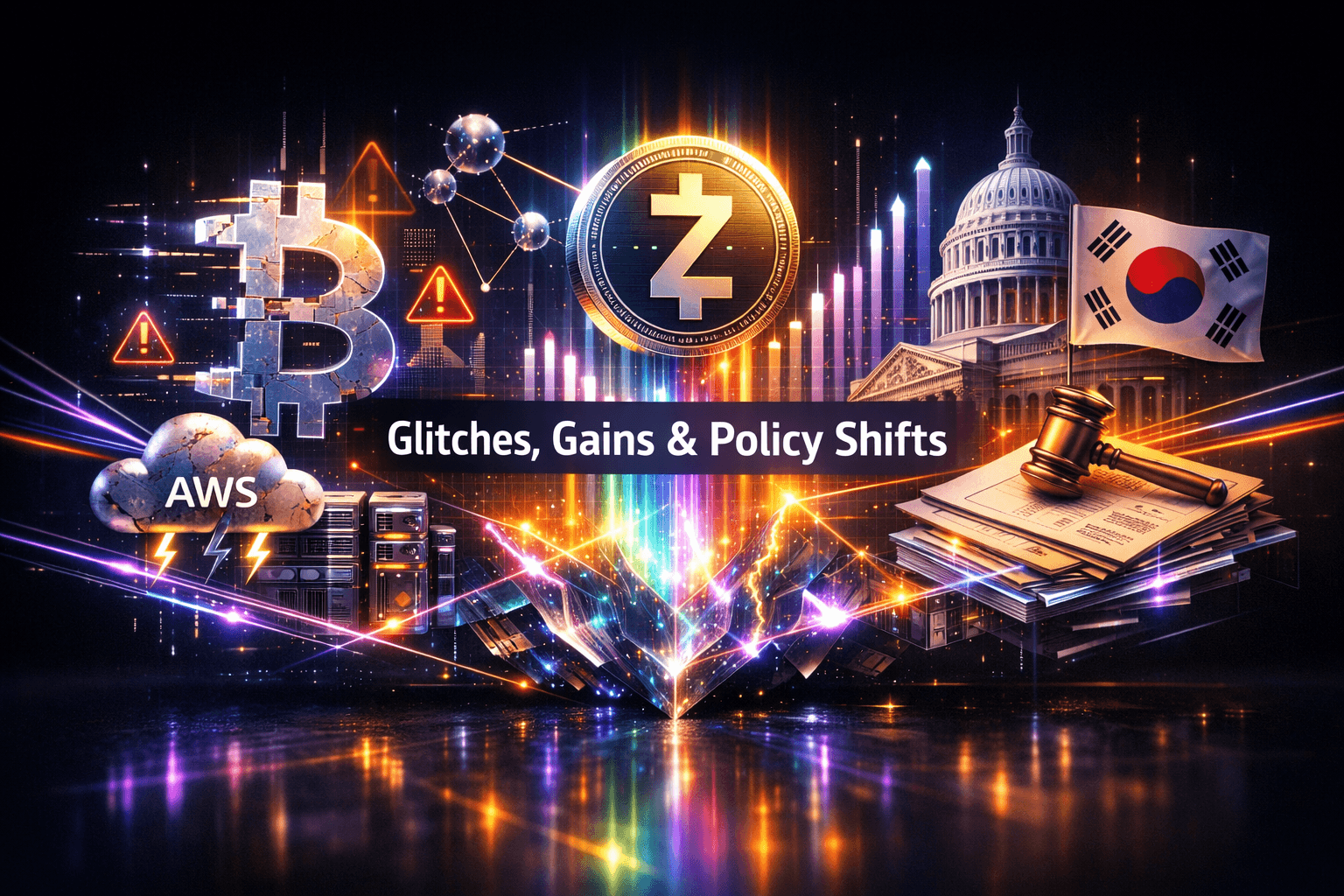
Crypto markets woke to a mixed morning, with fresh demand for privacy and quantum-resistant tech colliding with a string of platform and regulatory headwinds. You saw a sharp short-term price move in $ZEC and renewed macro flows that could lift bitcoin, but you also heard about outages and a user-facing glitch that highlight execution risk for retail traders.
Why this matters to you: momentum and policy are both shaping where capital flows next, and operational reliability is back on the front page. What should you watch first, price catalysts or platform stability?
Market Highlights
Quick facts and movers to start the trading day.
- $ZEC up about 70% in the last week as readers and traders hunt privacy and quantum-resistant solutions.
- S&P 500 call options volume surged to a record roughly $2.6 trillion, a macro flow CoinDesk says could be bullish for $BTC, though there are caveats tied to risk-on positioning.
- Coinbase, $COIN, restored trading after hours of disruption tied to an AWS issue, following a period of cancel-only and auction-mode restrictions.
- Revolut users reported a brief display showing $BTC at roughly $0.02, though it's unclear whether trades executed at that level or if it was a display error.
- South Korea plans new oversight of firms moving crypto overseas and intends to impose a 22% crypto capital gains tax starting January 2027, a material policy change for regional flows.
- Solv Protocol will migrate roughly $700 million of tokenized Bitcoin technology from LayerZero to Chainlink, reflecting fallout from prior security incidents.
Key Developments
Platform outages and user-facing glitches
Coinbase resumed trading after an AWS-linked disruption that put its markets into cancel-only and auction modes for hours. Separately, Revolut users saw $BTC briefly displayed at about $0.02, prompting screenshots and alarm. These incidents underline that infrastructure risk can create outsized short-term volatility, and you should remember that display issues may not reflect executed trades.
Privacy demand and quantum security drive Zcash rally
$ZEC rallied roughly 70% in a week amid growing interest in privacy coins and fears about AI and quantum-era surveillance. Zcash’s team also announced plans to roll out quantum-recoverable wallets within a month and to be quantum-proof by 2027. That combination of near-term product upgrades and macro demand has fueled speculative flows into privacy assets.
Regulatory shifts and political clarity
Support for the U.S. CLARITY Act appears broad, with a HarrisX poll showing 52% of registered voters backing it and cross-party vote implications. That political momentum could reduce legal ambiguity in the U.S. Meanwhile South Korea’s tighter oversight and a planned 22% capital gains tax from January 2027 create a regional headwind for inflows and repatriation strategies. How these policies play out will matter for global liquidity.
Security fallout and protocol migrations
Solv Protocol said it will migrate about $700 million in tokenized Bitcoin infrastructure from LayerZero to Chainlink after blaming LayerZero for a hack. The move follows other projects that re-evaluated oracle and messaging layers after security incidents. These shifts show you that protocol-level trust and counterparty risk remain critical for tokenized BTC and similar primitives.
What to Watch
Forward-looking catalysts and risks to track during the trading day and the coming weeks.
- Regulatory calendar, especially progress on the U.S. CLARITY Act and South Korea’s rollout of oversight and the 22% tax, effective January 2027, which could change trading flows.
- Platform stability updates from major venues, including $COIN and retail apps like Revolut, since outages and display errors can amplify volatility and retail order execution issues.
- Protocol security bulletins and migration plans, such as Solv’s shift to Chainlink and any follow-up audits of LayerZero integrations.
- Macro option flows and risk-on signals tied to the record $2.6 trillion S&P call volume, which analysts say may buoy risk assets including $BTC if the appetite for upside persists.
- Adoption signals for quantum-safe tech and privacy coins, and whether Zcash’s upgrades produce sustained utility beyond the latest price spike. Is this a lasting rotation or a short-lived trade?
Bottom Line
- Market momentum is mixed: strong interest in privacy and quantum-resilient tech sits alongside real operational and regulatory risks.
- Platform incidents like the Revolut display glitch and the AWS-linked Coinbase outage underscore execution risk for retail traders, so keep an eye on order confirmations and exchange status pages.
- Policy moves deliver both clarity and friction, as U.S. political support for the CLARITY Act may ease legal uncertainty while South Korea’s new oversight and 22% tax could damp regional flows.
- Protocol migrations and security reviews are accelerating, meaning counterparty and smart contract risk remain central to tokenized asset strategies.
- Data suggests momentum exists, but it's wise to keep your focus on liquidity, custody, and the policy calendar before making any decisions.
FAQ Section
Q: What caused the $BTC $0.02 display on Revolut? A: Reports indicate a likely display or feed glitch, and it's unclear whether any trades were executed at that price.
Q: Will South Korea's new oversight and 22% tax start immediately? A: The tax is slated for January 2027 and oversight measures are being tightened now, so you should expect a phased implementation and compliance guidance.
Q: Does the Zcash rally mean privacy coins are a safer bet now? A: Price strength reflects demand for privacy and quantum-resilient features, but analysts note elevated volatility and ongoing regulatory and technical risks.