The Big Picture
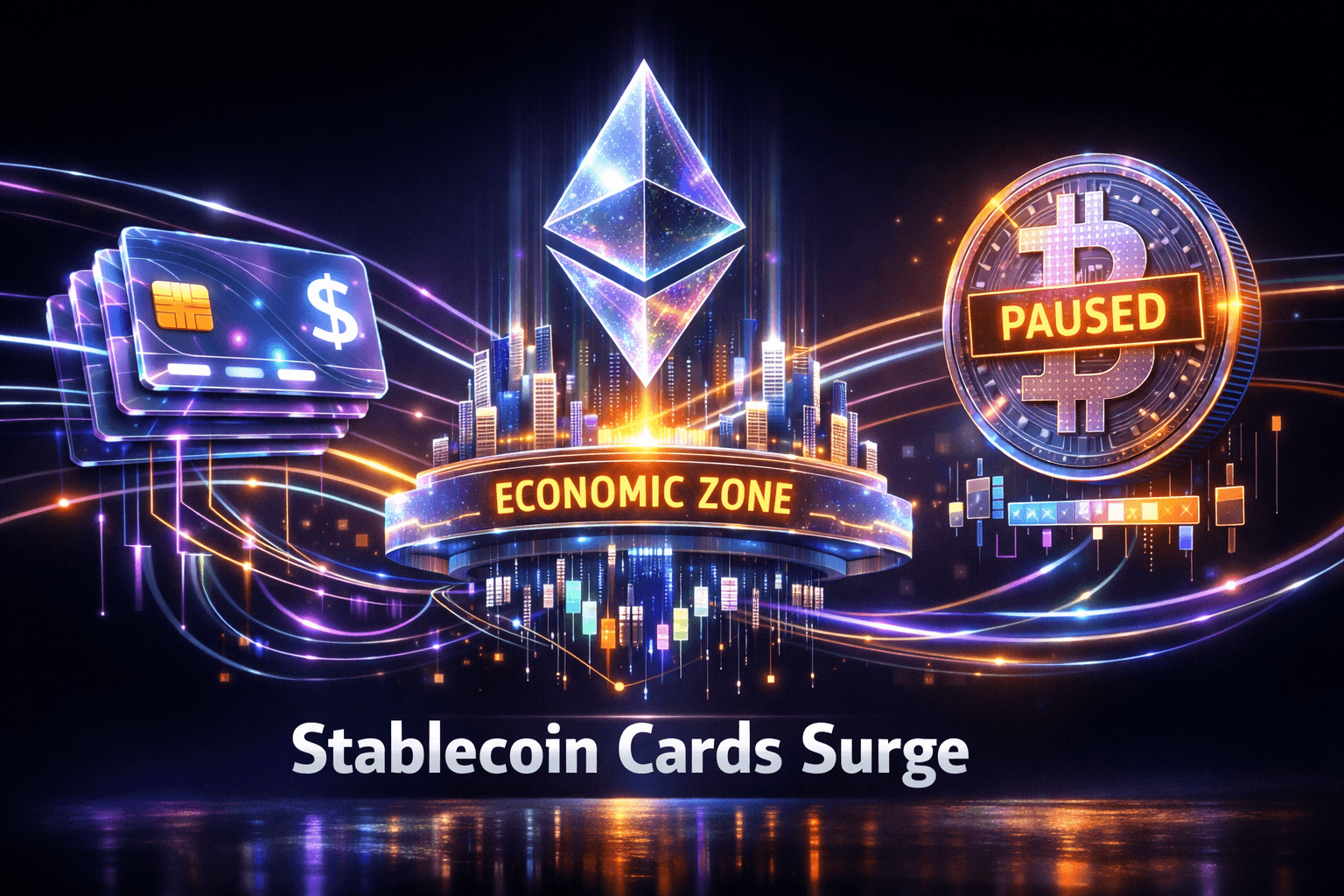
Heading into the long weekend, crypto headlines showed momentum on adoption and infrastructure even as US stock markets were closed. The most impactful development was the jump in real-world stablecoin payments, driven by Singapore's StraitsX and a surge in crypto card issuance that signals faster consumer take-up.
At the same time, Ethereum builders and the Foundation moved to tackle layer-2 fragmentation with coordinated funding and a proposed "Economic Zone". What does that mean for you as a retail investor looking at ecosystem durability and payment rails?
Market Highlights
Key facts and quick numbers to know heading into Monday.
- StraitsX reported a 40x surge in transaction volume and an 83x increase in card issuance between 2024 and 2025, highlighting rapid stablecoin payment adoption in Southeast Asia.
- Walmart-backed OnePay expanded token support to include Polygon, Arbitrum and Solana, increasing mainstream payment app access to $MATIC, $ARB and $SOL.
- Ethereum-focused initiatives gained momentum as Gnosis and Zisk unveiled an "Ethereum Economic Zone" with co-funding from the Ethereum Foundation and partnerships including $AAVE, Titan and Centrifuge.
- A major buyer appears to have paused weekly bitcoin accumulation, ending a 13-week buying streak, while global policy moves put crypto and political donations in the spotlight after Canada proposed a ban and the U.K. announced a moratorium.
Key Developments
Stablecoin Cards and Invisible Payments
StraitsX's card program growth is striking, with transaction volume up 40x and card issuance up 83x year over year. That rapid scale suggests stablecoins are moving from niche tech to everyday payments in some markets, and you may see more consumer-facing apps integrate stablecoin rails for low-fee, cross-border checkout.
Ethereum Economic Zone and Roadmap Progress
Developers from Gnosis and Zisk proposed an "Economic Zone" to reduce L2 fragmentation, and the Ethereum Foundation is co-funding the initiative announced at EthCC. This aligns with the broader Ethereum roadmap work such as Glamsterdam and Hegota, which aim to improve throughput and economic coordination across rollups.
These protocol-level moves could make the $ETH ecosystem more composable, reducing friction for developers and users. How fast this translates into higher throughput or lower costs will depend on adoption and tooling, but the coordinated funding is a positive signal.
Policy and Market Structure Updates
Canada proposed banning crypto political donations in a new election integrity bill, following the U.K.'s recent moratorium. The move is targeted at campaign finance rather than broad crypto activity, but regulators are clearly tightening rules around on-chain political funding.
Separately, Senators Alsobrooks and Tillis presented an agreement-in-principle on stablecoin yield that left stakeholders on both sides wanting more. Meanwhile, one large buyer appears to have skipped its weekly $BTC purchase, ending a 13-week run of accumulation. That pause raises questions about corporate or institutional allocation strategies but hasn't signaled systemic selling.
What to Watch
Watch these catalysts and risk areas as markets reopen for US trading on Monday. You're going to want to track on-chain flows and developer signals closely.
- Ethereum upgrades and rollup coordination: monitor EthCC follow-ups and announced timelines for Glamsterdam and Hegota features, plus adoption metrics on targeted rollups.
- Stablecoin yield and regulatory clarity: look for legislative or regulatory updates from US, U.K. and Canadian authorities that could affect issuer rules and yield products.
- Adoption signals from payments: follow OnePay rollouts and merchant integrations in Southeast Asia to see whether the StraitsX trend spreads to other regions.
- Bitcoin accumulation behavior: check weekly treasury and corporate buy announcements and wallet inflows to see if the recent pause becomes a pattern or was a one-off.
- Layer-2 interoperability: measure bridging volume and cross-rollup fees to judge whether the Economic Zone reduces fragmentation in practice.
Bottom Line
- Stablecoin payments are scaling in market-specific ways, and the StraitsX numbers show consumer rails are maturing in Southeast Asia, analysts note.
- Ethereum's Economic Zone and roadmap work represent coordinated progress on scalability and interoperability, which could reduce long-term frictions for developers and users.
- Regulatory moves on political donations and stablecoin yields add near-term policy risk, so you'll want to track official guidance and timing.
- The pause in a large weekly $BTC buyer's accumulation ended a 13-week streak, a development data suggests is worth monitoring for trend confirmation.
- Overall momentum leans positive on adoption and infrastructure, but selectivity and attention to policy developments remain important.
FAQ
Q: Will stablecoin cards drive mainstream crypto payments? A: They can, especially where low fees and fast settlement matter. StraitsX's 40x transaction growth shows consumer traction, but broader uptake depends on merchant acceptance and regulatory comfort.
Q: Does Canada's proposed political donation ban affect crypto markets? A: The proposal targets campaign finance rather than market activity. It raises compliance questions for platforms that facilitate donations, and you'll want to watch policy detail and any global spillover effects.
Q: What does the Ethereum Economic Zone mean for L2 users? A: The initiative aims to reduce fragmentation and improve interoperability. If adoption follows funding, developers may find it easier to build across rollups, which could lower costs and increase utility for users.