The Big Picture
Today the Consumer & Retail sector looks like a mixed bag, with big operational moves and product innovation on one side and retailer distress and macro risks on the other. Grocery and delivery players are expanding capabilities that could ease holiday logistics, while some department and specialty retailers report shrinking sales and leadership churn.
For you that means selective opportunity and elevated risk. Which trends will matter most this season, delivery expansion or higher gas prices? Your closest watchlist probably needs both types of signals.
Market Highlights
Here are the key numbers and market-moving items you should note this morning.
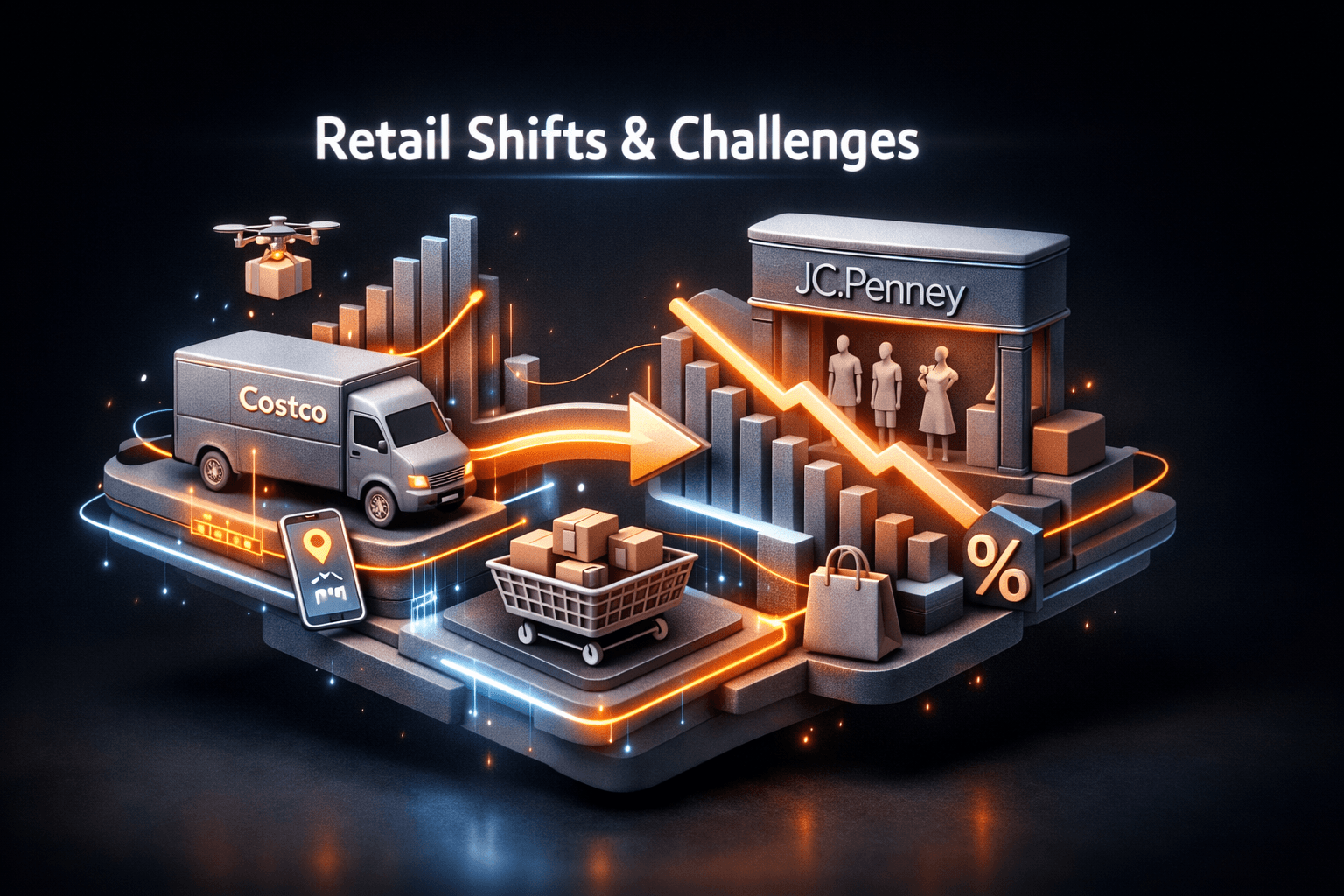
- Costco and DoorDash expand, with nationwide delivery now available through DoorDash for $COST members, building on earlier international ties and tests.
- J.C. Penney reported Q2 net sales fell more than 8 percent, prompting a marketplace launch as it tries to regain footing in apparel and home categories.
- Wegmans is investing $110 million in a new supply chain facility to reduce reliance on third parties and tighten distribution in its Upstate New York base.
- Gas prices are a rising macro headwind, up roughly 50 percent in the U.S. since the Feb 28 conflict between the U.S., Iran and Israel started, with recent state-level spikes that could squeeze holiday logistics.
- Flowers Foods brand Dave's Killer Bread, part of Flowers Foods, is bringing back pumpkin spice bagels nationwide as it amplifies seasonal limited time offerings.
Key Developments
Costco and DoorDash expand delivery partnership
DoorDash has rolled out nationwide delivery for Costco, widening an already tested relationship that included markets such as Australia and Puerto Rico. This means same-day, last-mile options are now broadly available to $COST members through DoorDash, which could shift member buying habits for bulky items and last-minute needs.
For investors, the implication is twofold. One, delivery penetration increases address convenience demand this holiday season. Two, increased delivery volumes could pressure margins unless efficiencies or fees offset costs.
Grocery operators investing in supply chains
Wegmans announced a $110 million investment to build a new distribution facility and consolidate operations. Kroger is reshaping its C-suite after naming Greg Foran CEO in February and bringing in several senior hires with Walmart experience, signaling a push to improve execution.
Those moves suggest grocers are prioritizing resilience and scale as gas price volatility and peak-season demand create more stress on networks. You should watch whether these investments yield better in-stock rates and lower third-party costs by year end.
Legacy retail strains, leadership changes and new tactics
J.C. Penney says total Q2 net sales slipped more than 8 percent even as activewear and beauty were bright spots. The chain has launched a marketplace to diversify assortment and try to recapture share.
Ethan Allen has opened a CEO search after activist pressure to replace the board, creating near-term leadership risk. These developments highlight the contrast between retailers investing in operations and others still fighting structural declines.
What to Watch
Look ahead to these catalysts and risk factors that could move stocks and the competitive landscape over the coming weeks.
- Holiday supply chain stress. Rising gas costs could compress margins and force last-minute logistics changes. How resilient are carrier contracts and inventory buffers at your favored retailers?
- Delivery economics. Track early order volume and average basket size for $COST on DoorDash and any fee changes by DoorDash $DASH. Will delivery add profitable incremental sales or simply redistribute in-store volume?
- Company leadership signals. Watch Ethan Allen's CEO search and any governance moves. Leadership turnover often precedes strategic shifts that affect margins and capital allocation.
- Product and brand innovation. Seasonal and LTO strategies, like Dave's Killer Bread's nationwide pumpkin spice bagels, and new product entries such as C4's beer-flavored energy drink, could drive short-term promotional wins and category heat.
- Certification and wellness trends. The Non-GMO Project expanded its non-ultraprocessed label to over 300 products, which could support premium pricing and private brand strategies for companies that adopt the label.
Bottom Line
- The sector shows balanced forces: operational investments and delivery expansion versus retailer weakness and fuel cost risk.
- Grocers and delivery platforms are taking concrete steps to reduce friction for holiday demand, but higher gas prices may erode margins.
- Legacy apparel and department stores are still vulnerable, with sales declines and governance turbulence signaling selective risk.
- Product innovation and certification trends remain growth levers for brands looking to capture consumer interest this season.
- Keep a selective approach, monitor delivery economics, and watch supply chain signals as peak shopping season ramps up.
FAQ Section
Q: How significant is Costco's nationwide rollout on DoorDash for delivery economics? A: It broadens convenience for members and could increase same-day order volume. Analysts will be watching average order values, fee structures and incremental sales versus cannibalization of in-store trips.
Q: Should you worry about gas price spikes affecting holiday inventory? A: Rising fuel costs can increase transportation spend and compress margins, especially for companies that rely on third-party carriers. Firms investing in self-distribution like Wegmans aim to mitigate that exposure.
Q: Do seasonal product rollouts like Dave's Killer Bread's pumpkin spice bagels move the needle? A: Seasonal limited time offers can boost foot traffic and short-term sales if they resonate. They are not a cure for structural problems at retailers facing declining core demand.