The Big Picture
The Consumer & Retail sector closed the week with a patchwork of operational moves and strategic pivots that leave investors with mixed signals. Strong direct‑to‑consumer discipline at some brands sits alongside distress in niche specialty retail, while logistics and labor moves are reshaping cost and service dynamics.
Why this matters to you: the stories below touch inventory and peak‑season timing, labor costs, same‑day delivery, and brand positioning. Those are the levers that will influence margins and sales when markets reopen on Monday.
Market Highlights
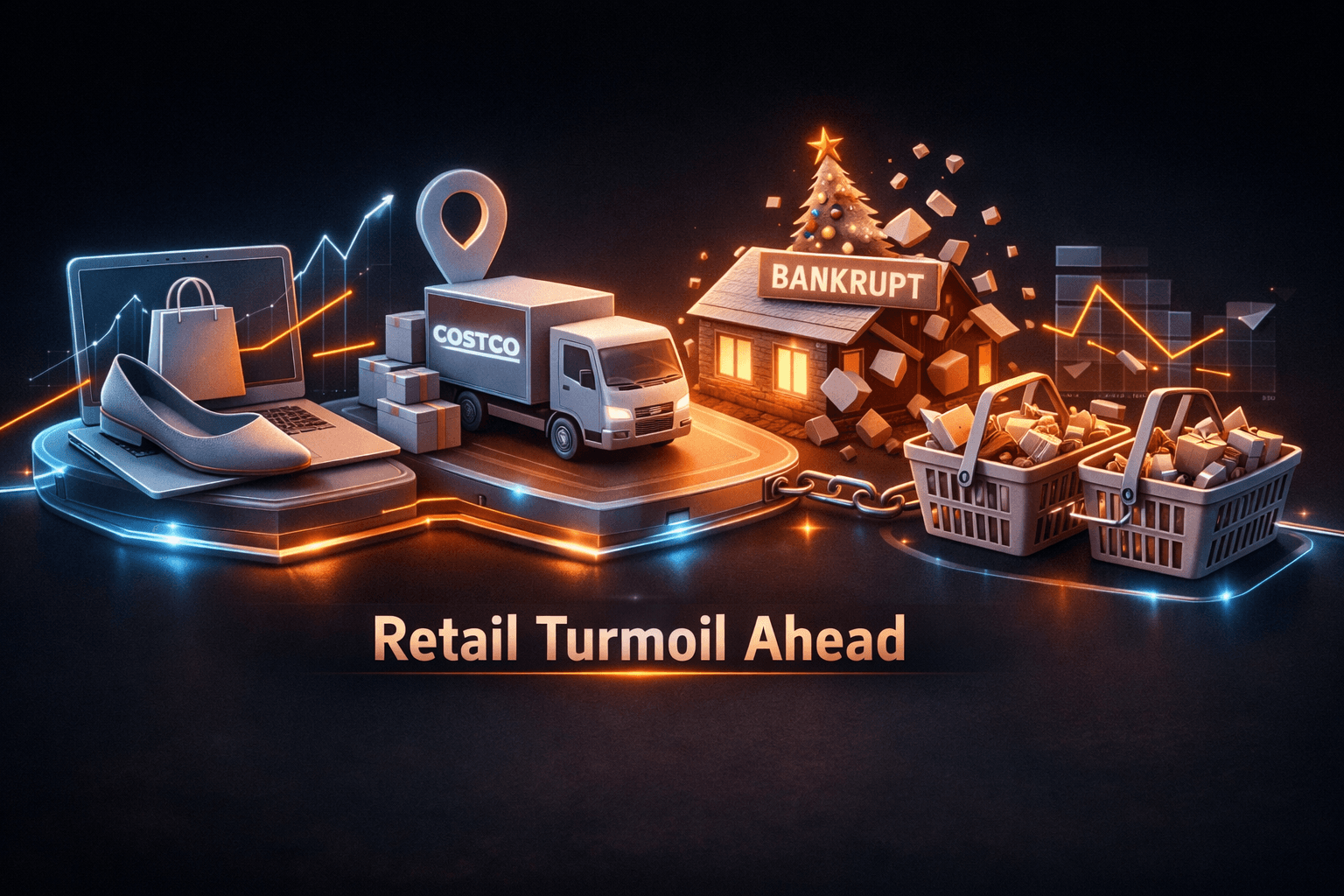
- Rothy’s reported continued scale and discipline, surpassing $200 million in sales by growing carefully and testing retail and wholesale channels.
- Office Depot Group rebrands from The ODP Group and consolidates the distribution name to Office Depot Business, aiming to unify a 40‑year brand across retail and B2B.
- Gordon Companies Inc., operator of Christmas Central and Christmas.com, filed Chapter 11 just ahead of peak selling season, raising inventory and seasonal risk concerns.
- On Holding signed soccer star Kylian Mbappé as it prepares to enter the football market, positioning the Swiss sneaker brand against $NKE and $ADDYY incumbents.
- Costco expands nationwide same‑day delivery with Uber and DoorDash, intensifying the delivery battle for grocery and bulk shoppers.
- Amazon raised its minimum starting hourly wage to $20 in core operations, a $1 increase, while adding grocery discounts for workers.
Key Developments
Rothy’s: DTC that learned to test and consolidate
Rothy’s success story highlights a disciplined DTC playbook. The brand has reached more than $200 million in sales by growing cautiously, trialing retail and wholesale placements, and avoiding the costly overexpansion that hurt peers.
For you, that suggests investors and operators should look for profitability signals, not just topline growth, when valuing footwear and DTC peers. Which DTC names can sustain growth without burning cash?
Logistics and labor reshape margins: Costco, Amazon, Kroger
Costco’s rollout of nationwide same‑day delivery through Uber and DoorDash scales a service customers increasingly expect. That should help convenience and conversion, but it will raise fulfillment costs in the near term.
At the same time, Amazon lifted its minimum starting wage to $20 an hour for core operations, a $1 increase. These moves underscore mounting wage and delivery cost pressure across retail, which could compress margins unless retailers pass costs to customers or find efficiencies.
Retail stress points: bankruptcy and vendor disputes
Gordon Companies Inc., operator of Christmas Central and other holiday retailers, filed Chapter 11 just before peak season. Seasonal retailers are especially exposed when inventory and staffing have to be scaled up quickly.
Meanwhile, Kroger's reported pullback of Red Bull at some banners over pricing discussions shows how supplier disputes can affect assortment and customer experience. Both items are reminders that product availability matters just as much as marketing in driving traffic.
Brand plays and strategic rebrands
Office Depot Group's decision to retire the ODP Business Solutions name in favor of Office Depot Business unifies a 40‑year brand across retail and B2B. A consistent brand can simplify marketing and reduce customer confusion in corporate accounts.
On Holding’s signing of Mbappé signals a targeted push into football, a category dominated by long‑standing incumbents. Expect heightened marketing spend as On tries to translate athlete equity to category share.
What to Watch
Here’s what you should monitor when markets reopen on Monday and into the coming weeks. Pay attention to earnings and seasonality indicators, because they’ll reveal whether these strategic moves are translating into revenue and margin traction.
- Peak season signals: watch inventory levels and early holiday promotions from specialty retailers and mass merchandisers for signs of overhang or upside.
- Labor and fulfillment cost trajectories: track guidance and margin commentary from $AMZN, $COST and grocery chains to see whether delivery and wage pressures are being absorbed or passed on.
- Bankruptcy fallout: follow Gordon Companies’ Chapter 11 filings for restructuring plans, vendor claims and liquidation timelines that could affect holiday supply chains.
- Brand and marketing spend: monitor On Holding and other footwear names for elevated marketing expense tied to athlete deals, and see if that drives unit demand.
- M&A and partnerships: keep an eye on further logistics tie‑ups after Costco’s DoorDash and Uber push, because these deals can change share in same‑day commerce.
Bottom Line
- Mixed signals dominate: disciplined DTC growth and delivery expansion sit beside a pre‑season bankruptcy and supplier frictions, creating a selective investment landscape.
- Labor and delivery remain top risks for margins, so watch wage trends and fulfillment partnerships closely.
- Brand consolidation and athlete endorsements point to marketing‑led share fights; short term costs may rise before revenue benefits show.
- Seasonal retailers are vulnerable heading into peak selling; pay attention to bankruptcy developments and inventory disclosures.
- When markets reopen, focus on guidance and margin commentary rather than short‑term share moves, because fundamentals will matter most over the quarter.
FAQ
Q: How does Costco’s nationwide delivery affect competitors? A: It increases pressure on rivals to expand same‑day service, which could raise industry fulfillment costs and shift spend toward convenience.
Q: Will Amazon’s $20 minimum wage force others to follow? A: Analysts note wage moves can create upward pressure across operations, but pass‑through, productivity and local labor markets will influence how peers respond.
Q: Should I be concerned about the Gordon Companies bankruptcy? A: The filing raises seasonal supply and vendor risk for holiday categories, so you should monitor restructuring filings and any knock‑on effects to suppliers.