The Big Picture
Your sector opened the week with a clear theme, innovation meeting experience. AI is being positioned not as a replacement for legacy systems but as a cost cutter that fixes the maintenance burden of EDI, while brands double down on real-world activations and targeted product growth to reach consumers who value experience and personalization.
Those operational and marketing shifts matter because they influence margins, inventory flows and customer lifetime value. You should care about how technology and on-the-ground activations will shape sales velocity and cost structures into the crucial holiday quarter.
Market Highlights
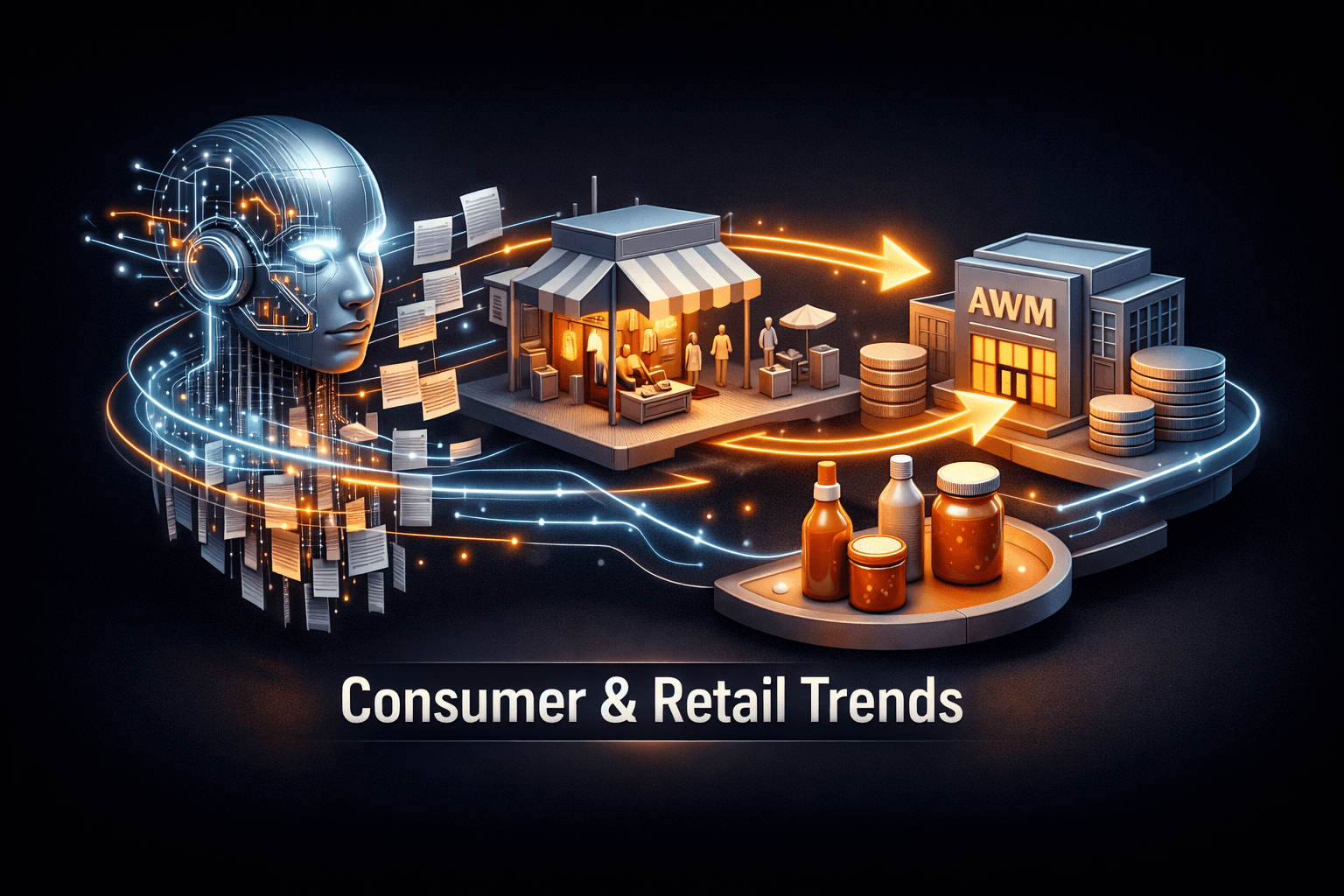
- Grainger announced a $210 million cash acquisition of Adroit Worldwide Media, bringing AI and site access technology into $GWW's operations. The deal aims to strengthen inventory and jobsite management.
- Retail technology commentary notes AI is being used to reduce EDI maintenance overhead, potentially lowering integration costs for retailers that rely on electronic data interchange for supplier connectivity.
- Retail and CPG marketing is active this weekend: Bubba tested a new brand identity at Lollapalooza and national brands staged tennis-themed US Open pop-ups in New York City to reach fans priced out of tickets.
- Food brands are targeting sauces as a growth vehicle, leaning into flavor variety and customization to increase basket frequency and per-unit spend.
- Brand reputation risk remains front and center, as Modern Retail’s coverage of cancellations shows social backlash still carries long tails that can dent customer trust and sales.
Key Developments
AI fixes EDI's cost problem
A Retail Dive analysis frames AI not as a replacement for electronic data interchange, but as a practical tool to reduce the maintenance overhead that made EDI costly and brittle. For retailers and suppliers that run large numbers of partner integrations, reduced maintenance could translate into lower IT spend and faster onboarding for new suppliers.
That matters to you because smoother supplier connectivity can cut stockouts and improve margin realization. If data suggests fewer integration errors, you may see steadier inventory turns and reduced emergency freight costs later in the year.
Payments, omnichannel and the checkout weak link
Retail Dive also flagged payments as the potential bottleneck for omnichannel strategies. A seamless checkout is now the differentiator between converting a visit and losing a customer to friction or abandonment.
Are your favorite retailers investing in checkout modernization? If not, conversion and online-to-offline attribution could stay muted, and marketing spend will be less effective until payment UX is improved.
Experiential marketing, CPG product plays and reputation risk
Brands are pushing experiential activations to capture consumers who value in-person moments. Bubba’s Lollapalooza activation and US Open pop-ups from names such as Evian and Sephora show marketers are willing to meet fans where they are instead of relying on tickets and large ad buys alone.
Meanwhile, Food Dive reports sauces are a rising category for CPG growth. Smaller SKUs and flavor extensions give brands an easier path to trial and repeat purchases. But Modern Retail’s piece on brand cancellations is a reminder that activation and product risk management must go hand in hand, because social backlash can quickly erase marketing gains.
What to Watch
Expect investor focus to center on operational proof points and near-term sales signals. Look for metrics that show technology investments are translating into measurable benefits for retailers and suppliers.
- Watch $GWW announcements and any investor commentary on cost synergies and timing for integrating AWM tech. Management updates will be key for gauging margin impact.
- Monitor payment partner disclosures and retailer tech stacks. Quarterly reports that call out conversion improvements or lower checkout abandonment will validate the payment thesis.
- Track CPG category sales for sauces and flavor extensions. Point-of-sale data or Nielsen/IRI releases that show share gains will indicate whether sauces are moving from trend to material growth driver.
- Keep an eye on brand reputation metrics and social listening. How quickly brands respond to cancellations or backlash can determine whether an activation produces sustained benefits or a short-term hit.
- Upcoming catalysts: Retail earnings in early September, Labor Day weekend sales data, and any updates from trade shows or technology partnerships announced in the coming weeks.
Bottom Line
- AI applied to legacy systems like EDI could reduce operating costs and speed supplier onboarding, which supports margin improvement.
- Payments remain a conversion choke point for omnichannel strategies, so improvements there can lift sales without incremental customer acquisition spend.
- Experiential marketing and targeted product plays, such as sauces for CPG brands, are driving engagement and incremental spend, though reputation risks are still material.
- $GWW's $210 million AWM acquisition signals strategic bets on AI for operational advantage; watch integration cadence and synergy guidance closely.
- Overall, innovation plus experience is the prevailing theme, but execution and risk management will separate winners from the rest.
FAQ Section
Q: How could AI fixing EDI affect retailer costs? A: AI can automate and simplify mapping and exception handling, lowering maintenance hours and integration costs over time.
Q: What should you watch to judge whether payment improvements are working? A: Look for lower checkout abandonment rates, higher conversion metrics and any retailer disclosures linking payment upgrades to sales lifts.
Q: Does a marketing activation automatically boost long-term sales? A: Not always, activations can drive awareness and sampling, but sustained sales need repeat purchase strategies and reputation management.