The Big Picture
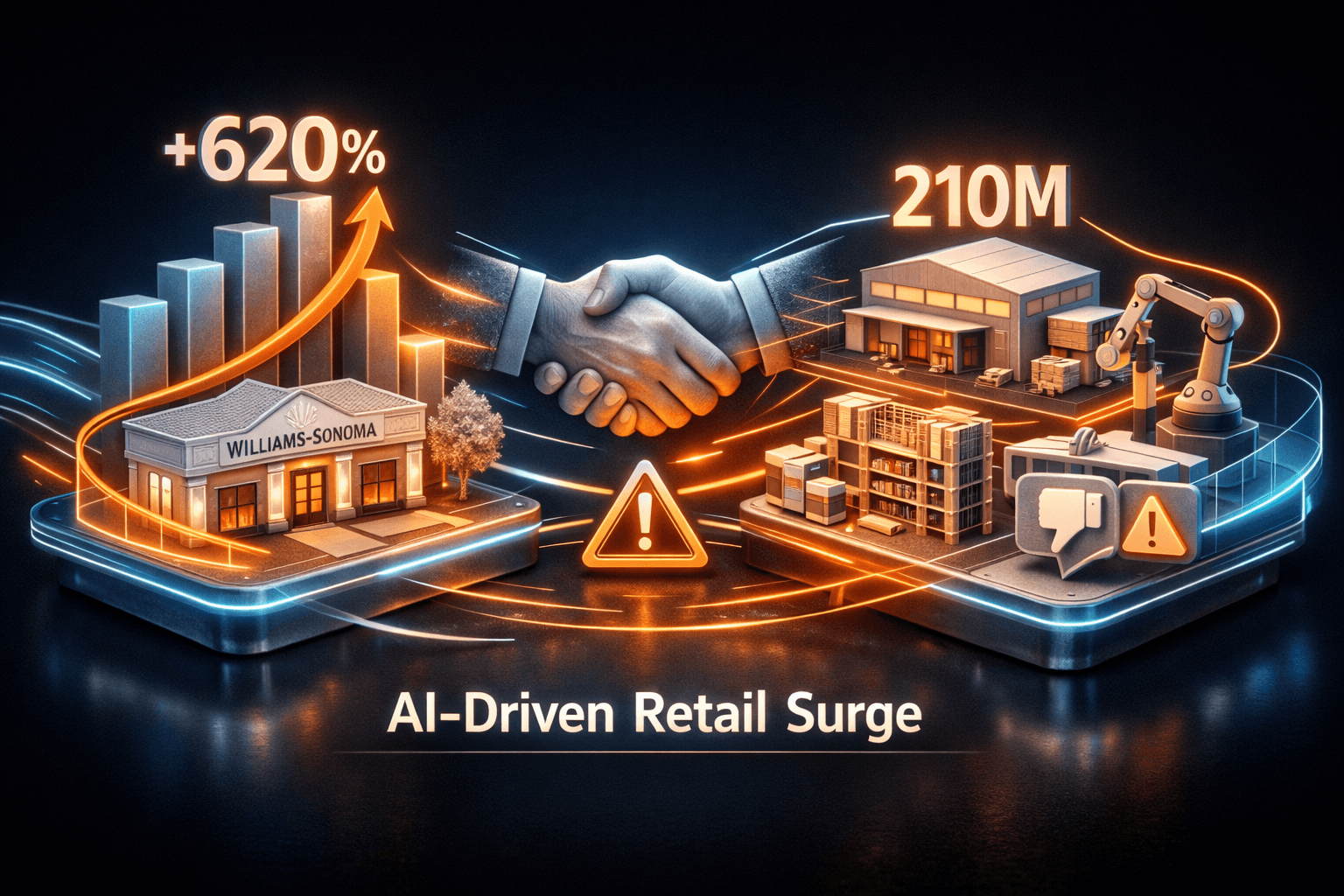
The weekend brought a clear theme for Consumer & Retail: AI is moving from pilot to profit, and companies are buying technology and talent to scale it. Williams‑Sonoma reported strong AI-driven revenue gains and industrial distributor W.W. Grainger is paying $210 million for AWM, a tech firm focused on AI and site tracking.
Those developments matter because they show retailers and distributors are monetizing AI and treating it as strategic infrastructure. Markets were closed Sunday and the last trading day was Friday, August 28, so you won't see a market reaction until Monday, August 31. What should you watch as you position for the week ahead?
Market Highlights
- $WSM, Williams‑Sonoma: Fiscal Q2 net revenue rose 6.7% year over year as of the quarter, and revenue from its AI assistant climbed 620% in the quarter.
- $GWW, W.W. Grainger: Agreed to acquire Adroit Worldwide Media (AWM) in an all-cash $210 million deal to add AI, tracking, and access control tech for job sites.
- Brand reputational risk: Modern Retail's podcast examined the new life cycle of brand cancellations, highlighting that many companies still struggle to respond to social backlash in ways consumers accept.
Key Developments
Williams‑Sonoma's AI lift
$WSM reported a 6.7% increase in net revenue for fiscal Q2, and said revenue tied to its AI shopping assistant rose 620% in the period. That suggests shoppers are engaging with AI tools and that monetization pathways are emerging beyond basic conversion boosts.
For you, that means retail technology spend and customer-facing AI could drive incremental revenue even in a slow housing market. Are AI features becoming a meaningful driver of same-store economics, or are they still an add-on? The early data points favor the former, but execution will matter.
Grainger buys AWM for AI and site-control tech
$GWW's $210 million cash acquisition of AWM signals industrial distributors see AI and access-control technologies as strategic for inventory and job-site operations. AWM brings talent, intellectual property, and tech that could improve Grainger's asset tracking and service offerings.
That deal also shows corporates are willing to pay for verticalized AI capabilities rather than build them in-house. If integration goes smoothly, Grainger could improve margins via better inventory utilization and new service revenues. Integration execution risk remains, so watch management updates.
Brand cancellations remain a reputational risk
Modern Retail's podcast dug into how brand cancellations now have a life cycle and why many companies still can't respond to social backlash in ways that satisfy consumers. The coverage reminds you that strong tech and operations won't immunize a brand from reputational damage.
Reputational missteps can depress traffic and sales, and they may trigger faster responses from platforms and partners. In short, AI and M&A are growth levers, but brand trust is a different kind of currency. How are your retailers managing both?
What to Watch
Heading into the next trading week, keep an eye on a few catalysts that could move Consumer & Retail names. Earnings cadence and management commentary on AI investments will be front and center for many firms. You should also watch any follow-up from Grainger about integration timelines and expected cost synergies.
- Earnings and guidance: Look for commentary from retailers and distributors on AI monetization, customer acquisition costs, and margin impacts in upcoming earnings calls.
- Integration risk: Grainger will need to outline how AWM fits into operations and when revenue or cost benefits kick in, so follow investor presentations and regulatory filings.
- Reputational triggers: Social media events or heightened activism can blow up quickly. Monitor brand sentiment and company response strategies, especially for consumer-facing names.
- Macro and retail traffic: Watch consumer spending signals and any late-summer promotional activity that could affect Q3 comps, plus supply chain indicators that influence inventory turns.
Bottom Line
- AI is shifting from experimentation to revenue, as $WSM's 620% AI revenue jump shows; this is a growth catalyst worth watching.
- $GWW's $210M AWM acquisition underlines that companies are buying AI capability to improve operations and monetize services.
- Brand cancellations and social backlash remain real risks, potentially offsetting gains from tech investments if companies mishandle responses.
- Integration and execution are the next tests, so don't assume headline deals immediately translate into margin expansion.
- Markets were closed Sunday; expect initial price reactions when trading resumes Monday, August 31, and watch management commentaries for clarity.
FAQ Section
Q: How material is Williams‑Sonoma's AI revenue gain? A: A 620% increase indicates rapid adoption, but the company still needs to show sustained contribution to margins and same-store sales.
Q: What does Grainger's acquisition mean for other distributors? A: It suggests peers may also buy specialized AI or tracking tech to improve inventory and service offerings, raising M&A watchlists in the sector.
Q: How should you think about brand cancellations? A: Treat them as an ongoing reputational risk that can quickly affect traffic and sales, so weigh brand health alongside technology and operational progress.