The Big Picture
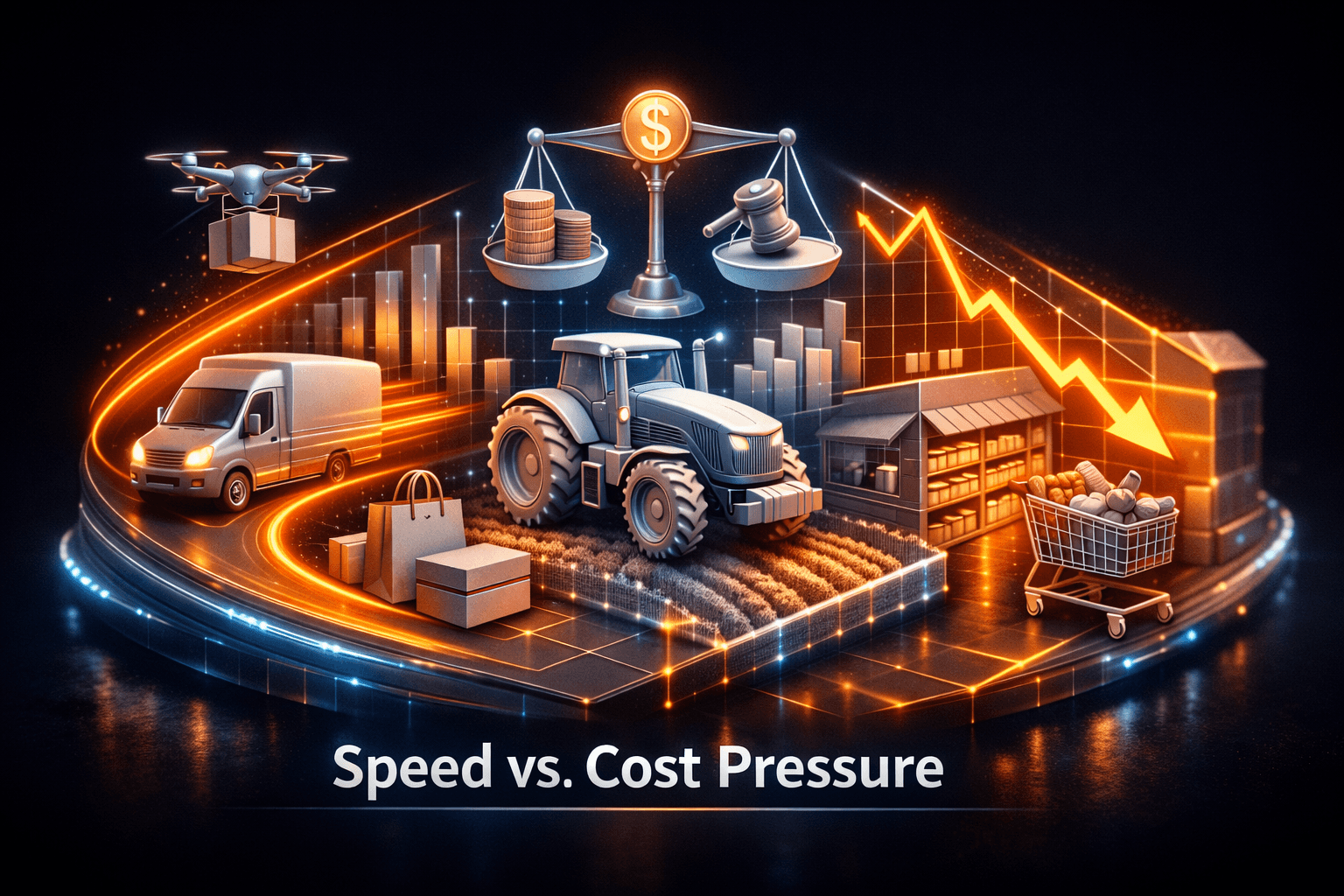
Today the Consumer & Retail sector showed two clear themes: speed as a competitive lever and rising cost scrutiny. Major retailers and consumer companies are doubling down on faster delivery and experiential retail, even as supply costs and regulatory probes push margin conversations higher.
That matters because you may see more investment in logistics and marketing even as grocers and beverage makers face price sensitivity and input-cost pressure. The mix creates opportunities for efficiency winners and risks for companies exposed to commodity and tariff swings.
Market Highlights
Here are the fastest takeaways from the day, organized for quick reading so you can follow what might matter to your watchlist.
- Deere & Company, Deere & (DE), reported growth in net sales and revenue for fiscal Q3 2026, helped in part by tariff refunds that eased supplier costs.
- Walmart, Walmart (WMT), expanded 30-minutes-or-less delivery options as customers accept added fees for speed, a vote of confidence for fast-fulfillment investments.
- Gap Inc., $GPS, named Justin Breton as vice president of development to advance its 'fashiontainment' strategy under Pam Kaufman.
- Constellation Brands, $STZ, committed $100 million to boost U.S. farm profitability in key producing states, a move tied to supply resiliency.
- Nearly 60 members of Congress urged an investigation into aluminum pricing, a development that could pressure beverage packaging costs for companies such as PepsiCo (PEP) and The Coca-Cola (KO).
- Regional grocer The Raley's Companies announced more store closures, adding to earlier shutdowns this year, signaling persistent pressure at the smaller end of the supermarket market.
Key Developments
Deere posts Q3 sales gains, aided by tariff refunds
$DE grew net sales and revenue in fiscal Q3, according to reporting today. Management cited a dynamic inflationary environment where factors like oil and tariff flows influence supplier costs, and tariff refunds helped dampen near-term pressure.
Implication: Deere's resilience points to pockets of pricing power and favorable one-off adjustments, but you still need to watch commodity and supply-chain volatility for future margin signals.
Walmart doubles down on ultrafast delivery as customers pay up
$WMT expanded its 30-minute delivery footprint, and company executives said shoppers are choosing faster fulfillment even when it costs more. The move aligns with a broader industry push into same-day and near-instant options as deployment costs decline.
Implication: Faster delivery is emerging as a growth battleground. You should consider how logistics investments could pressure margins near term while creating longer-term customer-retention benefits.
Grocers and grocer-adjacent players face shifting demand and cost threats
An AlixPartners report highlighted that Gen Z parents spread grocery spending across more channels, pushing grocers to pivot their loyalty and promotional strategies. At the same time, fuel-price spikes are making shoppers cautious before grocery inflation shows up on receipts.
Adding to the squeeze, nearly 60 members of Congress asked for an investigation into the Midwest Premium for aluminum pricing, a cost dynamic that could increase packaging expense for beverage makers and affect downstream pricing.
What to Watch
Look to a few catalysts and risk points that could shape trading and strategy through the week and into Q3 earnings season.
- Earnings and guidance from larger grocers and consumer staples over the next month, where commentary on fuel, aluminum and freight will matter to margins.
- Execution and rollout pace for same-day and 30-minute delivery, especially from $WMT and chains investing in micro-fulfillment. How fast can costs come down, and will shoppers remain willing to pay fees?
- Regulatory and Congressional action on aluminum pricing, which could prompt higher packaging costs and margin pressure for beverage makers and some food producers.
- Monitoring regional grocery chain health after The Raley's Companies' additional closures, which may signal local market saturation or shifting consumer preferences.
- Follow-up on Deere's tariff refunds, and whether those are one-time offsets or point to a broader policy trend that could influence industrial supply chains.
How should you prioritize these items on a watchlist? Focus on companies with clearer logistics economics and diversified input sourcing. Are you positioned to spot who benefits from faster delivery and who is most exposed to raw-material swings?
Bottom Line
- Sector sentiment is mixed, with growth-focused moves in delivery and retail entertainment offset by cost and regulatory pressures.
- $WMT's delivery expansion underscores industry momentum toward speed, but investors should watch margin tradeoffs closely.
- $DE's Q3 showing benefited from tariff refunds, offering a reminder that policy shifts can materially affect results.
- Input-cost risks, including aluminum pricing and fuel-driven consumer caution, remain primary downside drivers for grocers and beverage companies.
- Near-term opportunities could favor firms that turn logistics investment into durable customer gains while controlling packaging and freight exposure.
FAQ Section
Q: How will faster delivery affect retailer margins? A: Faster delivery increases operating costs initially, but data suggests customers will pay for speed. Margins will depend on how quickly companies scale efficiencies and monetize convenience.
Q: What does the aluminum pricing probe mean for beverage makers? A: With nearly 60 members of Congress calling for an investigation, beverage firms may face higher packaging cost scrutiny and potential price or margin pressure if the Midwest Premium persists.
Q: Should you expect more store closures in the grocery space? A: Regional chains like The Raley's Companies are closing additional stores, which indicates stress in certain local markets. Watch sales per square foot and channel mix to gauge future closures.