The Big Picture
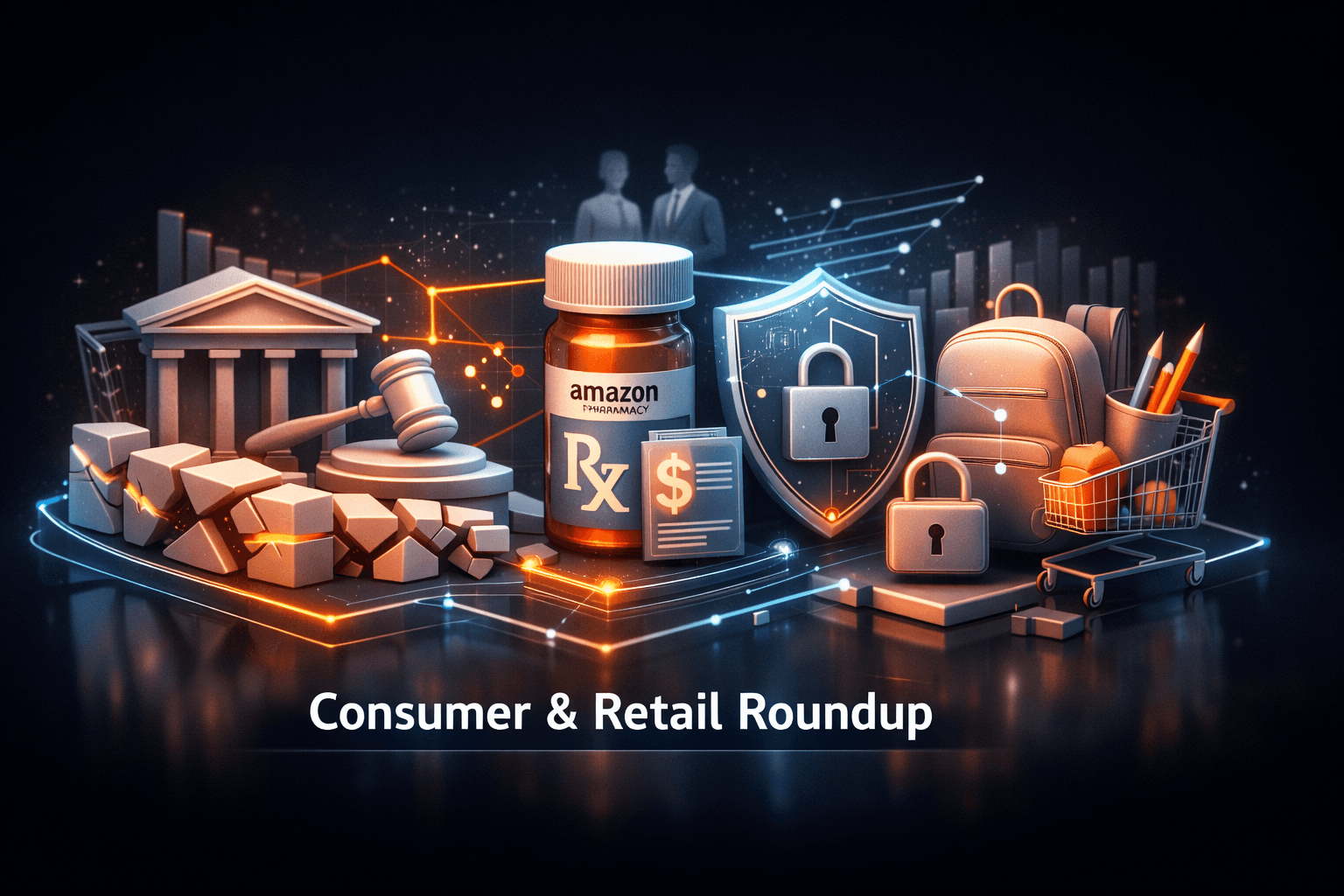
A mix of strategic repositioning and operational disruption left the Consumer & Retail sector in a holding pattern heading into the long weekend, as markets were closed after Friday's session. QVC Group won a critical restructuring approval that clears the path to exit Chapter 11, while Amazon's pharmacy business is moving deeper into clinical prescribing workflows.
At the same time, a ransomware attack at Coca-Cola's Fairlife dairy unit and a leadership shakeup at $WMT underscore persistent execution and risk-management challenges. For you as an investor, that means growth stories are intact but so are headline risks that can quickly affect margins and supply chains.
Market Highlights
Markets were closed on Saturday, Jul 18, with the last trading day on Friday, Jul 17. Below are the key overnight and pre-market developments to note before markets reopen on Monday.
- QVC Group, backed by parent companies in the home-shopping space, got court approval to cancel more than $5 billion in debt, moving closer to a Chapter 11 exit and freeing up capital for live social shopping initiatives, according to Digital Commerce 360.
- $AMZN, through Amazon Pharmacy, announced a collaboration with eNavvi to embed pricing, availability and delivery data into clinicians' prescribing workflows, aiming to reduce friction in medication fulfillment.
- $WMT confirmed the departure of its U.S. chief operating officer, a notable leadership change about five months after John Furner became CEO, Retail Dive reports.
- $KO reported a ransomware incident at its Fairlife dairy unit that forced a suspension of U.S. production while investigations continue, raising near-term supply concerns.
- Instacart expanded its in-store capabilities by acquiring Arpalus, adding smartphone-based shelf-scanning and inventory tools to its portfolio, Grocery Dive notes.
- Retail indicators show strong seasonal demand, with back-to-school spending forecast to reach record highs, though affordability remains a key consumer concern.
- $PEP said it improved sustainable sourcing but delayed emissions reporting as it reset targets to what it has confidence it can achieve.
Key Developments
QVC Group court approval brings restructuring closer to exit
Judge approval to eliminate more than $5 billion of debt gives QVC Group a clearer path out of Chapter 11. For the retailer, that could mean an ability to invest in live commerce and holiday sales programs without the drag of legacy liabilities.
Analysts note you should watch the timing of the formal exit and any post-exit capital allocation plans. Will management prioritize customer acquisition or technology upgrades first? Both paths have different margin implications.
Amazon Pharmacy embeds pricing into prescribing workflows
$AMZN's tie-up with digital prescription platform eNavvi aims to surface price, inventory and delivery options at the point of prescribing. That could turn more physician visits into immediate fill opportunities and speed adoption of lower-cost options for patients.
For retailers and pharmacy chains, this is a competitive signal. You should consider how pricing transparency may shift share among pharmacy players and whether margin pressure could follow from increased price visibility.
Cyber and leadership risks highlight operational fragility
The ransomware attack at Fairlife and the departure of Walmart's U.S. COO are reminders that operational events can have outsized impacts. Coca-Cola paused production at the affected dairy unit while it assesses the breach, and $WMT's leadership turnover arrives amid broader strategic adjustments.
These developments show that even large companies are vulnerable to tech-driven disruptions and executive changes. It's a double-edged sword for investors looking for secular growth amid ongoing operational risks.
What to Watch
Here are the catalysts and risks that could move sentiment when markets reopen on Monday.
- QVC exit timeline: Track court filings and any creditor settlements, which will clarify how quickly the retailer can redeploy capital toward growth.
- Back-to-school data and consumer affordability: Weekly sales, ticket sizes and promotional intensity will show whether record spending forecasts translate to real revenue and better margins.
- Cybersecurity fallout at $KO: Monitor production restart timelines and any supplier or retailer notices that could affect inventory and pricing.
- $AMZN healthcare integration: Watch for adoption signals from physician networks and any regulatory scrutiny of prescription-routing or pricing transparency.
- Instacart's Arpalus integration: Look for pilot results with retail partners that could improve shelf availability and cut in-store labor costs.
- Leadership moves at $WMT and other majors: Management changes can influence execution on initiatives like store refreshes and omnichannel rollout, so pay attention to successor announcements.
Which of these matters most to you? Your priorities will shape whether you focus on growth narratives or defensive exposure over the near term.
Bottom Line
- QVC's restructuring approval reduces leverage risk and may allow investment into live commerce, analysts note, but the timeline and execution are key.
- $AMZN's pharmacy-eNavvi move increases pricing transparency at the point of care, which could reshape pharmacy competition and fulfillment economics.
- Operational disruptions and leadership turnover at large retailers underscore event risk; keep an eye on supply chain notices and management plans.
- Back-to-school demand looks strong, yet affordability concerns may force heavier promotions and compress margins for some chains.
- Technology plays, like Instacart's Arpalus deal, show retailers and platforms are still investing to drive in-store efficiency and better inventory accuracy.
FAQ Section
Q: Will QVC's restructuring mean a quick turnaround for the business? A: Court approval is a major step, but a full turnaround depends on management's post-exit capital allocation and execution on live commerce strategies.
Q: How serious is the Coca-Cola ransomware issue for the broader supply chain? A: The Fairlife outage is localized for now, but it highlights the contagion risk of cyber incidents; watch for production restart dates and retailer inventory alerts.
Q: Does Amazon Pharmacy's new integration pose an immediate threat to traditional pharmacies? A: It increases pricing transparency and convenience at prescribing time, which could accelerate shifts in where patients fill prescriptions, but adoption will take time and depend on provider uptake.