The Big Picture
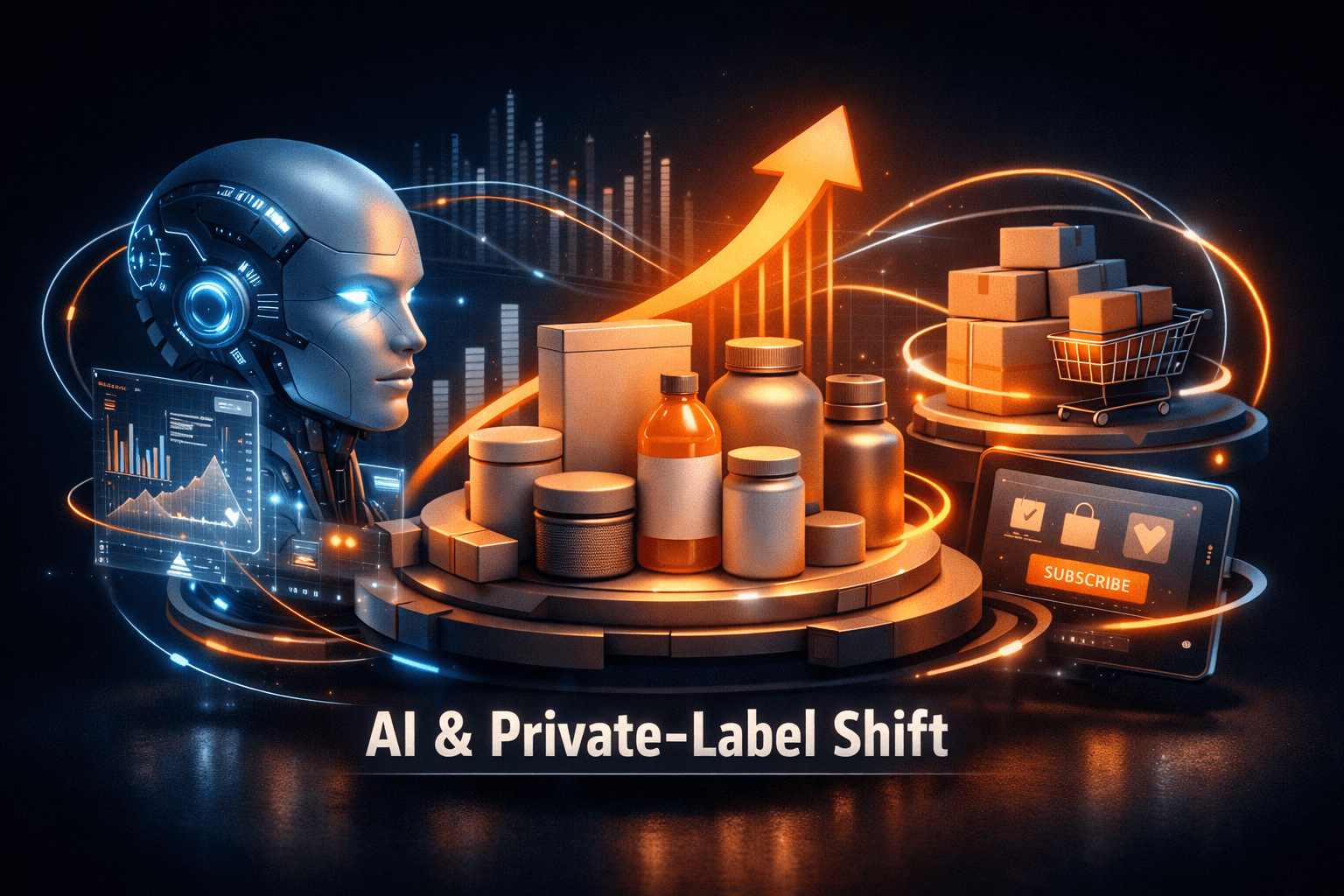
Today's backdrop for consumer and retail is defined by transformation, not retrenchment. Retailers and manufacturers are moving beyond cost-driven tactics and into AI, premium private label, subscription models, and pragmatic automation that together signal structural growth opportunities.
Why does this matter to you as an investor? These shifts touch margins, customer lifetime value, inventory risk, and recall exposure, all of which influence revenue durability and capital allocation decisions at public retailers and branded manufacturers.
Market Highlights
Quick takeaways from today's reporting offer concrete signals about where momentum is building.
- AI experiments are widespread: roughly 93 percent of grocers surveyed are testing AI tools, a figure that highlights scale of investment in $KR, $WMT and regional chains.
- Subscription traction: a NYC-born bone broth brand now fulfills about 10,000 orders a month after pivoting to a national subscription model, showing DTC unit economics can scale.
- Supply and automation wins: three manufacturers, including Boxed Water, streamlined end-of-line palletizing without buying expensive robots, underscoring quicker ROI on pragmatic automation.
- Food safety upgrades: smarter traceability is producing faster, more precise recalls, which limits downside risk and protects brand value.
- Marketing hesitancy: a Modern Retail+ survey of more than 100 marketing professionals found advertisers are slower to use AI for influencer and CTV channels than for social and retail media.
Key Developments
AI adoption grows, trust becomes the bottleneck
Reports show near-universal AI experimentation in grocery and retail, yet the real barrier is trust. Grocers are piloting recommendation engines, demand forecasting and customer engagement tools, but analysts note performance and transparency will determine whether AI moves from pilot to profit center.
Can retailers translate AI-driven discovery into durable loyalty? The answer will shape marketing spend efficiency and customer lifetime value across omnichannel players.
Private label moves up the value chain
Private label is no longer just about lower prices. Today’s pieces show private brands are competing on quality, formulation and branding, attracting shoppers who once preferred national labels. That evolution can bolster margins for retailers that get product development and positioning right.
For you watching results, expect retailers with strong private-label strategies to show improved gross margins over time, provided they maintain supply and quality controls.
Operational tech and safety improvements cut costs and risk
Manufacturers solving palletizing and end-of-line challenges without heavy capital outlay are shaving labor costs and improving throughput. Meanwhile, smarter traceability is making recalls faster and more targeted, which reduces financial and reputational fallout.
These practical gains are worth keeping an eye on because they directly affect working capital and loss expectations for both branded producers and grocery chains.
What to Watch
Several catalysts and risk items will steer stock reactions in the days ahead. Keep your focus on a few high-impact areas.
- AI rollouts and proof points: monitor pilot-to-production announcements and metrics like conversion lift, repeat purchase rate and forecast accuracy from large grocers and omnichannel retailers.
- Earnings season signals: watch commentary from major grocers and retail chains on private-label margin contribution and DTC subscription economics in quarterly calls.
- Supply chain automation adoption: new implementations that deliver clear ROI will be a positive sign for margin improvements.
- Regulatory and recall activity: increased precision in recalls reduces headline risk, but any high-profile safety incident can still move shares quickly.
- Marketing mix shifts: advertisers delaying AI for influencer and CTV channels may slow short-term ROAS gains, so track marketing efficiency metrics closely.
Bottom Line
- AI is driving experimentation at scale, but trust and measurable results will determine winners and losers in the next 12 months.
- Private label premiumization is broadening retailers' margin opportunities, provided quality and supply stability are maintained.
- DTC subscription success stories show niche brands can scale repeat revenue, which alters competitive dynamics for larger food and beverage companies.
- Operational tech and smarter traceability lower cost and risk, improving the durability of earnings for manufacturers and grocers.
- Stay selective, and watch pilots, earnings commentary, and recall incidents for the clearest signals about durable change.
FAQ Section
Q: How widespread is AI use in grocery retail today? A: Data suggests about 93 percent of grocers are experimenting with AI tools, with varied focus areas from forecasting to customer engagement.
Q: Are private-label products still just low-cost options? A: No, reporting shows private label is increasingly positioned for quality and branding, not just price, which can support better margins.
Q: What metrics should you track for DTC subscription brands? A: Key metrics include monthly orders, repeat purchase rate, churn, and customer acquisition cost relative to lifetime value.