The Big Picture
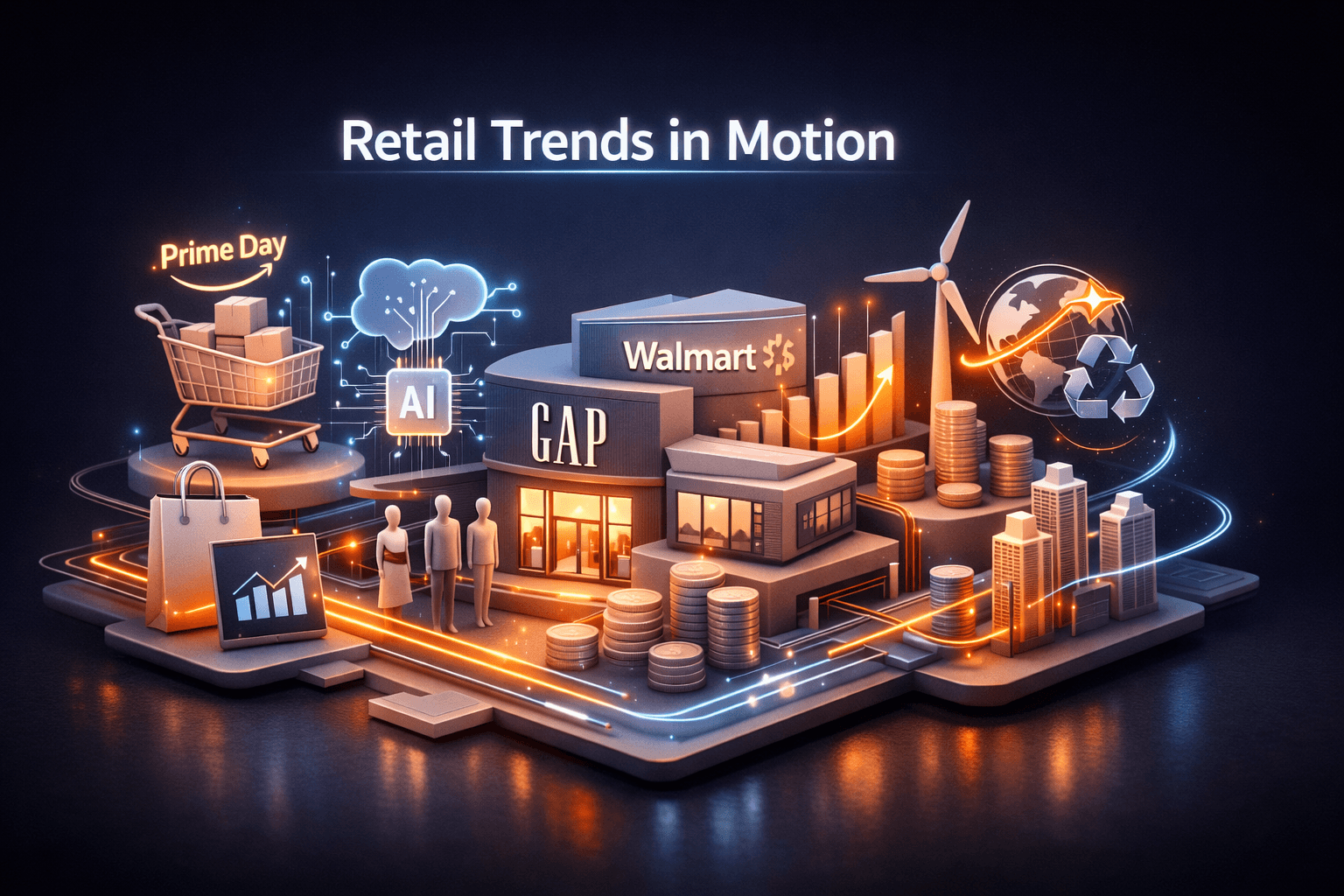
Retail momentum carried into today as major players lean into AI, advertising and sustainability while ecommerce demand shows resilience. Adobe Analytics data put U.S. ecommerce sales for the first 24 hours of Amazon Prime Day at $8.3 billion, up 5.3% year over year, and that surge is shaping how brands and platforms plan the rest of the year.
You should note that today’s developments matter because they point to where retailers will spend, what channels they’ll prioritize and which margins could expand. As you read on, look for how AI deployments and ad tech investments could change customer acquisition costs and lifetime value.
Market Highlights
Quick hits to start the day, so you can act on the headlines you care about.
- Amazon Prime Day 1 U.S. ecommerce sales reached $8.3 billion, a 5.3% gain versus the first 24 hours of last year, according to Adobe Analytics.
- Trashie launched a $35 take-back service for toys, expanding its 2024 textile program into a new sustainability vertical.
- Salesforce rolled out AI agents and enhanced B2B ecommerce features in Agentforce Commerce, signaling faster AI adoption by merchants.
- Gap Inc. is overhauling marketing with Google Cloud, Zeta Global and Publicis Sapient to push AI-driven personalization across channels.
- Walmart moved to bolster its higher-margin ad business with the acquisition of CTV tech platform Vibe.co.
- GameStop’s board canceled a previously proposed performance package for CEO Ryan Cohen, a package reportedly valued at $35 billion, as attention shifts to a potential eBay deal.
- Hershey named Heather Hoytink, a PepsiCo veteran, as president of its U.S. business effective July 8.
Key Developments
AI is the theme: Salesforce, Gap and the limits brands set
Salesforce announced AI agents and expanded B2B features in Agentforce Commerce, aiming to streamline purchasing and search for merchants. Gap said it will partner with Google Cloud, Zeta Global and Publicis Sapient to overhaul marketing with AI to improve relevance and reduce friction online.
At the same time, industry reporting highlights a shift in executive thinking about where AI shouldn’t be used. That mix of adoption and guardrails tells you companies are chasing efficiency while trying to protect brand and compliance risk.
Advertising and ecommerce platform plays: Walmart and TikTok Shop
Walmart’s acquisition of Vibe.co is a clear push into higher-margin ad and CTV inventory, fitting a broader trend where retailers monetize shopper data. Analysts note this could lift ad revenue mix over time and improve gross margins for $WMT compared with pure retail margins.
TikTok Shop’s Deals For You Days shows marketplaces are creating new promotional calendars to capture discovery-driven shopping. If you sell or follow marketplace sellers, these events may set the tone for customer acquisition cost benchmarks ahead of peak season.
Sustainability and corporate focus: Trashie, Hershey and GameStop governance
Trashie’s new $35 toy take-back service expands a consumer sustainability play that could reduce waste and create recurring revenue for a niche audience. Sustainable offerings can be a differentiator for brands and give you a different lens into durable consumer preferences.
Hershey named Heather Hoytink to run its U.S. business starting July 8, bringing in a PepsiCo executive to oversee confection and snacks. Governance moves at GameStop, including nixing a $35 billion CEO performance award, suggest boards are refocusing incentives around strategic deals rather than headline compensation.
What to Watch
Here are the near-term catalysts and risks that could move names you care about today. Will AI deployments translate into measurable sales lift or just lower costs? That’s one open question to monitor.
Watch upcoming earnings and guidance from major retailers after Prime Day, because Adobe’s early sales data suggests a healthy start but full-event performance will refine the story. Also keep an eye on any details from Walmart on Vibe.co integration and ad revenue targets.
For brand investors, monitor rollout timelines from $CRM and $GPS for their AI initiatives and the first-party data strategies that will underpin personalization. You should also track regulatory or privacy updates that could affect CTV and ad targeting across platforms.
Bottom Line
- Retailers are accelerating AI adoption while setting boundaries, combining efficiency with brand protection.
- Ecommerce demand held up during Prime Day’s first 24 hours, with $8.3 billion in U.S. sales and 5.3% year over year growth, implying continued consumer spend online.
- Walmart’s ad tech deal and TikTok Shop promotions point to higher-margin revenue streams becoming central to retailer strategies.
- Sustainability and governance moves from Trashie, Hershey and GameStop show the sector is balancing growth with long-term brand and operational priorities.
- Keep your focus on execution details, integration timelines and any regulatory shifts that could change how data and ads are monetized.
FAQ Section
Q: How significant was Prime Day for ecommerce this year? A: Adobe Analytics reported $8.3 billion in U.S. ecommerce sales during the first 24 hours, a 5.3% increase year over year, making it the largest ecommerce day so far this year.
Q: What should investors watch about retailers using AI? A: Watch whether AI projects from vendors like $CRM and initiatives at $GPS deliver measurable lifts in conversion or meaningful reductions in marketing costs, and follow any privacy rules that could limit targeting.
Q: Why does Walmart’s Vibe.co buy matter? A: The acquisition strengthens $WMT’s ad tech and CTV capabilities, which analysts say could boost higher-margin revenue and diversify earnings beyond traditional retail sales.