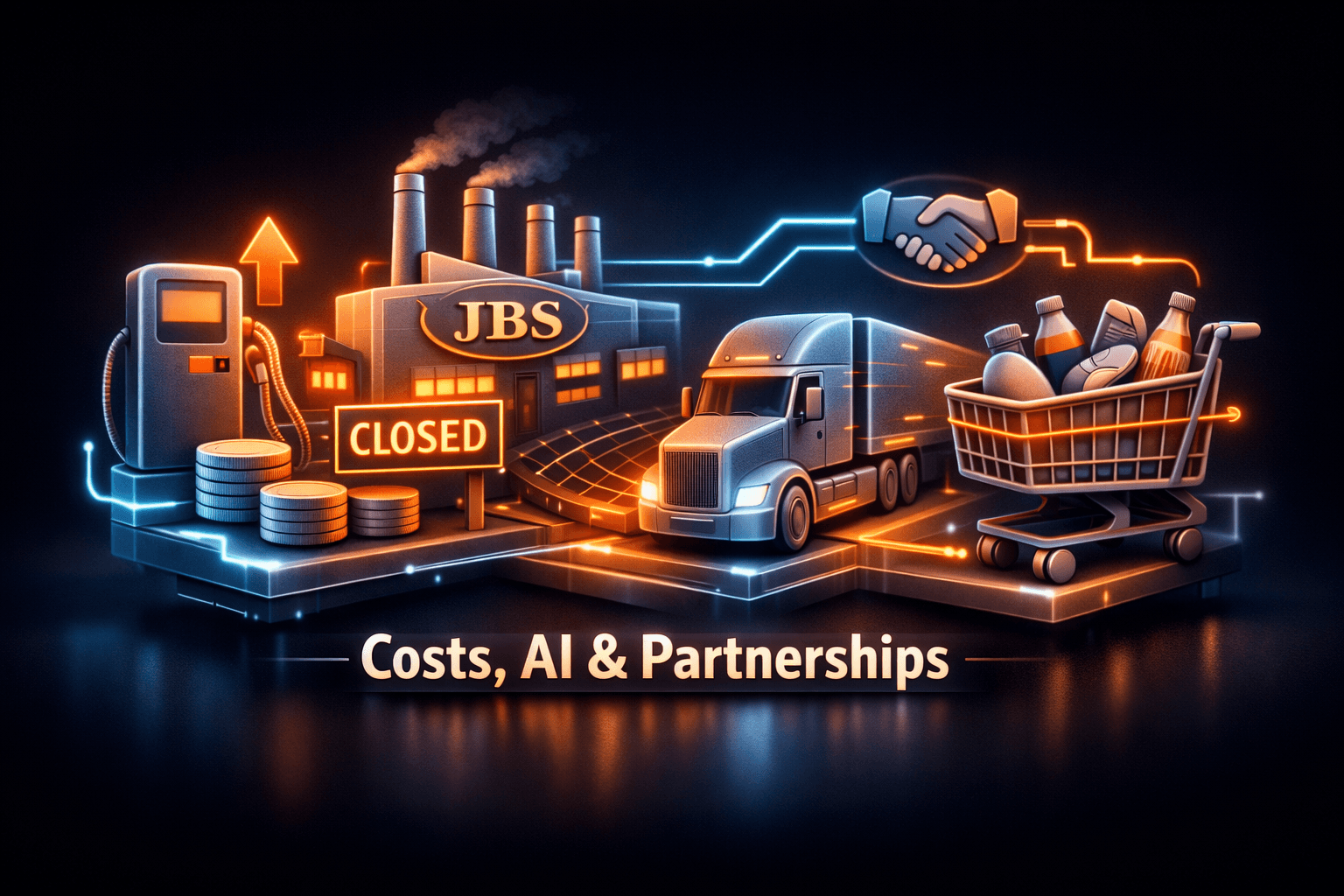
The Big Picture
Today’s Consumer & Retail headlines paint a market in transition, where cost pressures collide with fast-moving innovation. Rising fuel costs and a major plant closure are tangible near-term headwinds, but retailers and CPG companies are doubling down on AI, automation and creative merchandising to protect margins and drive sales.
That balance matters for you if you follow retail and grocery names, because the winners this year may be the companies that can both manage logistics costs and use technology and partnerships to keep customers engaged. How companies respond over the summer will tell you a lot about profit resilience across the sector.
Market Highlights
- Dick’s Sporting Goods $DKS plans to expand Lids shop-in-shops to 100 locations by the end of summer, with 46 currently open, offering growth in accessory categories.
- JBS will close a Pennsylvania beef processing plant and lay off at least 2,000 workers as part of a manufacturing reshuffle, signaling supply-chain and labor disruption in meat production.
- Brands are raising free-shipping thresholds and testing new delivery fees as rising fuel costs push up transportation expenses for retailers and direct-to-consumer sellers.
- PepsiCo $PEP signed a multiyear deal to expand autonomous truck use with Gatik to bolster capacity in hard-to-staff parts of its network.
- Target $TGT shareholders rejected a proposal to require the board chair be independent, keeping Brian Cornell as executive chairman amid governance scrutiny.
- Dollar General $DG promoted Travis Nixon to chief data and AI officer, signaling a wider move to embed AI into store operations and merchandising.
Key Developments
Rising fuel costs change shipping math
Retailers and brands are responding to higher fuel prices by raising free-shipping thresholds, adding delivery fees and experimenting with paid shipping models. Those moves aim to recapture margin pressure from logistics, but they can also affect conversion and average order value.
What should you watch for? Monitor consumer response to higher checkout fees and any pushback in e-commerce conversion rates. If delivery fees accelerate cart abandonment, companies may have to trade off price for growth.
AI and product pages get a retail makeover
Retailers are redesigning product pages to be more discoverable by AI agents such as ChatGPT, Claude and Gemini. That means richer structured data, clearer product copy and formats that help automated assistants answer buyer queries.
This shift could alter how you think about digital shelf competition, because discoverability to AI may soon be as important as search engine optimization. Companies that move faster stand to capture referral traffic from AI-driven shopping behaviors.
Partnerships, in-store concepts and creative marketing
Brick-and-mortar merchandising is showing momentum. $DKS is rolling out 100 Lids shop-in-shops to expand licensed headwear distribution, and Target $TGT is reviving a designer collaboration with Isaac Mizrahi to boost apparel appeal. Aldi is leaning into an unboxing trend with Blind Boxes to drive shopper excitement.
These initiatives show retailers are trying to trade on experience and novelty as online and offline competition intensifies. For you, that means look for differentiated formats and exclusive assortments that could help same-store sales.
Automation and executive moves reshape cost structures
PepsiCo $PEP’s multiyear deal to expand autonomous trucking with Gatik targets hard-to-staff lanes and suggests longer-term savings in transport costs. Dollar General $DG named Travis Nixon chief data and AI officer, signaling a push to use optimization and AI to reduce costs and improve stocking.
At the same time, JBS’s plan to close plants and cut at least 2,000 jobs underscores ongoing labor and capacity challenges in food processing. Automation may ease pressure over time, but disruptions can be immediate and material.
What to Watch
Keep an eye on fuel price trends and any broad changes in fuel surcharges announced by major carriers. Those moves will affect shipping cost outlooks for DTC brands and national retailers alike.
Watch earnings and commentary from major retail and grocery chains this summer for how they’re passing or absorbing higher logistics costs. Pay attention to mentions of AI-driven merchandising, autonomous transport pilots and new store concepts in prepared remarks. Are companies prioritizing margin protection or top-line share?
Also monitor governance and investor sentiment at large-cap retailers after the Target $TGT board vote. Will activist pressure or proxy proposals resurface later? And on the supply side, see whether JBS cost-cutting leads to higher wholesale meat prices that flow through to grocers.
Bottom Line
- Pressure on logistics costs is a clear near-term headwind; expect more shipping fee experiments and price threshold adjustments.
- AI and automation are being deployed across merchandising and logistics, which could help margins over time but will create winners and losers in the near term.
- Partnerships and in-store concepts are busy tools to drive foot traffic and differentiation as online competition intensifies.
- Watch summer earnings and commentary for how companies plan to balance margin protection with market share goals; you should note any change in language around fees, labor and automation.
- Operational disruptions like JBS plant closures can create supply shocks, so track category-level price effects in grocery and foodservice.
FAQ Section
Q: How will higher fuel costs affect retailers? A: Higher fuel costs raise transport expenses, prompting retailers to raise shipping thresholds and add delivery fees to protect margins; consumer response will determine the net impact.
Q: Can AI changes to product pages boost sales quickly? A: Data suggests AI-friendly pages improve discoverability to digital assistants, but measurable sales gains will depend on implementation speed and how shoppers use AI agents.
Q: Should I worry about JBS plant closures? A: Plant closures and layoffs can cause short-term supply constraints and price volatility in meat categories, so you should watch wholesale prices and grocer margin commentary.