The Big Picture
Today the Consumer & Retail sector looked like a study in contrasts, with technology and strategic repositioning pushing growth initiatives while regulatory and cost pressures cropped up for grocers and suppliers. You saw big tech move deeper into checkout, traditional retailers double down on AI, and private-label and grocery players facing potentially higher waste costs.
That mix matters because it affects revenue drivers, margins and where you might focus your attention tomorrow. Read between the lines to separate durable tailwinds from nearer-term headwinds, and ask which stories will most affect margins across retail subsectors.
Market Highlights
Here are the day's top takeaways and concrete data points from company and industry reports.
- John Deere ($DE) reported fiscal Q2 worldwide net revenue growth of 5 percent and disclosed a $272 million refund related to tariff costs, underscoring both demand resilience and input cost volatility.
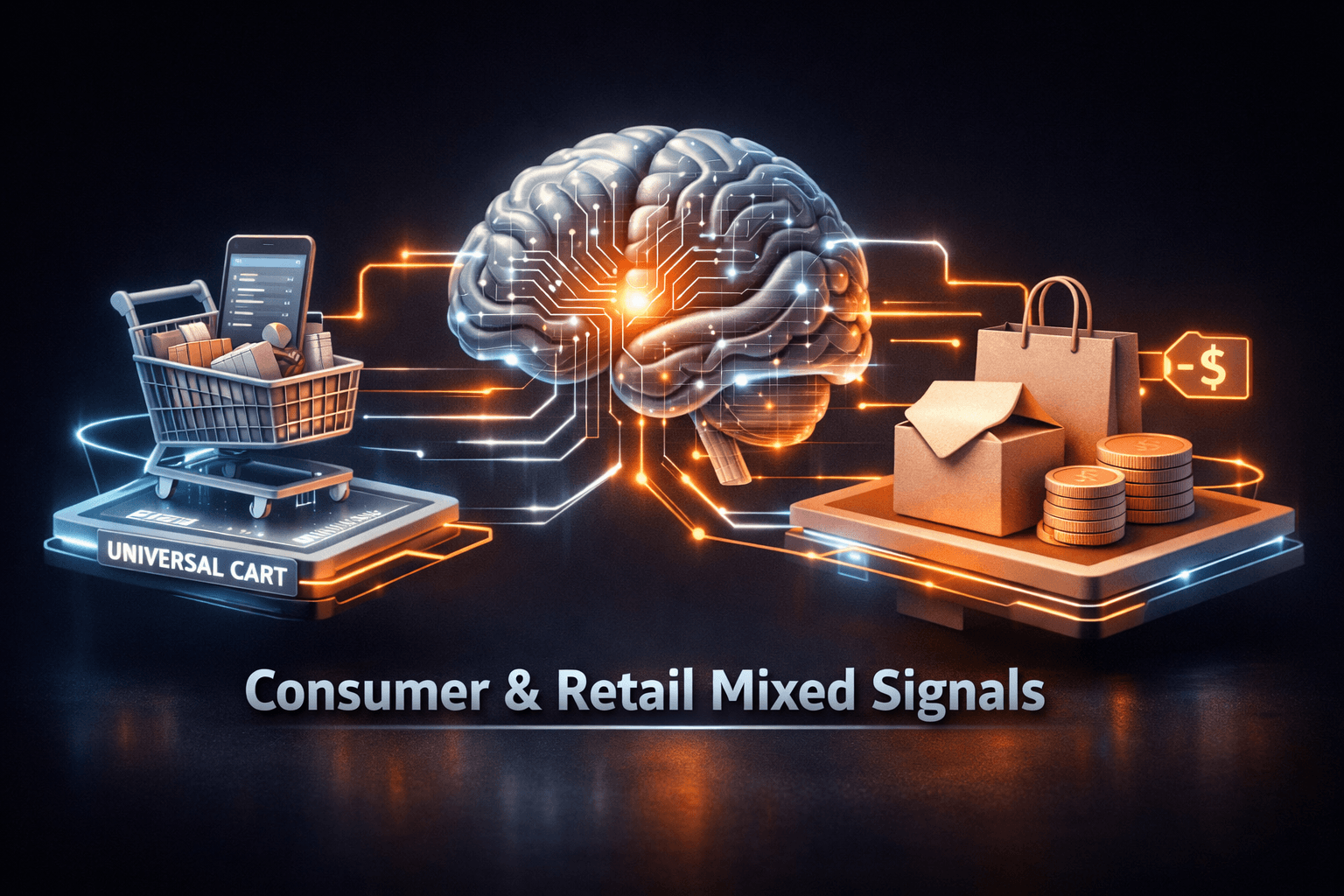
- Google ($GOOGL) launched a Universal Cart that lets shoppers add items across merchants from Search, Gemini, YouTube and Gmail, a move that could streamline checkout and raise conversion rates for participating merchants.
- Lowe's ($LOW) is leveraging AI tools and associate-led services to boost online conversions and strengthen DIY customer relationships, highlighting omnichannel investments paying off.
- RedSail relaunched its PrimeRx marketplace as RxMarket to support independent pharmacies with pricing visibility and purchasing efficiency amid rising financial pressure.
- Policy risk increased for grocers after multiple states passed extended producer responsibility rules that shift packaging waste costs onto retailers and brand owners, a trend consultants say will force strategic decisions and higher costs for private label programs.
Key Developments
Google’s Universal Cart pushes cross-retailer checkout
Google rolled out a Universal Cart that lets consumers add items across merchants from Search, Gemini, YouTube and Gmail. That integration simplifies discovery to checkout, and analysts note it could boost conversion rates for merchants that tie into Google’s commerce layer. How will retailers respond, and will you see a pickup in cross-channel sales as adoption grows?
Retailers pivot to AI and customer-first experiences
Lowe's is using AI-enhanced omnichannel features, associate-led services and loyalty options to court DIY shoppers and increase online conversions. Data suggests personalization and staff-led service remain key conversion levers. Meanwhile, apparel and athleisure brands are diversifying into new activity niches like tennis and pickleball, a clear sign of brand-level growth experimentation.
Grocers face regulatory and cost pressures
Legislation in several states now makes grocers responsible for managing packaging waste for their private-label products. Consultants from AlixPartners warn these extended producer responsibility fees will force retailers and suppliers to reconsider packaging, pricing and product mixes. If you follow grocery chains, expect margin planning and private-label strategies to come under fresh scrutiny over the next quarters.
What to Watch
Focus on catalysts and risk factors that will shape performance in the coming sessions and quarters.
- Adoption of Google’s Universal Cart, and whether merchants report measurable lift in cross-site conversions. Watch merchant partnerships announced over the next 30 to 90 days.
- Retailers' AI rollouts and measurement. Check for early conversion metrics from $LOW and other omnichannel players to see if digital investments translate into sustained sales gains.
- State-by-state implementation of extended producer responsibility rules and any federal guidance. These rules could create material cost shifts for private label and margin pressure for grocers like $KR and big-box operators like $WMT.
- Management moves and brand strategies, including Lidl US installing Alan Barry as CEO in July, which could signal operational priorities that affect pricing and store strategy.
- Independent pharmacy dynamics after RedSail’s RxMarket relaunch, and whether greater pricing visibility eases margin pressure for local pharmacies.
Which companies will absorb new fees and which will pass costs to consumers? That question will be central to earnings calls and pricing strategies in coming quarters.
Bottom Line
- Tech-driven commerce is making checkout smoother, which could lift conversion for merchants that integrate with Google’s Universal Cart.
- AI and associate-led experiences are working to convert DIY shoppers, but retailers must show sustained ROI on digital investments.
- New packaging-fee legislation creates a meaningful headwind for grocers and private label programs, and that risk could pressure margins sector-wide.
- Corporate moves like Lidl US's CEO appointment and Shoe Carnival ($SCVL) reversing a rebanner strategy signal active portfolio management across retail categories.
- Smaller innovations in snacking and athleisure point to category-level growth opportunities, even as cost pressures persist elsewhere.
FAQ Section
Q: How could Google’s Universal Cart affect small and mid-size retailers? A: The feature can increase checkout convenience and potentially conversions for merchants that integrate with Google, but success will depend on implementation costs and traffic quality.
Q: What does the extended producer responsibility legislation mean for grocery margins? A: The rules shift waste management costs toward retailers and brand owners, which analysts say could compress private-label margins unless costs are passed to consumers or packaging is redesigned.
Q: Should I expect immediate margin relief for farmers from John Deere’s tariff refund? A: Deere disclosed a $272 million tariff refund in the quarter, which helped reported results, but broader cost pressures like fuel and tariffs remain variables you should monitor during upcoming earnings cycles.