The Big Picture
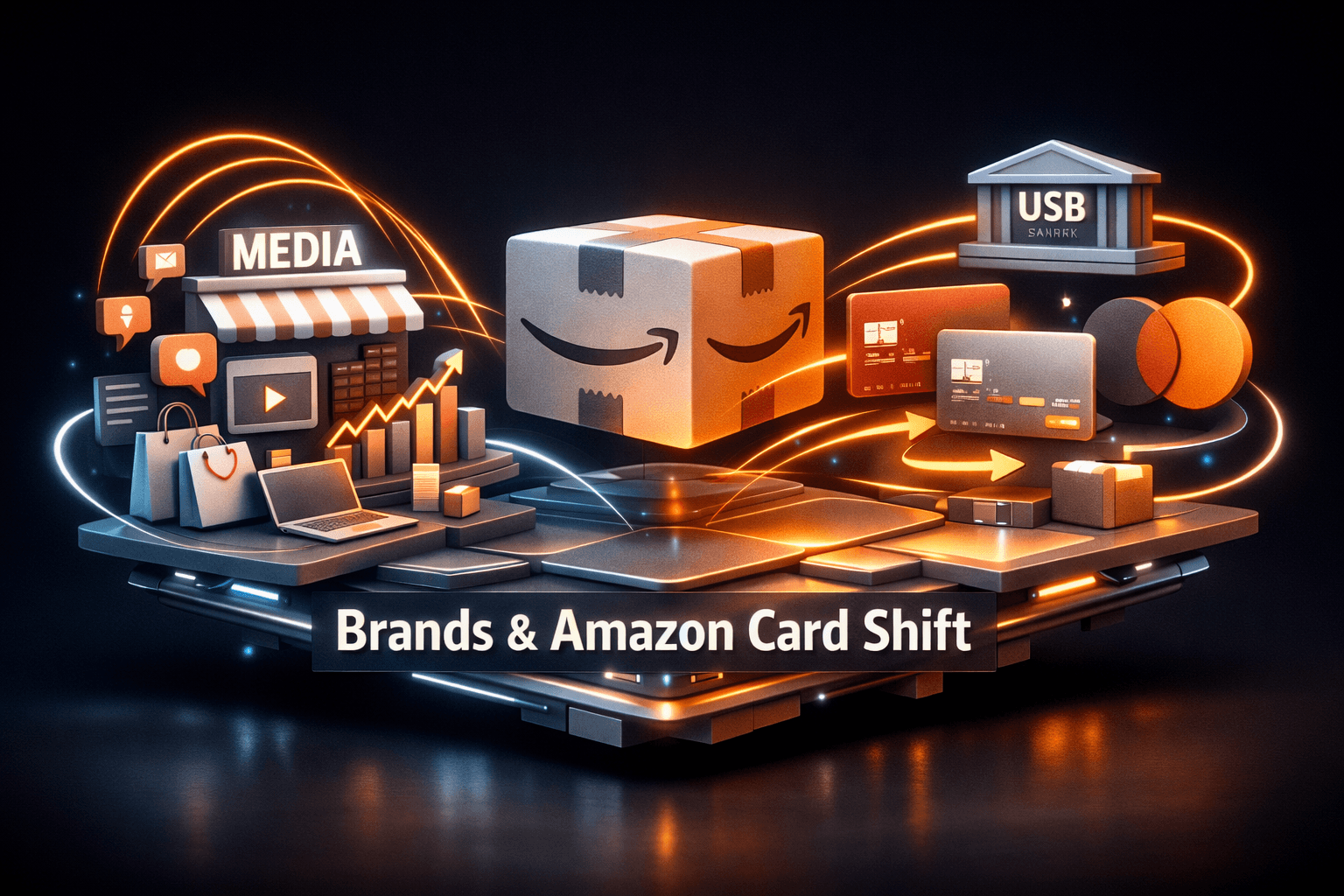
Two developments this weekend underline how consumer brands and retail giants are building new revenue and engagement levers. First, smaller and niche brands are treating content as a direct route to customer attention, using shows and podcasts to build loyalty. Second, Amazon is reconfiguring its Business credit card program, moving new issuance to U.S. Bank and Mastercard and adding rewards and financing features for commercial buyers.
These moves matter because they touch the two pillars of retail economics, customer acquisition and payment monetization. If you follow retail, these stories are food for thought on where marketing budgets and payments partnerships are headed, especially as markets reopen Monday after the long weekend.
Market Highlights
Note: U.S. markets are closed Sunday, May 17. The last trading day was Friday, May 15 and the next open session is Monday, May 18.
- Amazon $AMZN announced changes to its Amazon Business card program, shifting new applicants to U.S. Bank $USB and Mastercard $MA as of May 13, with reporting on the change published May 15.
- American Express $AXP will no longer be the issuer for new Amazon Business applicants, a notable change for payment networks and issuer economics.
- Prince Street Pizza and other niche brands are increasingly producing owned-media content, exemplified by Prince Street Pizza's "Delivering Happiness" talk show launched last September, which aims to boost brand awareness without relying on traditional ad buys.
Key Developments
Amazon Business moves to U.S. Bank and Mastercard
Amazon introduced a revamped Prime Business Card and Amazon Business Card on May 13 and new reporting confirmed the issuing partners will be U.S. Bank and Mastercard for new applicants. Analysts note this shifts Amazon's payment mix away from American Express for new signups and adds broader rewards and financing tools aimed at business buyers.
For your portfolio perspective, the change could benefit payment processors and card issuers that win volume from $AMZN, while it may reduce prospective new-account flows for $AXP. It also signals Amazon's continued push to deepen services tied to its commerce platform.
Brands act like media companies, Prince Street Pizza case
Modern Retail highlighted how Prince Street Pizza operates an online talk show, Delivering Happiness, hosted by actor Nick Turturro, to drive brand awareness and engagement. The show launched last September and reflects a wider trend where brands invest in owned content to reach audiences directly.
That matters because owned-media lowers dependency on paid channels and gives you a first-party relationship with customers. For retailers, stronger direct-engagement capabilities can improve customer lifetime value and reduce acquisition costs over time.
What to Watch
As markets are closed, you'll want to monitor these catalysts ahead of the next session on Monday, May 18. Watch how the stocks and payment partners react once trading resumes.
- Monday session reaction: Check $AMZN, $MA, $USB, and $AXP for volatility tied to the card issuer shift. Traders will re-price issuer economics and market-share implications.
- Ad and content budgets: Look for commentary from retailers and CMOs about reallocating spend to owned channels. Will you see more brands launch podcasts or video series in 2026?
- Merchant pricing and acceptance: Monitor industry commentary on interchange economics and any merchant incentives tied to the new Amazon Business cards.
- Retail earnings and guidance: Upcoming quarterly reports may mention payments partnerships or direct-to-consumer content strategies. Those disclosures will help you judge scale and ROI.
Stay alert to regulatory or partnership announcements that could follow, and track any analyst notes on payment issuer margins or brand marketing effectiveness.
Bottom Line
- Amazon's move to $USB and $MA for Amazon Business cards signals a strategic push to enhance payments and financing tools for commercial buyers, which could shift card volume among major issuers.
- Brands producing owned-media content are competing for attention in-house, which can lower long-term customer acquisition costs and improve loyalty metrics.
- These trends are complementary, with payments innovation supporting commerce and content helping conversion, creating multiple pathways for revenue expansion.
- Watch trading when markets reopen on Monday, May 18 for reactions across $AMZN, $MA, $USB, and $AXP, plus any follow-up announcements from retailers about content strategies.
- Data suggests momentum, but analysts note execution risk and timing will vary by company and market segment.
FAQ Section
Q: How does Amazon's card change affect American Express? A: The shift means new Amazon Business applicants will be issued by U.S. Bank and use Mastercard rails, which reduces future new-account issuance for $AXP while existing cardholder arrangements may remain unchanged.
Q: Should brands invest in owned media instead of paid ads? A: Owned media can lower long-term acquisition costs and deepen customer relationships, but you should weigh upfront production costs and audience scale when comparing to paid channels.
Q: What should I watch on Monday when markets reopen? A: Look at price and volume moves for $AMZN, $MA, $USB, and $AXP and any company statements or analyst notes about payments, card economics, or marketing strategy.