The Big Picture
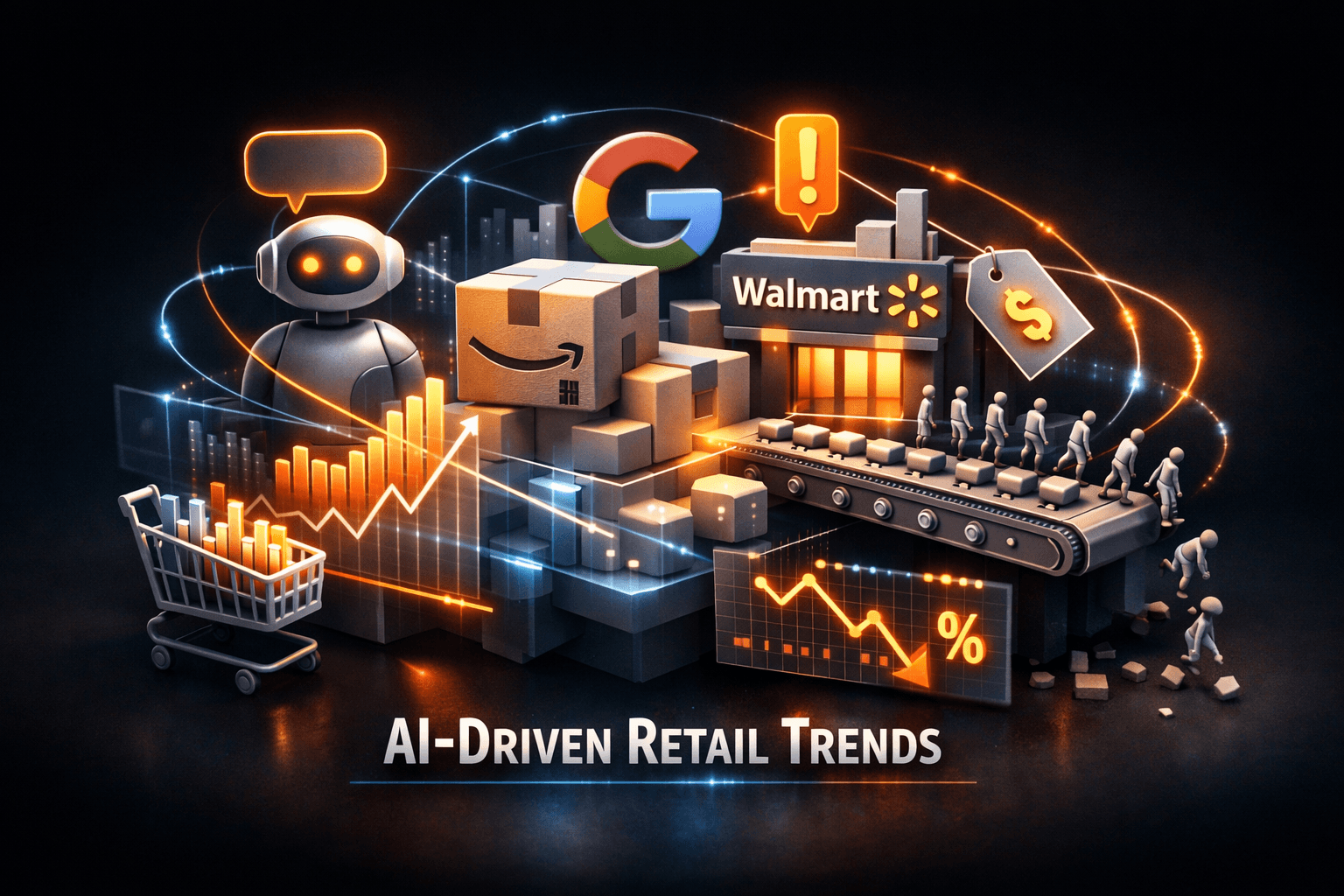
AI is reshaping retail operations and customer experience, with large players racing to embed agentic commerce and internal decision engines while consumer spending remains resilient. You’re seeing rapid tech deployment alongside cost cuts and new regulations, so the sector is moving fast but not without headwinds.
For investors, that means growth and disruption are happening at the same time, and you'll want to weigh innovation catalysts against operational risks and policy changes.
Market Highlights
Major companies and policy moves set the tone overnight and in pre-market headlines. Here are the quick facts you need before the open.
- Tapestry $TPR, owner of Coach and Kate Spade, won a U.S. patent for its internal AI system Mira, built to centralize data and speed decisions.
- Amazon $AMZN rolled out "Alexa for Shopping," combining its Rufus and Alexa+ agents to enable AI-driven purchases.
- Google $GOOGL teamed with Stripe for agentic checkout and partnered with Affirm $AFRM and Klarna to add BNPL options to AI-driven purchases.
- Walmart $WMT will lay off or relocate up to 1,000 corporate roles after a tech and product reorganization.
- April retail sales rose for the seventh straight month, with nearly every category posting gains, according to Retail TouchPoints and NRF commentary.
- Maryland passed the first U.S. ban on data-driven grocery price hikes, limiting dynamic pricing practices but not banning electronic shelf labels.
- Rent the Runway announced founder Jennifer Hyman is stepping down as CEO, with Nordstrom veteran Teri Bariquit named interim chief executive.
Key Developments
AI adoption accelerates, but skills lag
Modern Retail's research shows marketers' measured adoption of AI climbed from 44% in 2022 to 86% in 2025, a steep adoption curve. But the survey also flagged stalled progress on technical skills, which suggests implementation risks even as spending increases.
That raises a question for you, will companies deploy AI fast enough without creating data or governance headaches? Firms that balance investment with training may move ahead of peers.
Platform players push agentic commerce and BNPL
Google's partnerships are widening agentic commerce, with Stripe connecting agentic checkout to major AI platforms and Google adding Affirm $AFRM and Klarna payment options inside AI Mode. Amazon $AMZN pushed its own response with Alexa for Shopping, combining prior voice and agent efforts.
These moves speed customer path to purchase, but they also bring new regulatory and payment risk, and they could reshape merchant fees and conversion dynamics.
Retail fundamentals mixed: sales growth vs. cost cutting
Retail sales climbed for a seventh month in April, signaling resilient consumer demand supported by labor and wage trends. Yet Walmart $WMT's plan to cut or relocate up to 1,000 corporate jobs highlights efficiency drives and organizational realignment across the sector.
Meanwhile, Congress advanced an organized retail crime bill in the House, and Maryland enacted a dynamic pricing ban for groceries, adding regulatory variables that could affect margins and pricing strategies.
What to Watch
Keep an eye on earnings reports and guidance from major retailers this quarter, because they’ll show how AI investments and cost moves are affecting margins. You'll want to track whether improved analytics translate into higher same-store sales or just higher operating expenses.
Watch regulatory developments closely, especially the Senate action on the organized retail crime bill and how states interpret dynamic pricing rules. How will retailers balance flexible pricing and consumer protection concerns?
Monitor vendor and partner rollouts for agentic commerce. Pay attention to BNPL adoption rates inside AI-driven flows and any early merchant fee changes, because those will affect payments revenue and consumer conversion metrics.
Bottom Line
- AI adoption is accelerating across marketing and operations, but talent gaps could slow ROI realization.
- Platform partnerships from $GOOGL, $AMZN, and payment firms like $AFRM are pushing agentic commerce, which may alter conversion funnels and fees.
- Retail demand looks resilient based on April sales, yet cost-cutting at major retailers shows profit pressures and efficiency drives persist.
- New laws and federal bills on pricing and organized retail crime introduce regulatory risk that could affect pricing strategies and inventory loss prevention.
- Be selective and watch upcoming earnings and policy moves, because the next quarter should clarify whether tech investment or cost control is driving results.
FAQ Section
Q: How fast is AI being adopted in retail marketing? A: Modern Retail's survey shows AI adoption jumped from 44% in 2022 to 86% in 2025 among brand and agency professionals.
Q: Will agentic commerce change checkout behavior? A: Early partnerships from $GOOGL, Stripe, and $AMZN suggest agentic checkout could speed purchases and increase BNPL usage, but merchant economics and regulation will influence adoption.
Q: What immediate risks should you monitor? A: Watch corporate cost actions like Walmart's job changes, state pricing laws such as Maryland's ban, and federal movement on organized retail crime legislation, all of which can affect margins and operations.