The Big Picture
FedEx's decision to press into same-day delivery escalates competition in a segment where speed can determine winners and losers. You should note this matters beyond logistics, because faster fulfillment reshapes retailer economics and expectations for omnichannel performance.
Alongside that operational push, the sector saw deal activity and tech investments that suggest companies are sharpening capabilities to protect margins and customer loyalty. From QXO's sizable acquisition to Visa's new AI tools, these moves point to a focus on efficiency, transparency, and marketing innovation.
Market Highlights
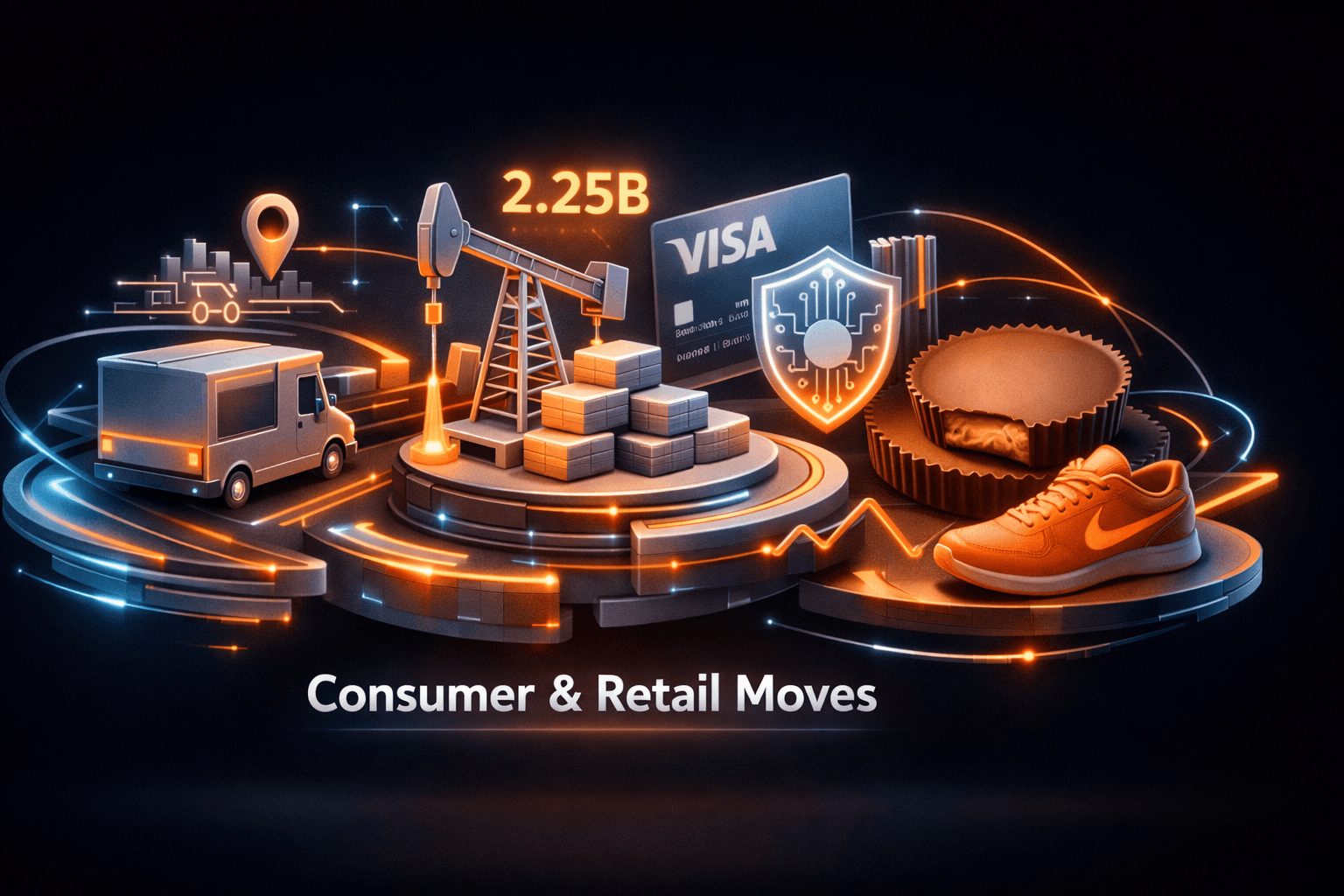
- $FDX: FedEx announced an expanded same-day delivery push, putting it in direct competitive range with $DASH, $AMZN, and $UPS on speed-sensitive fulfillment.
- $QXO: QXO completed its acquisition of Kodiak Building Partners in a transaction valued at about $2.25 billion, signaling consolidation in building-products distribution.
- $HSY: The Hershey Company said it will revert to a classic Reese's recipe starting in 2027 after public criticism, a move aimed at brand trust and core product integrity.
- $HD: The Home Depot named Franziska Bell as CTO effective April 6, underscoring the retailer's continued emphasis on tech-driven operations and customer experience.
- $V: Visa rolled out six AI-powered dispute-resolution tools intended to cut costs and reduce fraud-related losses for merchants and banks.
- $NKE: Nike acknowledged a longer-than-expected recovery, keeping investor patience in focus as management works through its turnaround plan.
Key Developments
FedEx takes the fight to same-day rivals
FedEx's move into same-day delivery puts it in direct competition with delivery and marketplace platforms that have prioritized sub-24-hour fulfillment. For you as an investor, that means logistics players will increasingly battle on network density, pricing, and technology integration, not just capacity.
Short-term pricing pressure and promotional activity are possible as players vie for share. Longer term, successful same-day execution could widen moats for companies that integrate fulfillment with retail and payments ecosystems.
Consolidation and tech leadership: QXO and Home Depot
$QXO closing the $2.25 billion Kodiak Building Partners deal underlines consolidation in building-products distribution, a trend that can create scale benefits for pricing, inventory management, and regional coverage. You should watch integration milestones to see if cost synergies materialize.
$HD appointing Franziska Bell as CTO signals renewed emphasis on digital and operational tech, which can improve supply chain resilience and online conversion rates. Expect Home Depot to highlight tech priorities when Bell assumes duties April 6.
Brands, recipes, and smarter product transparency
$HSY reverting Reese's to a classic recipe shows how reputational pressure and consumer expectations can force product-level change. It’s a reminder that brand trust can have direct P&L implications if consumers react strongly.
Separately, the SmartLabel initiative and wider use of QR codes point to growing product transparency, which could reduce friction for ingredient-sensitive shoppers and create differentiation for brands that volunteer richer information. How will your preferred consumer brands respond? It's a question that could influence loyalty and margins over time.
What to Watch
Look for execution signals and near-term catalysts that will validate these strategic moves. For FedEx, watch pilot market rollouts and any pricing details. For $QXO, monitor early integration guidance and cost-synergy targets.
Keep an eye on Visa's rollout timeline for its six AI dispute tools and metrics showing dispute resolution time and fraud loss reductions. Those numbers will inform how quickly merchants can capture administrative savings and whether adoption drives tangible volume shifts.
Nike's next earnings update and management commentary will be key to assessing whether the turnaround is gaining traction. What will convince you that recovery is sustainable, and when will you see clearer margin improvement?
Also watch marketing experiments around April Fools product drops and Hollister's music-video campaign from Abercrombie & Fitch $ANF, as those items show how brands are trying unconventional tactics to boost engagement. It's too early to read the tea leaves on which ideas scale, but keep an eye on engagement and conversion metrics.
Bottom Line
- FedEx's same-day push raises the stakes in fulfillment; expect short-term competition but potential long-term benefits for firms that execute efficiently.
- Deals and tech hires, led by $QXO's Kodiak close and $HD's new CTO hire, favor companies investing in scale and operational tech to protect margins.
- $HSY's recipe reversal and SmartLabel adoption highlight the growing premium on transparency and product trust among consumers.
- $V's AI tools could cut merchant costs and shrink fraud losses, a positive for payment ecosystems and retailer payment margins.
- Watch $NKE closely for clearer evidence of recovery, as pockets of softness could keep sector sentiment mixed in the near term.
FAQ Section
Q: How quickly could FedEx's same-day push affect retailer costs and delivery times? A: Effects depend on rollout pace and scale, but major changes are typically visible within several quarters as network investments and pricing shifts take hold.
Q: Will QXO's Kodiak acquisition immediately boost margins? A: Acquisitions of this size usually show benefits over time, after integration, so expect initial reporting around synergy targets in upcoming quarters.
Q: How important is recipe change or product transparency to sales? A: Consumer perception can materially affect brand sales, especially for staple products, so moves like $HSY's recipe reversal aim to protect long-term loyalty and shelf demand.