The Big Picture
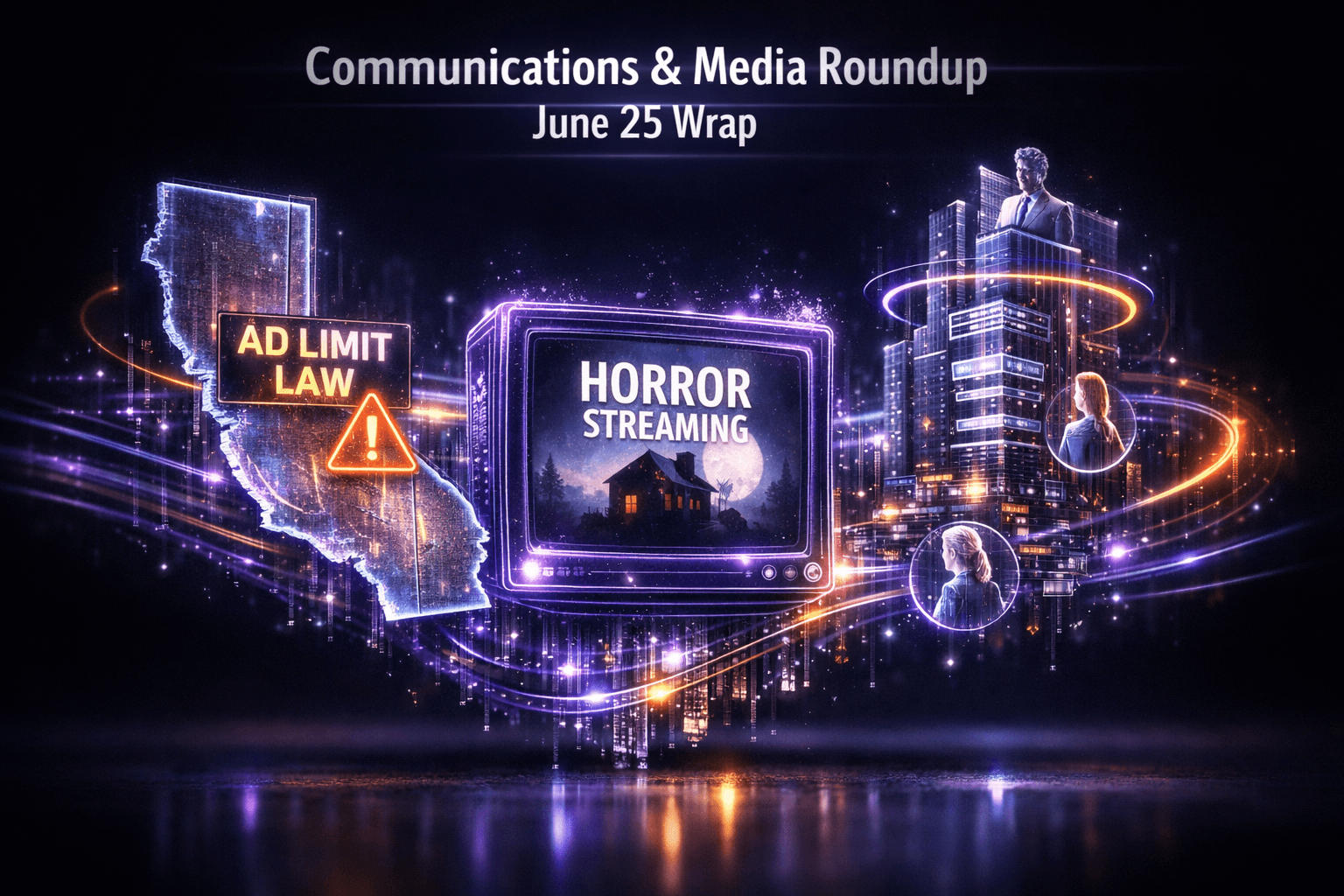
California's incoming law that bars streaming ads from being louder than the surrounding content is the standout item for investors today, because it affects ad-supported business models across the sector and will force platform-level compliance next week.
At the same time you saw creative headlines and new entrants, from Adam McKay hinting at a possible reunion with Will Ferrell to HorrorHound's independent streaming launch on July 1. Those stories matter for sentiment and content pipelines, but they won't move the sector on their own.
Market Highlights
A compact news slate left the headline risk fairly contained, with items touching content, distribution, regulation and hardware. Here are the quick facts you need to scan before tomorrow's open.
- Regulatory: A California law limiting ad loudness for streaming takes effect next week, creating a compliance timeline for ad-supported platforms, platforms like $NFLX, $DIS and $CMCSA's Peacock will need to adapt.
- Content and talent: Director Adam McKay discussed potential renewed collaboration with Will Ferrell, and Seth Rogen signaled he's ready to direct again after years away, matters that influence creative pipelines and publicity rather than immediate financials.
- New launches: HorrorHound announced HorrorHound TV will launch July 1 with festival-backed titles, adding another specialist streamer to an already crowded market.
- Corporate moves: NBC News digital chief Chris Berend is exiting after seven years, a leadership change that could affect digital strategy at $CMCSA's news properties.
- Tech and infrastructure: Extreme Networks announced a multi-beam Wi-Fi product for large venues, and Turkcell picked a digital vending partner for 5G bundles, signaling steady activity in network upgrades and monetization initiatives.
Key Developments
Streaming ad rules reshape ad-supported platforms
California's law banning ads louder than accompanying content goes into effect next week, creating an operational checklist for major streamers and ad tech vendors. Platforms that rely on ad-supported tiers will need to verify audio leveling across live and on-demand inventory, and ad buyers may see changes in ad creative or placement as a result.
What does that mean for you as an observer of the sector? Expect short-term compliance costs and potential ad tech upgrades, while analysts note the rule is unlikely to meaningfully dent advertising revenue long term. Still, smaller platforms may feel the burden more than larger incumbents.
New entrants and content revivals keep competition tight
HorrorHound TV launches July 1 with festival titles such as The Babysitter Murders: Timing's Off, aiming at a niche audience. Niche streamers often use low-cost, high-engagement catalogs to build loyal subscribers, but they face distribution and marketing costs to scale.
On the content front, Adam McKay's comments about a possible reunion with Will Ferrell and Seth Rogen's return to directing are reminders that talent-driven headlines can influence streaming windows and promotional cycles. These items boost content sentiment, but they don't alter balance sheets until projects are greenlit and monetized.
Infrastructure and operator partnerships signal steady B2B demand
Telecom and network vendors were active today. Extreme Networks unveiled a multi-beam Wi-Fi solution for stadiums and large venues, reflecting ongoing venue upgrades as live events rebound. Extreme's product push could move the needle for venue networking budgets.
Turkcell's choice of a digital vending platform to bundle subscriptions with 5G service shows operators looking to diversify ARPU. Meanwhile, a Hitron executive described the FCC's router ban exemption process as manageable once applications were filed, with the full process taking about six weeks. That suggests channel partners are adjusting to regulatory changes without major disruption.
What to Watch
Tomorrow you'll want to track how companies frame near-term costs and operational impacts from the ad-volume law. Will platforms disclose incremental capex or ad tech spend in near-term filings or press releases?
Keep an eye on July 1 for HorrorHound TV's launch metrics and early subscriber traction, because niche streamers live and die by initial engagement. Also watch leadership moves at $CMCSA and related digital units, since executive exits can presage strategic shifts or reorganizations.
On the infrastructure side monitor any early wins for $EXTR or public vendor announcements tying multi-beam Wi-Fi deployments to venue reopenings. For telecom investors, follow 5G bundling experiments from operators such as Turkcell for evidence of ARPU uplift or churn reduction.
Risks to monitor include execution on compliance timelines, ad revenue sensitivity to creative or placement changes, and the crowded streaming landscape where marketing costs can erode margins. Who stands to gain, and who could face margin pressure? That's the question to keep front of mind.
Bottom Line
- Neutral market tone today, driven by regulatory tweaks and niche launches rather than earnings or large strategic deals.
- California's ad-volume rule is the most consequential item for platform operations, creating predictable compliance work and modest near-term costs.
- Content headlines and talent movement help sentiment, but they only become financial drivers once projects are greenlit and distributed.
- Infrastructure upgrades and 5G bundling partnerships point to steady B2B demand, an area worth tracking for equipment vendors and operators.
- For now you should stay selective and watch company disclosures on ad-tech spend, subscriber metrics and partner integrations.
FAQ Section
Q: How will the California ad-volume law affect streaming revenue? A: The law forces audio-level compliance which may cause one-time technical costs and minor operational changes, but analysts suggest it is unlikely to materially reduce overall ad revenue across major platforms.
Q: Will HorrorHound TV challenge bigger streamers? A: HorrorHound TV targets a niche horror audience and may build loyal subscribers, yet it faces scale and marketing hurdles that limit near-term disruption to larger services.
Q: Does the FCC router ban mean equipment shortages? A: Vendors reported the exemption process was manageable and took about six weeks in one case, indicating supply chain adjustments are proceeding without widespread reported shortages.