The Big Picture
Infrastructure and regulation set the tone for the Communications & Media sector this weekend, with Equinix unveiling an AI-ready data center in Hong Kong while Chinese carriers face fresh scrutiny over alleged price discrimination. Those developments matter to you because they touch the cost and availability of digital distribution, the economics of mobile data, and where ad and streaming dollars flow next.
At the same time, festival coverage and new streaming releases kept attention on content and audience behavior. Markets were closed on Saturday, and the last U.S. trading day was Thursday, June 18, so consider these as news items you should follow into next week.
Market Highlights
Quick facts and market context to scan before you dig in.
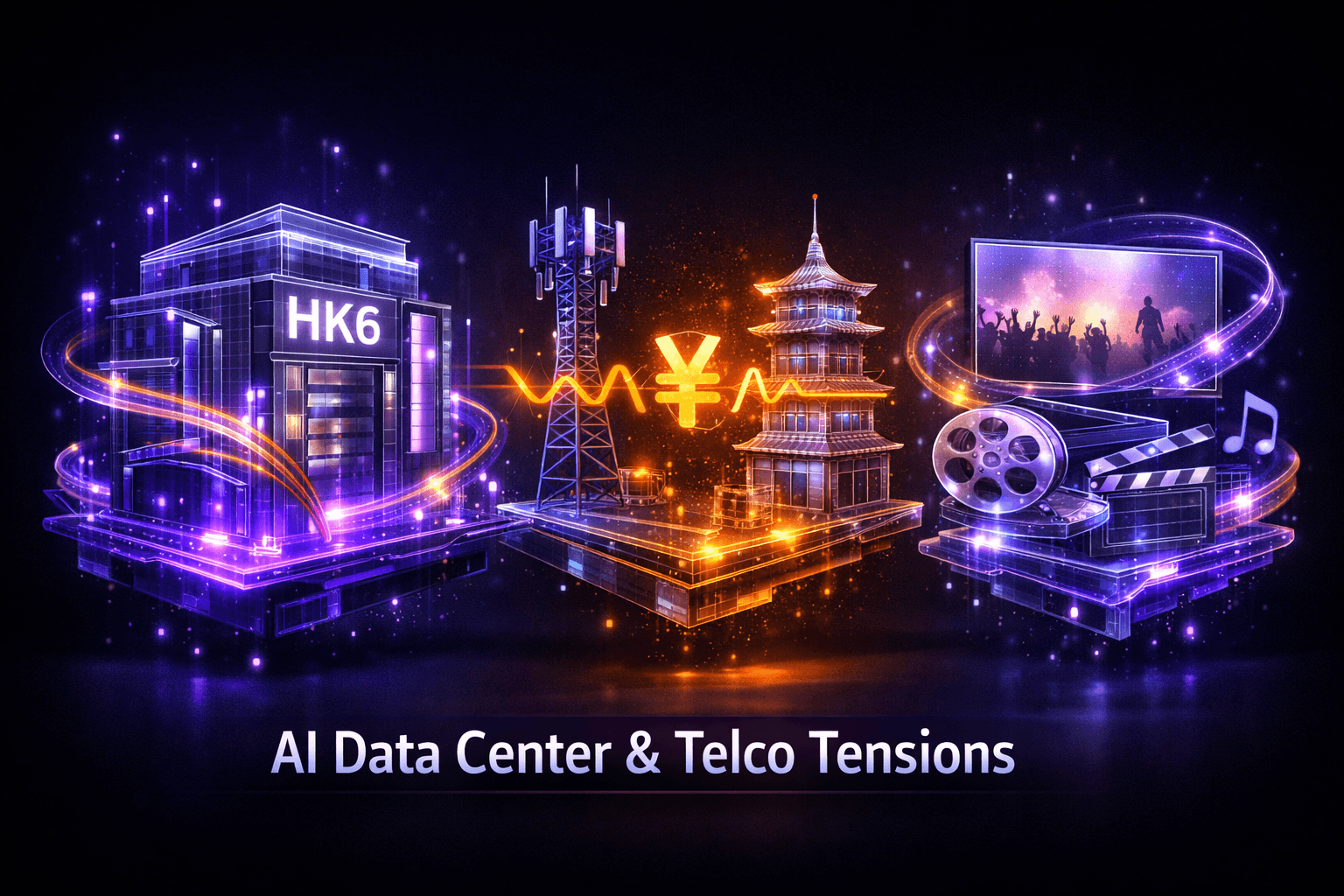
- Equinix opened the first phase of its HK6 data center in Hong Kong, an AI-ready facility with 1,000 cabinets and an initial investment of about US$124 million. The development underscores ongoing demand for capacity and interconnection in Asia. See $EQIX for company context, with markets last trading on Thursday, June 18.
- Reports say major Chinese mobile operators are under fire for alleged price discrimination tied to mobile data packages and AI-token offerings. Regulators and media scrutiny create headline risk for carriers and platform partners, especially in advertising and app distribution.
- Spain is reportedly moving to mandate power backup for mobile networks, a regulatory push that could increase resilience but adds cost for operators and vendors. Nokia is among suppliers positioned to benefit from network upgrades, see $NOK for exposure.
- On the content side, Tony Leung promoted theatrical viewing at the Shanghai masterclass while Edward Burns’ new film moved straight to streaming. Sports media produced a headline with Knicks stars confronting Stephen A. Smith during a podcast taping, highlighting the volatile interaction between live sports, personalities, and audience reaction.
Key Developments
Equinix opens HK6, reinforcing Asia AI infrastructure
Equinix’s HK6 launch brings 1,000 cabinets online and links directly to the Hong Kong Shenzhen innovation hub. For investors and industry watchers, this is another sign that hyperscale and enterprise customers continue to invest in proximity to AI compute and data sources. More capacity tends to support cloud, streaming, and media workflows, though you should watch utilization and pricing trends to see how quickly demand turns into revenue.
Regulatory pressure and resilience rules reshape telco economics
Light Reading’s reporting on alleged price discrimination by Chinese telcos raises regulatory risk in a market that already faces intense government oversight. Separately, Spain’s reported plan to force mobile network power backups could boost short-term capex for operators and vendors, but it also increases network reliability for advertisers and streaming platforms. Who bears the cost and who benefits will become clearer as regulators and industry respond.
Content and attention remain fragmented between theaters and streaming
Festival coverage from Shanghai and Raindance, plus reviews and streaming releases, underline a persistent duality in content distribution. Tony Leung’s comments in Shanghai argue that certain films rely on theatrical nuance, while Edward Burns’ latest title launching on streaming shows indie features often find a digital home. For media companies, this split affects windowing strategies, ad inventory, and licensing revenue. Meanwhile, sports-related PR moments like the Knicks-ESPN confrontation can shift short-term viewer sentiment and advertiser conversations.
What to Watch
Here are the catalysts and risks to track as markets reopen Monday, June 22.
- Regulatory actions in China, including investigations or enforcement related to the alleged price discrimination, could affect mobile ARPU, partnerships, and advertising flows to apps and platforms. Will regulators impose fines or mandate pricing changes?
- Follow utilization and lease-up reports from $EQIX and other data-center operators, plus any commentary about hyperscaler demand for AI capacity. Data-center revenue growth depends on sustained intake and pricing for dense AI workloads.
- Spain’s power-backup mandate for mobile networks could drive vendor contracts and upgrades. Watch procurement announcements from $NOK and others, and monitor any cost guidance from operators that might affect margins.
- On the content side, look at early streaming viewership metrics for new releases and festival buzz that can influence distribution deals and licensing fees. Also keep an eye on sports-rights conversations after high-profile media incidents, since they can alter negotiation leverage for broadcasters and platforms.
Bottom Line
- Infrastructure expansion like Equinix’s HK6 is a clear positive for capacity and AI workloads, but revenue conversion depends on sustained demand and pricing.
- Regulatory scrutiny in China and new resiliency rules in Spain add both cost and opportunity, creating a mixed picture for telco margins and vendor contracts.
- Content distribution remains split between theaters and streaming, so you should watch licensing, windowing, and viewership metrics to gauge where ad dollars go next.
- Short-term attention-grabbing media moments can swing sentiment about networks and platforms, but they rarely change fundamentals on their own.
- Keep an eye on regulatory announcements and company-level updates when markets reopen Monday, June 22, to see which narratives gain traction.
FAQ Section
Q: What does Equinix’s HK6 opening mean for data-center investors? A: It signals continued demand for AI-ready capacity in Asia and potential revenue growth for colocation providers, though you should watch utilization and pricing reports for confirmation.
Q: How could reports of price discrimination affect Chinese telcos and media partners? A: Increased scrutiny could lead to fines or mandated changes that compress ARPU or alter app distribution economics, creating headline risk for operators and the platforms that rely on them.
Q: Should you expect more content to skip theaters for streaming? A: Data and festival reactions suggest a selective approach. Some films aim for theatrical nuance, while many indie titles find streaming a more viable path for reach and revenue.