The Big Picture
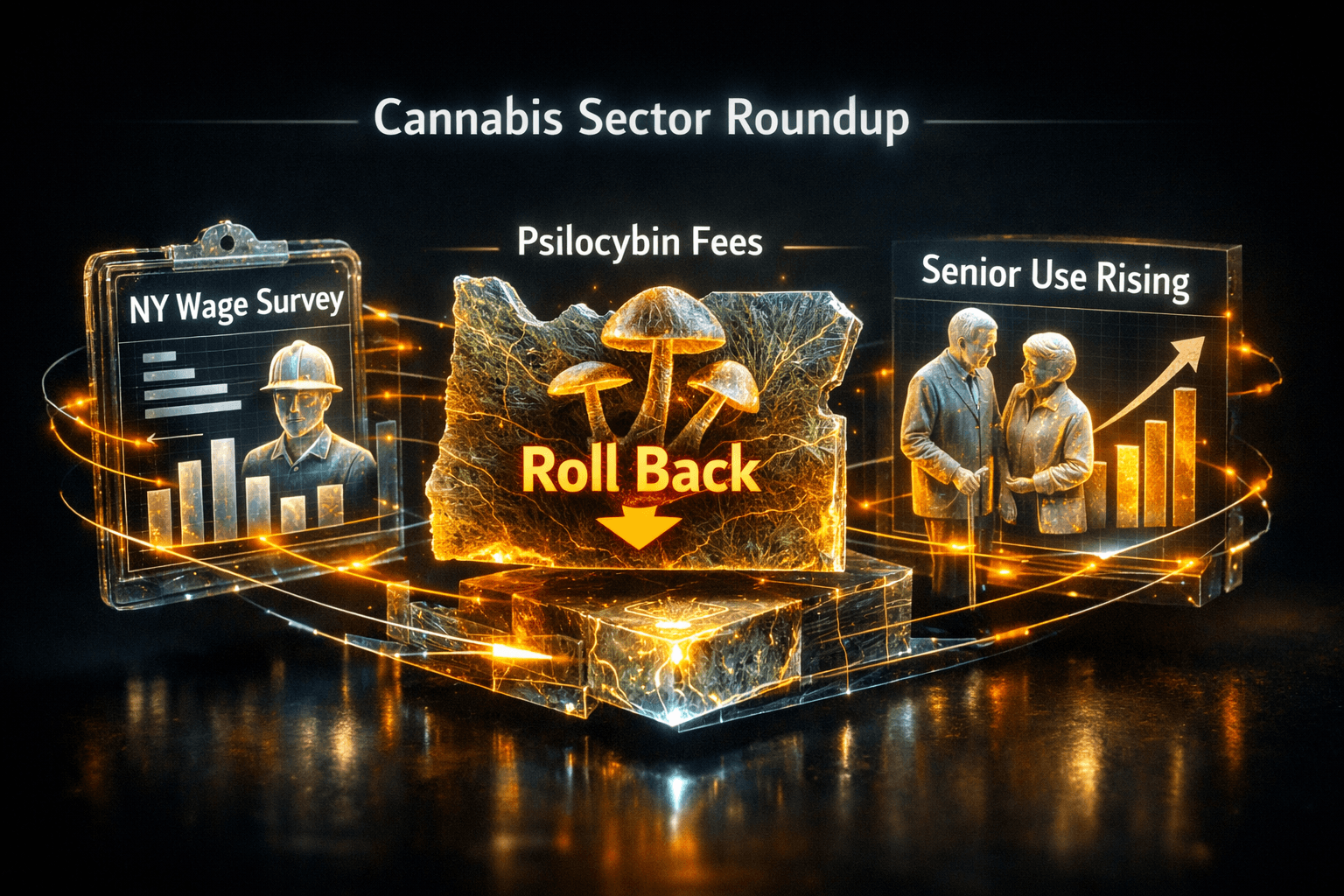
The most consequential thread today was policy and labor: a new FTI Consulting survey shows New York cannabis roles pay about $25.87 an hour, roughly 25% above the state retail average, even as operators push back against a proposed prevailing-wage recommendation slated for end-2027. That dynamic puts costs and public perception front and center for operators with heavy exposure to state markets.
At the same time regulators and voters are delivering mixed signals. Oregon officials dropped a plan to double psilocybin licensing fees after industry pushback, while a federally funded UC San Diego study found more than one in ten seniors used marijuana within the past 24 hours, a sign demand is broadening. For you as a shareholder or watcher, that combination means policy wins and demand tailwinds can coexist with margin and political risks.
Market Highlights
Headlines today were varied and mostly nonmarket-moving, but the stories carry concrete numbers investors can use to assess exposure and risk.
- Labor data: FTI Consulting survey shows average New York cannabis wage of $25.87 per hour versus the state retail average of $20.47, a gap of roughly 25%.
- Taxes and policy: Michigan’s wholesale cannabis tax remains 24 percent; a gubernatorial candidate has pledged repeal, creating potential fiscal upside if political promises become law.
- Demand signal: UC San Diego research reports more than 10 percent of seniors used marijuana in the past 24 hours, indicating older demographics are an expanding buyer base.
- Regulatory move: Oregon Health Authority formally dropped an attempt to double psilocybin licensing fees after industry protests, a near-term cost relief for affected operators.
- Track these sector symbols that many investors watch: $MSOS, $TCNNF, $GTBIF, $CURLF, $TLRY.
Key Developments
New York wage survey and the prevailing-wage debate
The FTI-backed survey, sponsored by the Safe and Affordable coalition, found cannabis retail wages in New York average $25.87 per hour, about 25 percent above the state retail mean of $20.47. Still, many operators oppose a law that would push a formal prevailing-wage recommendation by the end of 2027. The result: higher wages are a positive PR story and a potential recruiting edge, but a formal wage mandate could compress margins for already struggling operators.
Oregon drops psilocybin fee hike after industry pushback
The Oregon Health Authority abandoned plans to double licensing fees for psilocybin service providers following strong objections from businesses and advocates. That regulatory retreat reduces an immediate cost risk for psilocybin entrepreneurs and suggests state agencies may still be sensitive to industry feedback on program design.
Politics, taxes and growing demand among seniors
In Michigan, a high-profile gubernatorial candidate supports repealing the 24 percent wholesale cannabis tax, and industry groups are watching elections closely. But skepticism from some lawmakers signals political promises may not translate into policy. Meanwhile, federally funded research showing over 10 percent of seniors used marijuana in the past day is an important demand datapoint, especially for companies targeting medical and adult-use older consumers.
What to Watch
Expect the policy calendar and demographic trends to steer sector moves in the near term. Which levers will matter most to you as you assess positions?
- New York wage policy, timeline: the prevailing-wage recommendation process runs toward end-2027, but interim hearings and local rules could alter cost trajectories sooner. Watch statements from New York regulators and operators.
- Michigan election outcomes: the governor’s race and any legislative shifts could change the 24 percent wholesale tax landscape. Track polls and party control indicators.
- Psilocybin regulation: Oregon’s reversal eases immediate fee pressure, but other states considering psychedelics programs may follow suit or propose different fee structures.
- Demographic demand: the UC San Diego senior-use finding suggests product development and marketing aimed at older consumers could be growth levers. You should watch product mix and sales by age cohort reported in state retail data.
- Sector tickers to monitor for sentiment and flows: $MSOS, $TCNNF, $GTBIF, $CURLF, $TLRY, as these often reflect ETF and large-cap responses to regulatory and demand headlines.
- Corporate cadence: earnings, state sales reports and licensing updates over the next 60 days will show whether higher wages and taxes are showing up in margins or being absorbed by revenue gains.
Bottom Line
- Policy and labor stories led today's headlines, creating mixed upside for demand but potential cost pressure in operator margins.
- Regulatory relief in Oregon and growing senior use are positive signals for long-term consumer breadth, but political promises on taxes remain uncertain.
- Keep an eye on state-level rulemaking and the New York prevailing-wage process through 2027, because local mandates can change the economics quickly.
- Track the listed sector tickers and upcoming state sales releases to see whether revenues are absorbing higher labor costs or margins are contracting.
- Investment disclaimer: This article provides analysis and information only. Analysts note and data suggest trends, but this is not personalized investment advice, nor a recommendation to buy, sell, or hold any security.
FAQ Section
Q: Will a New York prevailing-wage recommendation automatically raise costs for cannabis operators? A: Not automatically, the recommendation could prompt local rules and contracts that raise labor costs, but implementation timing and scope will determine the financial impact.
Q: Does Oregon dropping the psilocybin fee hike mean funding or program quality will suffer? A: The decision lowers near-term costs for providers, but regulators may revisit funding needs via other mechanisms, so program outcomes depend on future rulemaking.
Q: Are seniors becoming a reliable growth market for cannabis products? A: The UC San Diego study shows rising use among older adults, indicating growing demand, but product adoption and repeat purchase behavior will be visible in state sales reports over coming quarters.