The Big Picture
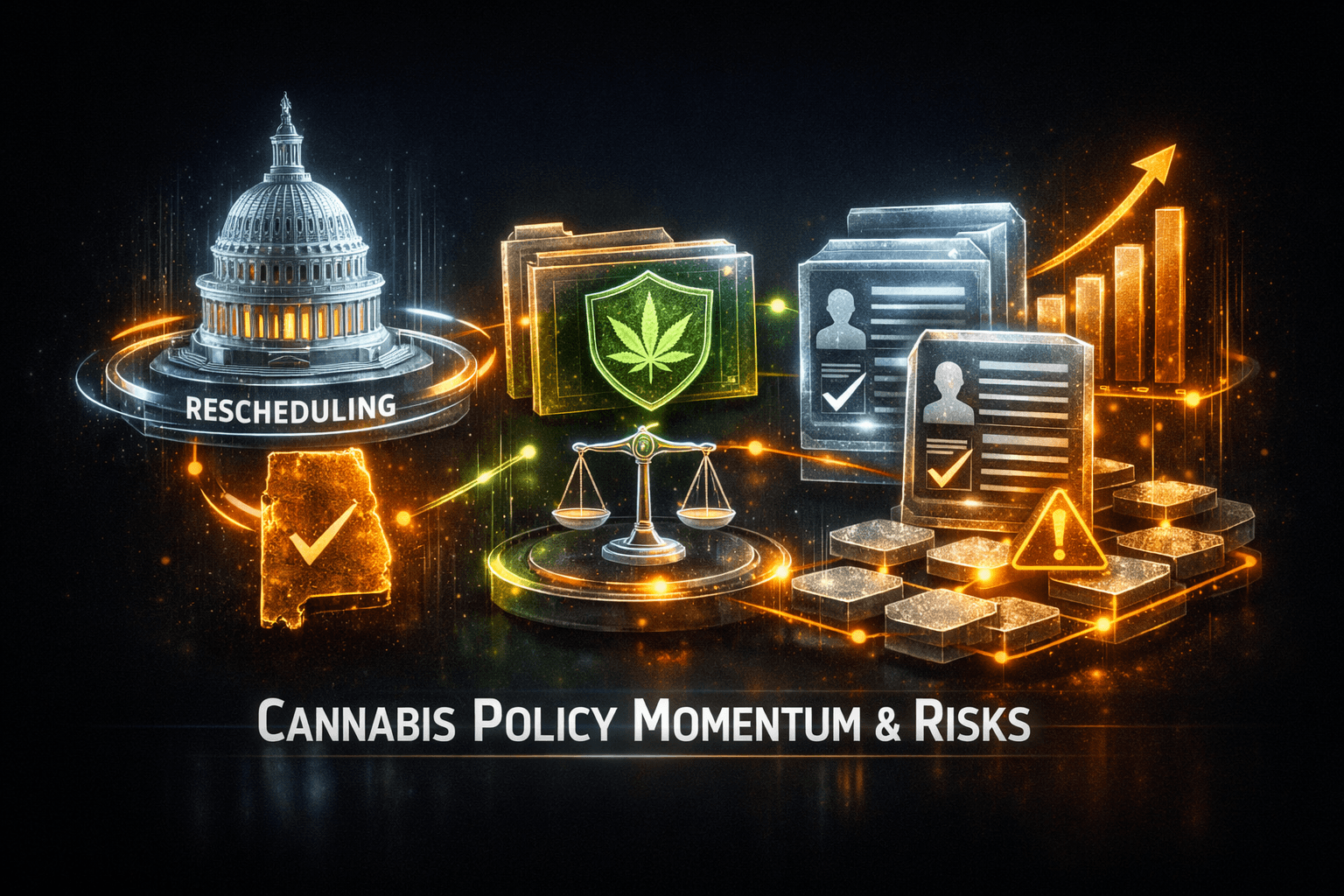
Federal policy momentum continued to reshape the cannabis landscape over the weekend, as Alabama public health officials withdrew their objection to federal marijuana rescheduling and Congress saw a bipartisan push to protect applicants with past cannabis use. These developments add to a wave of regulatory clarity that matters for operators, workers and market access.
While markets were closed Sunday, these policy shifts reinforce a broader trend toward normalization. If federal rescheduling implementation proceeds, you could see reduced legal uncertainty for companies and faster state-level alignment in the months ahead.
Market Highlights
Markets were closed on Sunday, so price action refers to conditions heading into the long weekend, as of Friday, September 18.
- $MSOS, the US cannabis ETF, remains a primary proxy for sector exposure, trading mixed heading into the weekend as policy headlines stacked up.
- Leading operators tracked by retail investors include $TLRY, $CURLF, $TCNNF, and $GTBIF, each facing company-specific regulatory and market catalysts you should watch.
- Consumer interest stories from High Times, including September strain features and cultural pieces like the TraxNYC gold nug cast, underline steady retail engagement in legal markets.
Key Developments
Alabama withdraws objection to federal rescheduling
Alabama health officials formally withdrew their objection to the federal rescheduling of marijuana, a move reported Friday that state sources described as procedural. That follows prior federal action to reschedule, and it shows state-level agencies may be moving to align with Washington rather than resist it.
For you as an investor, state alignment reduces one axis of legal uncertainty. Questions remain about implementation, licensing changes and how quickly regulators will adapt operational guidance in each state.
Bipartisan CURE Act aims to clear federal employment hurdles
Congressional lawmakers introduced the Cannabis Users' Restoration of Eligibility Act, a bipartisan bill intended to prevent denial of federal jobs and security clearances for people with past cannabis use. The proposal also aims to provide relief to those who already lost opportunities due to prior use.
This kind of legislation could expand the available workforce for operators and remove a social stigma barrier that affects hiring and retention. Will it pass? That depends on legislative priorities, but its bipartisan sponsorship increases its odds of meaningful movement.
Stricter enforcement and hemp rules underscore compliance risk
Not all headlines were positive. Michigan regulators imposed a record fine and revoked a popular product maker's permit after finding egregious violations. Separately, analysis of the federal hemp THC ban extension shows operators have more time but still face a chemistry challenge before tighter rules take effect.
These stories highlight a continuing theme, compliance matters. You should expect sharper enforcement and operational risk for companies that fail to meet testing and labeling standards.
What to Watch
Policy implementation, enforcement and demand trends will drive near-term moves. Keep an eye on how federal agencies roll out rescheduling rules and what guidance states issue in response.
- Federal implementation timeline for rescheduling, and any rulemakings or guidance from DEA and HHS.
- Congressional action on the CURE Act and related measures that affect employment, licensing and access for consumers.
- State-level responses, especially in conservative or undecided states where you might see new alignment efforts similar to Alabama.
- Hemp operators facing the extended federal THC ban deadline, and how companies adapt product formulations and testing protocols.
- Regulatory enforcement trends after Michigan’s record fine, and any spillover inspections or recalls that could affect retail supply.
- Sector tickers to watch for positioning and headlines: $MSOS, $TCNNF, $GTBIF, $CURLF, $TLRY, as of Friday, September 18 heading into the long weekend.
How will companies and regulators settle into new rules, and what does that mean for your exposure to the space? Expect important updates early in the week as lawmakers and agencies react to the weekend developments.
Bottom Line
- Policy momentum is positive, with Alabama’s procedural alignment and a bipartisan employment protections bill reducing some legal and social barriers.
- Enforcement risk remains high, as Michigan’s record penalty shows regulators will act decisively against compliance failures.
- Hemp rules were extended, which gives operators breathing room but creates a near-term technical deadline for product chemistry and testing changes.
- Watch federal rulemakings and state responses closely, because implementation details will determine winners and losers in the coming quarters.
- Stay selective and monitor company-level compliance, licensing status and balance sheet resilience rather than assuming uniform upside across names.
FAQ Section
Q: Will federal rescheduling immediately legalize cannabis nationwide? A: No, rescheduling changes federal criminal and regulatory posture but does not automatically legalize recreational sales in states; implementation details will matter.
Q: How could the CURE Act affect cannabis employers? A: If enacted, the bill could expand the candidate pool by preventing disqualification for past cannabis use in many federal roles and security clearances, easing hiring constraints for operators.
Q: What should you monitor for compliance risk? A: Track state enforcement actions, testing standards changes, product recalls and any company announcements about corrective actions or license status, because these can materially affect revenues and operations.