The Big Picture
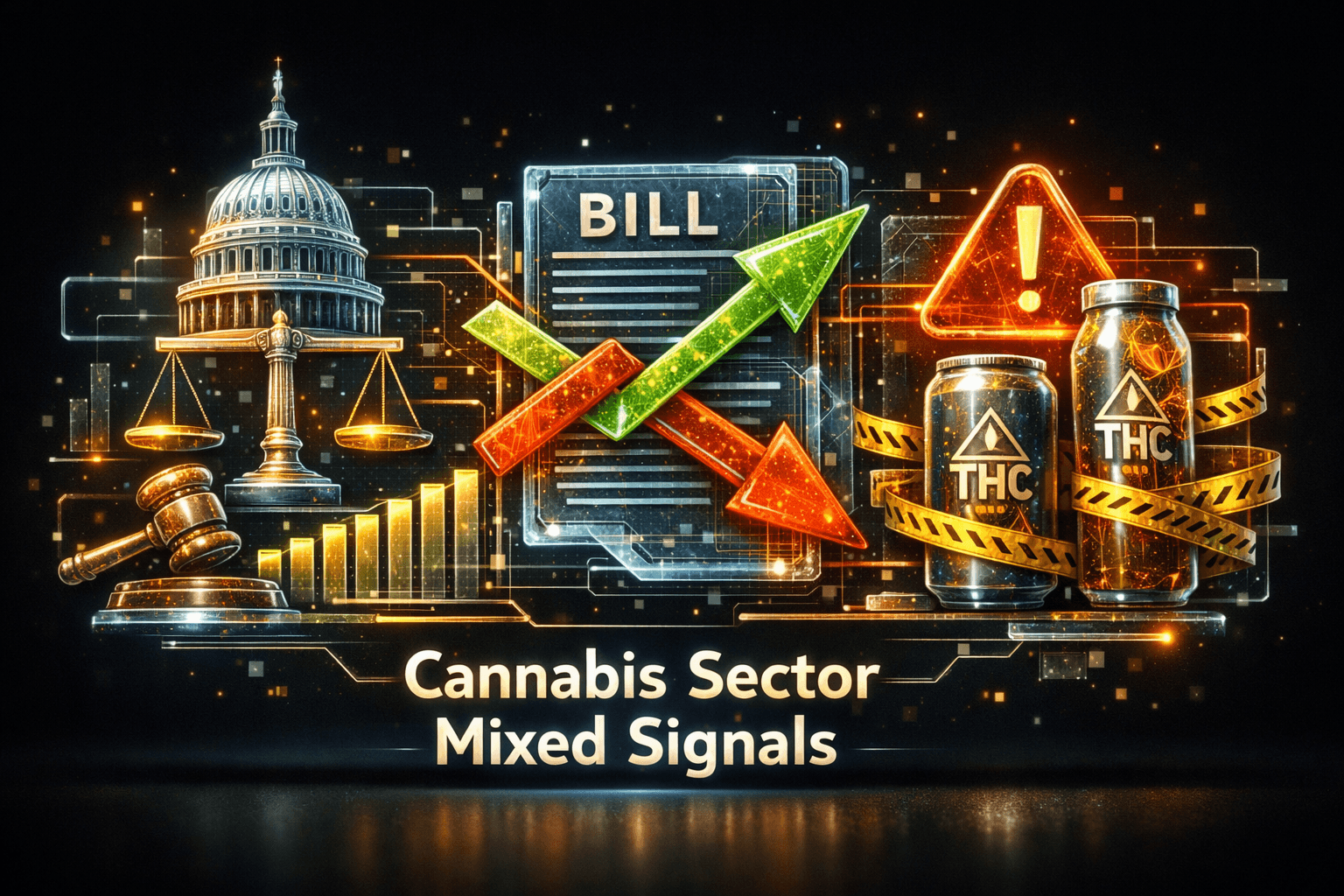
Federal and state regulatory moves grabbed the headlines today, putting compliance and market access squarely in the spotlight for cannabis operators. The Trump administration's rescheduling action, paired with New Jersey's decision to remove THC drinks from liquor stores, creates fresh uncertainty about distribution and oversight.
At the same time, a new congressional bill to support plant based medicines, polling that shows growing public acceptance, and active industry conferences kept deal flow and sentiment from tipping fully negative. For you as an investor, this means volatility is likely to persist and selectivity matters going into next week.
Market Highlights
Trading in major cannabis names and ETFs reflected the mixed headlines, with intraday swings and sector rotations as investors parsed policy and state-level impacts.
- $MSOS and other cannabis ETFs were focal points for flows as traders adjusted exposure to regulatory risk and macro headlines.
- $TLRY and consumer-facing names drew attention because New Jersey's beverage restriction highlights distribution challenges for infused products.
- $TCNNF, $GTBIF and $CURLF were mentioned repeatedly by commentators as names to watch as regulatory clarity and state market execution drive near-term performance.
Key Developments
Federal rescheduling puts the DEA in the regulatory driver's seat
Opinion pieces and analysis published today flagged a major change, where rescheduling under the current administration effectively shifts day to day regulatory oversight toward the DEA. That transition raises compliance burdens for operators, because federal-level rulemaking typically introduces licensing, tracking and enforcement frameworks that mirror other controlled substances.
For you, that means federal clarity could be a double edged sword. Clear rules may open capital markets over the long run, but they can also add costs and timelines in the near term. Time will tell how fast operators and states align with federal requirements.
New Jersey pulls THC drinks from liquor stores, operators adapt
New Jersey announced THC drinks will be removed from liquor stores effective November 13. Industry coverage notes retailers and producers are already revising distribution plans and marketing strategies ahead of the deadline. High Tide outlined a strategy to respond, signaling some operators will pivot to licensed cannabis retail channels and alternative product formats.
This change narrows points of sale for infused beverages and could pressure sales for companies relying on broader retail distribution. If you hold exposure to beverage-focused brands, monitor channel shifts closely and track how retailers and regulators execute the transition.
Policy, public opinion and grassroots momentum
Outside regulation, two positive signals emerged: a Rasmussen poll showed a majority of Americans no longer see marijuana as highly dangerous, and a new congressional bill aims to boost development of plant based medicines, including cannabis derived therapies. Those developments support normalization and research momentum.
Meanwhile, industry events like NECANN and local community activations such as Shore House Canna’s Fall Fest reflect healthy deal flow and consumer engagement on the ground. You should weigh these demand side signals against regulatory costs when assessing sector fundamentals.
What to Watch
Focus on near term deadlines, rulemaking timelines and industry gatherings that can move sentiment and information flow.
- November 13, 2026: New Jersey removal of THC drinks from liquor stores. Track retail guidance and transition plans from distributors and brands, and watch for follow up state or municipal clarifications.
- DEA rulemaking timeline: Any federal rule text or compliance guidance will be a major catalyst. Expect incremental updates and analyst notes as details emerge.
- NECANN Atlantic City, Sept 18-19: A key industry conference where deal flow and commercial partnerships will be on display. If you follow company managements, see who appears and what partnership announcements surface.
- Congressional bill on plant based medicines: Monitor committee movement and press releases. Progress could spur R&D collaborations and reframe biotech and cannabis intersections.
- Watch these sector tickers for relative performance and news flow: $MSOS, $TCNNF, $GTBIF, $CURLF, $TLRY. Analysts note these names often lead ETF flows and headlines.
- Retail and wholesale dynamics: Reports comparing chain and independent dispensary ordering patterns matter for margin forecasts and inventory management. Are chains squeezing wholesalers, or is that pressure easing?
Bottom Line
- Regulatory change dominated the day, with federal rescheduling and New Jersey's distribution restriction creating near term uncertainty.
- Offsetting forces include shifting public opinion, a bill supportive of plant based medicines, and active industry events that keep demand visible.
- Expect continued volatility as you assess regulatory guidance, holiday season retail plans and conference deal flow over the next month.
- Track company level disclosure on compliance costs and distribution shifts closely, because those will drive earnings variability.
FAQ
Q: How will New Jersey's removal of THC drinks from liquor stores affect product sales? A: Removing that channel narrows points of sale, which could temporarily reduce reach for beverage brands. Companies are expected to shift sales to licensed cannabis retailers and direct to consumer channels where allowed.
Q: Does federal rescheduling mean faster access to traditional capital markets? A: Rescheduling can improve long term prospects for capital access by aligning federal law with commercial structures. At the same time you should expect new federal compliance requirements that add costs and timelines.
Q: Which near term events should investors follow? A: Watch the Nov 13 New Jersey deadline, DEA rulemaking updates, the NECANN conference on Sept 18 and 19, and any progress on the congressional bill for plant based medicines.