The Big Picture
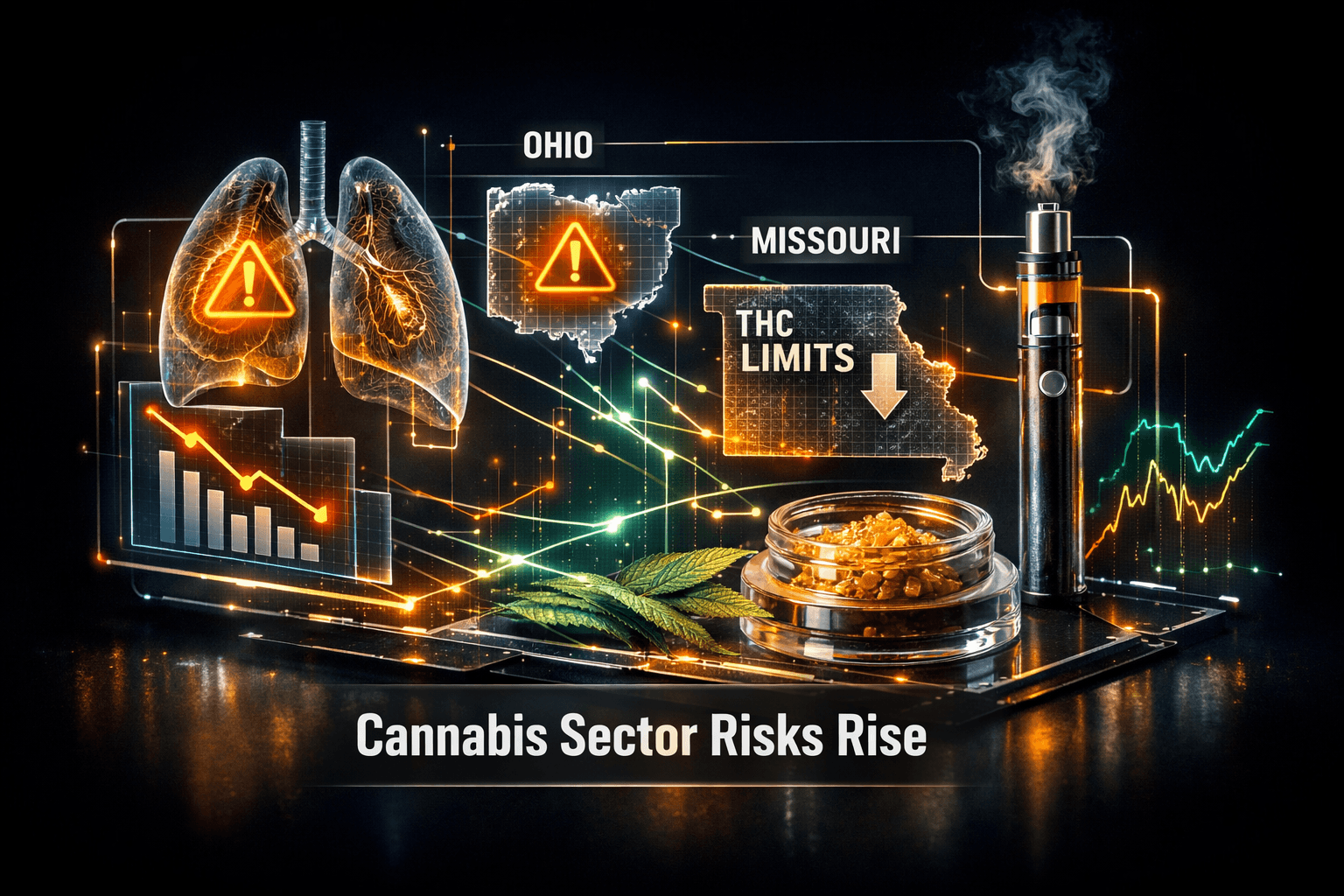
A vape-related health incident in Ohio that led to a dispensary closure and reports of a death has put regulatory and safety concerns back in the spotlight for the cannabis sector. At the same time, Missouri is moving ahead with restrictions on hemp THC products while the federal ban has been delayed, leaving a patchwork of rules that could dent consumer confidence and sales.
Markets are closed on Sunday, Sept 13, so investors are heading into the long weekend with policy risk elevated and product innovation offering only a partial offset. You should be prepared for heightened regulatory headlines when trading resumes on Monday, Sept 14.
Market Highlights
Remember, U.S. equity markets were closed today. The facts below reflect the news cycle heading into the long weekend and the likely focus for investors when markets reopen on Monday.
- Ohio vape incident: A medical center reported a death temporally linked to people who bought vapes from a dispensary that has since closed, prompting public-health inquiries and local scrutiny.
- Missouri policy: State regulators are advancing restrictions on hemp-derived THC products, while a delayed federal ban leaves states to set their own rules for now.
- Product innovation: Coverage of fresh frozen cannabis and live rosin highlights quality differentiation that premium brands are using to chase margins and connoisseur demand.
- Names to watch in the sector include $MSOS, $TCNNF, $GTBIF, $CURLF, and $TLRY as potential barometers of sentiment and policy impact when U.S. markets reopen.
- Research and culture stories, like a High Times piece on prehistoric psychoactive use, may boost broader consumer interest but have limited near-term impact on prices.
Key Developments
Ohio vape reports and dispensary closure
Local reports indicate a dispensary closed after multiple customers reported adverse effects from vapes, and a regional ER recorded a death in the same timeframe. Authorities have not linked the death conclusively to the products, but regulators and public-health officials are investigating.
Implications: You should expect state-level testing, potential product recalls, and heightened inspections. Retail foot traffic and vape category sales could face near-term pressure while investigations proceed.
Missouri tightens hemp THC rules as federal action stalls
Missouri regulators are moving forward with limits on hemp-derived THC products and are open to reassessing rules in early 2027. The state-level approach follows a broader pattern, where federal inaction or delays leave the regulatory burden with states.
Implications: Companies that rely on hemp THC formulations or national distribution face a patchwork market and compliance costs. Analysts note this creates uncertainty for product lines tied to non-intoxicating versus intoxicating classifications.
Fresh frozen and live rosin: product differentiation gains attention
Coverage of fresh frozen processing and live rosin underscores why some producers are investing in cold-chain infrastructure to preserve terpene profiles and command premium pricing. The technique is capital and logistics intensive, so it remains a niche strategy for brands targeting connoisseurs.
Implications: You might see margin gains for vertically integrated operators that can control harvest-to-extract supply chains. However, the barrier to entry means broader industry impact will be gradual rather than immediate.
What to Watch
Heading into Monday and beyond, here are the catalysts and risks that could move sentiment and influence your positions.
- Regulatory follow-ups: Look for state health department updates from Ohio and any product testing or recall notices. You should monitor local agency releases and media coverage closely.
- Missouri timeline: The state may revisit hemp THC drink rules in January 2027, so calendar that as a policy inflection point that could alter product availability and marketing strategies.
- Company exposure: Track major public names and ETFs tied to sector performance. $MSOS and $TCNNF can signal ETF flows, while $GTBIF, $CURLF, and $TLRY may show how operators with different business models respond to regulatory news.
- Supply-chain and quality trends: Ask whether brands you follow have cold-chain capabilities for fresh frozen processing, and how much of their revenue could be insulated by premium extract products.
- Public-health headlines: Will additional illnesses be reported, and could federal agencies escalate testing standards? Those outcomes will matter to demand and retail licensing.
Bottom Line
- Short-term outlook is cautious, as health-safety reports and state regulatory moves raise the probability of tighter oversight and consumer caution.
- Product innovation like fresh frozen live rosin offers a growth niche, but it does not offset broad regulatory risk in the near term.
- Expect volatility when U.S. markets reopen on Monday, Sept 14, especially for companies with large vape or hemp-THC exposure.
- Monitor official test results and state rulings; analysts note clarity from regulators will be the key determinant of near-term sentiment.
- Stay selective and keep an eye on compliance footprints, supply-chain advantages, and states with shifting policy calendars.
FAQ Section
Q: What should I do if a company I follow is linked to the Ohio vape incident? A: Follow official health department updates and company disclosures. Check for product recalls and testing results before drawing conclusions.
Q: Will Missouri's actions affect sales elsewhere in the U.S.? A: Possibly, because state rules can set precedents and drive labeling changes. With the federal ban delayed, states are the primary policy driver for now.
Q: Is live rosin technology a meaningful revenue driver for public cannabis firms? A: It can be for vertically integrated operators that can build a cold chain, but the benefits are often concentrated in premium segments and may take time to scale.