The Big Picture
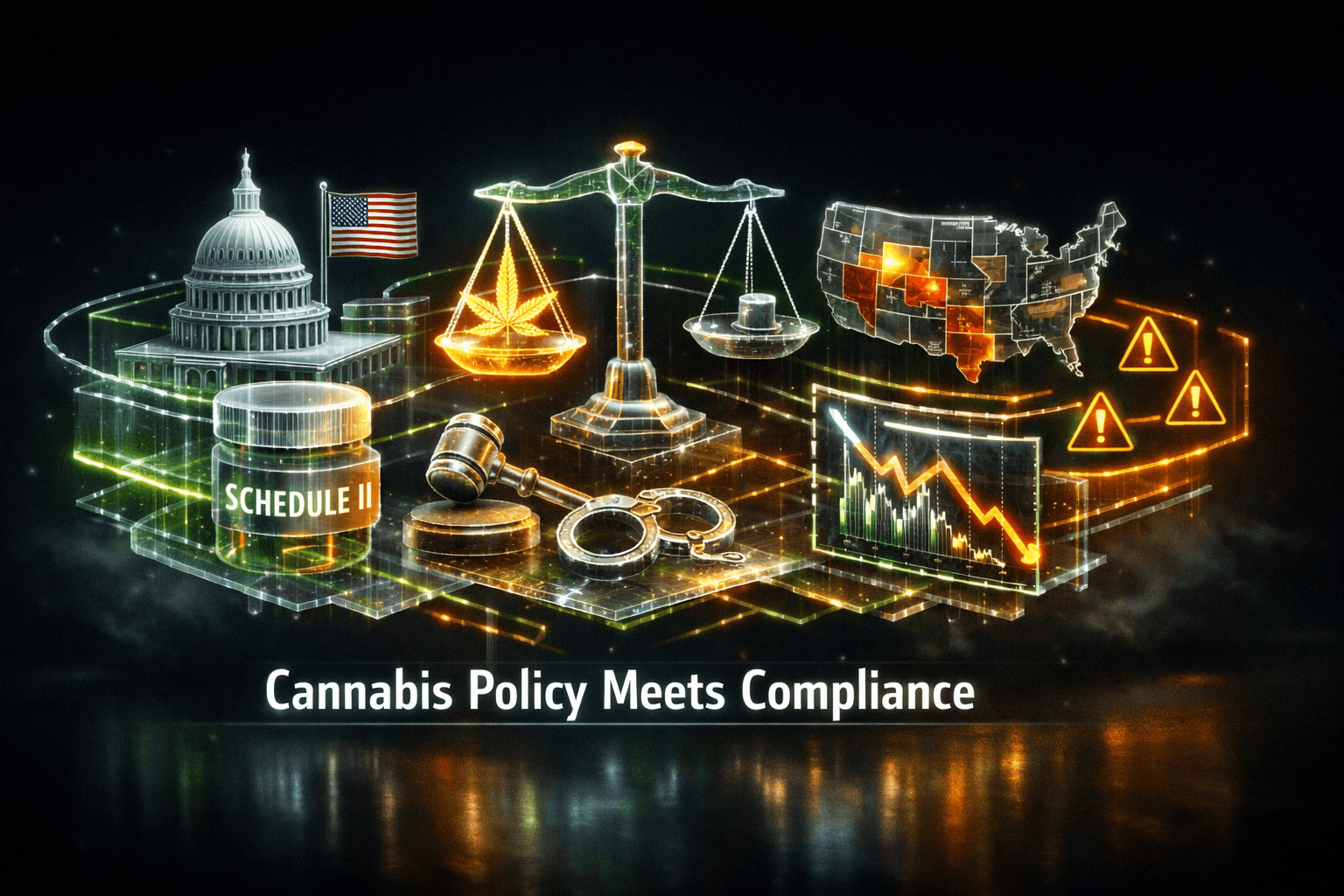
The biggest development for cannabis investors over the holiday weekend is a study in contrasts: federal momentum toward rescheduling and additional clemencies sits alongside a fresh wave of state-level enforcement and regulatory tightening. That mix leaves the industry facing both potential upside on federal policy and immediate operational and compliance risk at the state level.
Heading into the long weekend, as of Friday, September 4, you're likely parsing federal headlines while also watching how state rules and enforcement actions will affect revenue and margins. What does that mean for your holdings and the broader sector? Expect a selective market response when U.S. trading resumes on Tuesday, September 8.
Market Highlights
Key facts and data points to know right now.
- Federal action: The White House granted clemency to two federal marijuana prisoners and the DEA is moving forward on a rescheduling review, signaling potential changes to federal enforcement and banking access.
- State revenue and fees: California reports $8.4 billion in cannabis tax revenue to date, including about $4.5 billion in excise taxes and $3.4 billion from standard sales tax; Q2 generated $261.7 million.
- Regulatory pain points: Florida floated new medical marijuana marketing rules that could raise license renewal fees and compliance costs, with renewal fees cited around $1.3 million in recent reporting.
- Compliance failures: An Arizona cannabis testing lab has continued to fail inspections after prior fines, raising product and regulatory risk for operators dependent on third-party testing.
- Governance and M&A risk: Aurora Cannabis (ACB) urged shareholders to reject Curaleaf Holdings (CURLF)'s hostile bid, highlighting takeover risk and capital structure debates that could affect valuations.
- Tickers to watch in the sector: AdvisorShares Pure US Cannabis ETF (MSOS), Trulieve Cannabis (TCNNF), Green Thumb Industries (GTBIF), $CURLF, $TLRY — these remain focal points for ETF and individual-stock flows when markets reopen.
Key Developments
Federal momentum: rescheduling and clemency
The administration granted commutations to two people serving federal marijuana sentences while the DEA pursues a rescheduling review. That combination advances the long-running conversation about federal reform, and it could ease banking, research and interstate commerce frictions if it leads to regulatory change.
For you as an investor, federal progress is a positive catalyst, but timing remains uncertain. Don’t expect overnight transformation, but the policy trend reduces one major structural risk over the medium term.
State enforcement, regulatory tightening and uneven rules
Several state-level stories undercut the optimism at the federal level. North Carolina lawmakers are still weighing intoxicating hemp and marijuana policy with no clear path to legalization, and Hawaii has stepped up enforcement of a longstanding ban on smokable hemp, reportedly costing some retailers steep revenue declines, as much as 90% for one operator.
Texas and Florida also illustrate the regulatory tightrope. A Texas hemp THC regulatory approach has squeezed businesses, even where a ban was rejected. Florida is proposing stricter medical cannabis marketing rules and higher renewal costs, which operators say could be draconian. Those actions show you that state policy will shape winners and losers.
Industry governance and capital — who controls the plant?
High Times published a cautionary piece about institutional investors arriving with term sheets and agendas that can strip founders of control. That theme plays into current takeover drama, as Aurora ($ACB) pushes back on $CURLF's hostile bid while flagging a strong balance sheet with CA$149 million in cash.
You should ask whether capital coming into the sector will prioritize long-term operations or rapid consolidation. How will boards and founders respond when outside money brings pressure? That question matters for corporate strategies and valuations.
What to Watch
Near-term catalysts and specific items you'll want to monitor before markets reopen Tuesday.
- DEA and Department of Justice updates, timeline and any draft rule language on rescheduling. Even incremental guidance can move sentiment.
- State-level actions: watch North Carolina reconvening in November, Florida's marketing rule proposals, Texas enforcement patterns, and Hawaii enforcement activity for licensing and retail impacts.
- Regulatory compliance signals: additional inspection results or fines for testing labs, like the Arizona case, could disrupt supply chains and product availability in affected markets.
- Corporate governance and M&A: follow the Aurora- Curaleaf standoff, shareholder votes, and any competing bids. Keep an eye on $CURLF, $ACB and the major multi-state operators you hold or follow.
- Sector ETFs and names: watch $MSOS, $TCNNF, $GTBIF, $CURLF and $TLRY for flow-driven moves when U.S. trading resumes on Sept 8; expect volatility tied to policy headlines and state enforcement reports.
Bottom Line
- Federal signs of progress on rescheduling and clemency are meaningful, but they don’t erase short-term state-level risk.
- State enforcement and new rules in Florida, Hawaii, Texas and North Carolina create uneven operating environments and potential revenue pressure for operators.
- Compliance gaps, especially in testing, are an immediate operational risk that can hurt product availability and brand trust.
- Corporate control battles and incoming institutional capital create governance and M&A risk that could reshape market leadership.
- When trading resumes on Tuesday, Sept 8, expect selective responses by the market; you should watch regulatory headlines and governance developments closely.
FAQ Section
Q: How will federal rescheduling affect cannabis companies? A: Rescheduling could ease federal banking, allow more clinical research and reduce legal risk, but concrete benefits depend on subsequent rulemaking and bank and investor responses.
Q: Should I worry about state crackdowns like those in Hawaii and Arizona? A: Yes, state enforcement can materially affect revenues and compliance costs, so monitor inspections, rule changes and licensing actions in markets where companies operate.
Q: What should I watch in the Aurora-Curaleaf dispute? A: Track shareholder communications, any competing bids, balance sheet disclosures such as Aurora's cash position, and regulators' responses to takeover attempts; these will shape outcomes and valuations.