The Big Picture
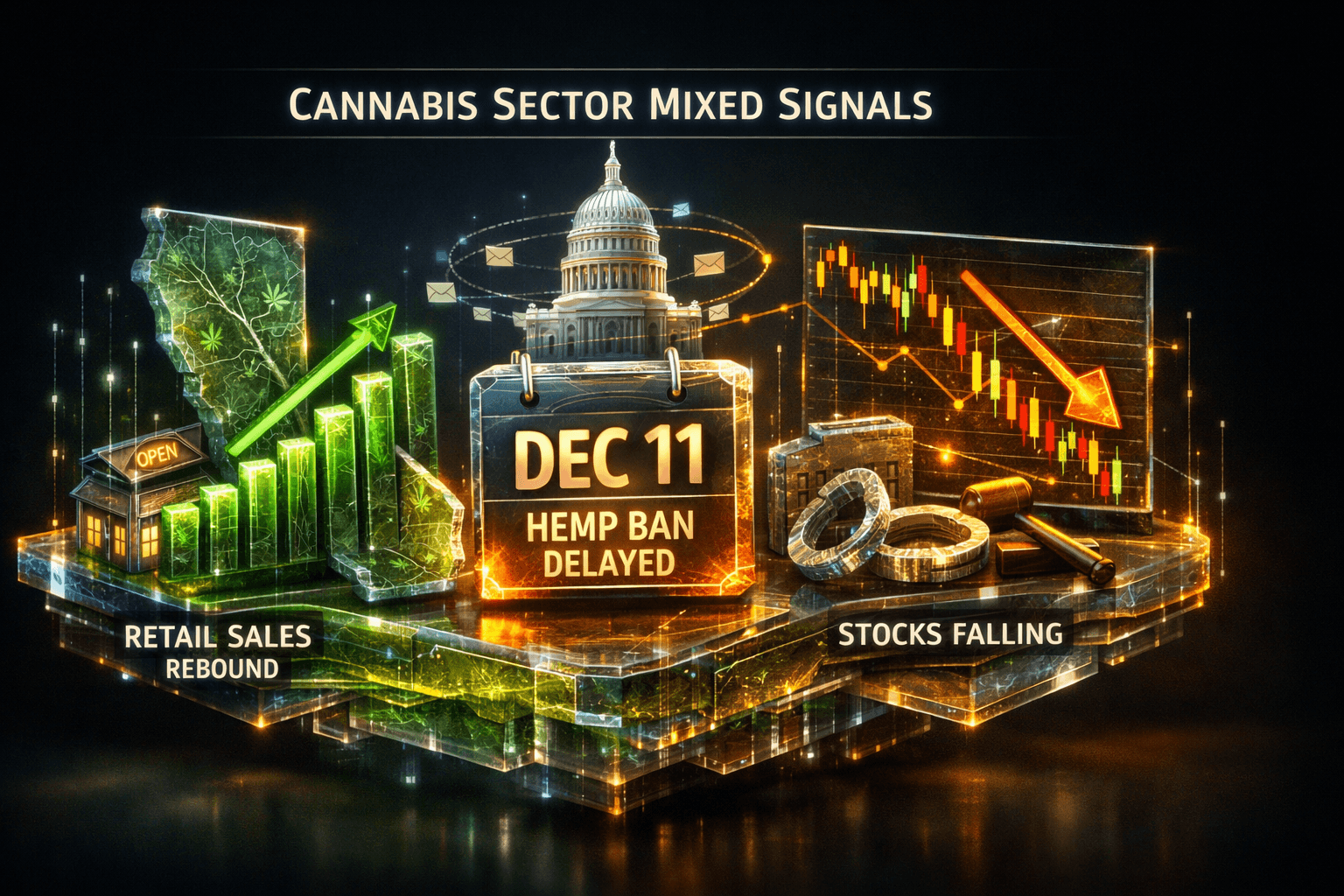
California, the largest U.S. cannabis market, reported stabilization in Q2 retail sales at $1.013 billion, signaling that the worst of the slump may be easing. At the same time Congress approved a one-month delay to a federal hemp cannabinoid ban, pushing the effective date to December 11.
Those two developments matter because they touch both demand and the regulatory backdrop that shapes product availability and investor sentiment. But headwinds remain, including new state-level advertising restrictions and continued softness in cannabis equities, so the picture for your investments is decidedly mixed.
Market Highlights
Key market movements and data points investors noted today:
- California Q2 retail cannabis sales: $1.013 billion, essentially flat year over year, according to MJBizDaily.
- California cannabis tax receipts since 2016: $8.4 billion, Governor Gavin Newsom announced, underscoring fiscal contributions from the legal market.
- Congressional action: House voted 370-48 to delay the federal hemp ban, moving the deadline to December 11, according to media reports.
- Regulatory shifts: California signed AB 2249 tightening packaging and advertising rules that could affect product marketing and shelf appeal.
- Sector breadth: industry newsletters and market commentary describe cannabis stocks as lagging recent market gains, despite consumer and tax data improvements. Watch sector names and ETFs such as $MSOS, $TCNNF, $GTBIF, $CURLF, and $TLRY for trading signals.
Key Developments
California sales steady, tax haul grows
Q2 retail sales in California held steady at $1.013 billion, which suggests demand has stabilized after a period of contraction. The state has now collected $8.4 billion in marijuana tax revenue since legalization, a point officials cite when defending ongoing regulation and enforcement efforts.
For investors the implication is clear, sales momentum can support cash flow for retail-focused operators and bolster municipal support for the industry, but it does not automatically translate into stock gains. Are margins improving? That depends on cost structures, competition, and taxation at the local level.
Federal hemp ban delay and lobbying tensions
Congressional leaders agreed to delay a broad federal ban on most hemp cannabinoid products until December 11 as part of a funding measure. The one-month reprieve reduces immediate regulatory risk for hemp product sellers and online retailers, but it also intensified infighting between hemp and cannabis lobbies reported this evening.
That fight matters to you because it shapes the regulatory timeline and the certainty companies need to plan inventory, marketing, and capital raises. A delay buys time, yet the underlying debate remains unresolved and could resurface with force before the new date.
State regulation tightens while local bills stall
California signed AB 2249 to restrict packaging and advertising that might appeal to minors, tightening compliance standards for brands and retailers. Separately, a bill to allow dispensary drive-thru windows was pulled by its sponsor after doubts about floor support.
Tighter advertising rules raise compliance costs and could reduce some impulse purchases, while the drive-thru bill being put on hold removes a potential convenience channel that some operators had been counting on. In short, policy is increasingly a mixed bag for operators' growth plans.
What to Watch
Look to these catalysts and risks that could move the tape tomorrow and in the weeks ahead.
- Regulatory calendar, especially actions tied to the December 11 hemp ban deadline and any interim guidance from regulators. Will Congress extend or alter the reprieve?
- California enforcement and implementation of AB 2249, which will affect packaging lead times and marketing budgets for consumer brands. You'll want to watch compliance announcements from large multistate operators.
- Earnings and retail reports from key operators, and weekly/monthly sales snapshots out of California. These numbers will tell you if the Q2 stabilization is persisting through late summer.
- Market breadth and flows into cannabis ETFs and names such as $MSOS, $TCNNF, $GTBIF, $CURLF, and $TLRY. Equity weakness could continue even if fundamentals improve, so monitor trading volume and relative performance.
- Policy and public health signals, including the VA records discussion about cannabis use disorder and public messaging that could influence patient and veteran access.
What should you focus on first? Start with revenue trends and regulatory changes that affect product availability and margins, then watch liquidity in the names you follow.
Bottom Line
- California's market is stabilizing with Q2 retail sales at $1.013 billion, but stabilization is not the same as rapid growth.
- The federal hemp ban delay to December 11 reduces immediate risk, yet it fuels lobbying battles that could influence the final outcome.
- State-level rules like California's AB 2249 will raise compliance costs and shift marketing tactics for brands and retailers.
- Cannabis equities remain soft relative to these developments, so market sentiment is not fully aligned with improving top-line data.
- Be selective, track upcoming regulatory dates, and watch sales momentum and liquidity in ETFs and key names for clearer signals.
FAQ Section
Q: How significant is California's $1.013 billion in Q2 sales? A: It signals stabilization in the largest U.S. market and supports the case that demand is holding, but it does not guarantee margin improvement or stock gains.
Q: Does the December 11 delay mean hemp products are safe from regulation? A: No, the delay is temporary and gives stakeholders time to lobby and adjust, but the legal risk will return unless Congress acts again.
Q: Should I expect cannabis stocks to react to these news items tomorrow? A: Stocks often respond to regulatory clarity and sales trends, yet equities can lag fundamentals, so monitor trading volume and sector ETFs for near-term cues.