The Big Picture
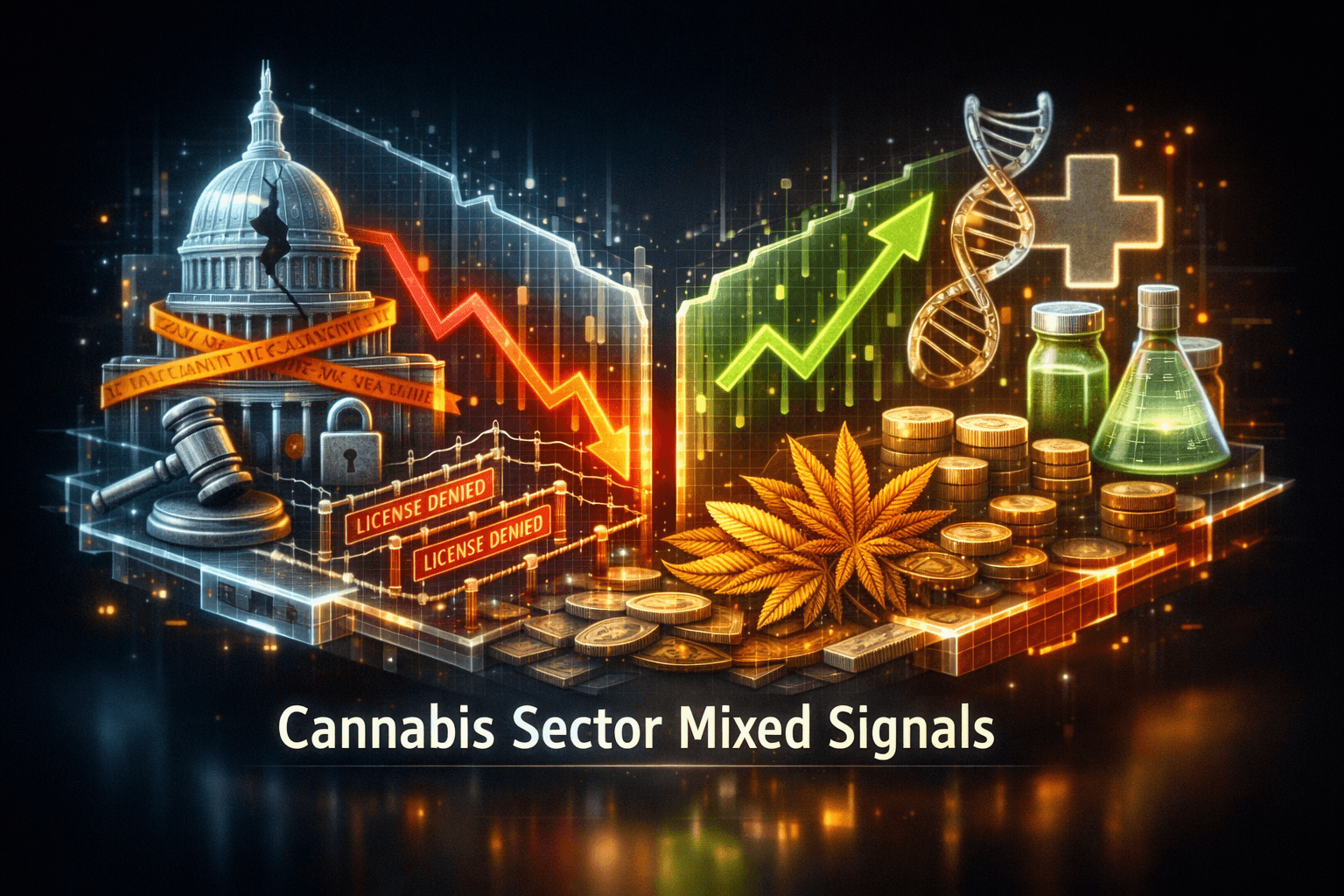
Today the cannabis sector felt like a mixed bag, with state-level clampdowns and political drama countered by constructive federal moves and fresh medical research. You saw headlines about tougher penalties and stalled retail rollouts, while Congress and researchers offered policy and clinical developments that could ease market uncertainty down the line.
Why does this matter to you? Regulation and public perception still drive demand, licensing timelines and legal clarity shape revenue prospects, and federal action can swing the playing field for many companies overnight. Expect volatility and the need for selectivity in the near term.
Market Highlights
Trading today was characterized by sentiment swings as headlines landed throughout the day. No single stock dominated the tape, but the broader narrative pushed investors to weigh risk versus policy upside.
- $MSOS, the cannabis ETF many use as a sector barometer, tracked mixed headlines and saw intraday swings as state and federal stories hit the wires.
- Plant-touching and ancillary names referenced by traders include $TCNNF and $GTBIF, while beverage and consumer plays such as $CURLF and major cultivators like $TLRY were mentioned in investor discussions.
- State regulatory stories out of Louisiana and Rhode Island contributed to a cautious tone, while House action on hemp THC and new federally funded research lent counterbalancing optimism.
Key Developments
Federal action on hemp THC delays potential recriminalization
The U.S. House is set to vote this week on legislation that would delay a federal ban on hemp-derived THC products that is scheduled to begin in November. The measure, already approved by the Senate, aims to give lawmakers more time to craft workable regulations to keep hemp THC products legal while safety and labeling rules are developed.
For investors this is a live policy catalyst that could prevent abrupt market disruption for many consumer and retail-facing businesses. Analysts note this creates breathing room for companies and regulators to align on standards, which may reduce short-term regulatory risk.
State-level enforcement, licensing bottlenecks, and political fallout
Not all state news was constructive. Louisiana’s governor asked schools to publicize a law that can jail people for up to a year for smoking marijuana within 2,000 feet of school property, a move that tightens enforcement and could influence public sentiment and retail behavior in that market.
Meanwhile Rhode Island’s 24 planned adult-use stores remain stuck in licensing limbo four years after legalization, underscoring how regulatory bottlenecks can delay revenue realization for operators and frustrate investors who expect rapid retail rollouts. Political scandals also surfaced in Florida, where a grand jury found $10 million destined for children's health care was diverted in part to fight marijuana legalization, adding a political risk element to state ballot dynamics this fall.
Medical and adjacent research supports demand narratives
Research headlines were a notable positive today. A federally funded cancer study highlighted differences in symptom relief tied to THC and CBD content and emphasized cost and access barriers, and researchers argued insurance coverage should be considered. Separately, an OHSU study reported sustained benefits from Oregon’s psilocybin program for many participants.
These studies strengthen the medical and therapeutic narrative, which analysts say can support policy change and broaden payer conversations over time. You should watch how medical evidence informs state and federal debate on coverage and clinical access.
What to Watch
Stay focused on policy calendars and licensing updates, because they drive near-term operational outcomes. You should track the House vote on the hemp THC delay closely, it could be a major sector-wide catalyst if approved.
- Legislative catalyst: House vote on delaying hemp THC recriminalization, expected this week.
- State regulation: Licensing timelines in Rhode Island and enforcement changes in Louisiana could reshape market access and local demand.
- Medical access: Follow publication of the federally funded cancer study details and any payer or insurer commentary about coverage for medical marijuana.
- Key tickers to monitor for headline sensitivity include $MSOS, $TCNNF, $GTBIF, $CURLF, and $TLRY as they often lead intraday reactions to policy or research news.
Risk factors to monitor include election-related political spending, continued state enforcement actions, and uneven rollout of licensing that can delay revenue for operators. How you react will depend on your time horizon and risk tolerance.
Bottom Line
- Today's news was mixed, with federal and clinical developments offering upside while state enforcement and licensing delays created near-term headwinds.
- Congressional action to delay a hemp THC ban is the highest-impact near-term catalyst; monitor the House vote this week.
- Medical research is reinforcing the therapeutic narrative and may help policy or payer conversations, but changes will be incremental.
- State-level politics and enforcement remain an unpredictable source of volatility for retail-facing companies and local markets.
- This is a time for selectivity, and for you to keep an eye on regulatory calendars and study publications that could change the conversation over weeks and months.
Investment disclaimer: This article provides market analysis and informational content only. Analysts note data suggests a range of outcomes, but this is not individualized investment advice and it does not recommend buying, selling, or holding any security.
FAQ Section
Q: How will a delay in the hemp THC ban affect product makers and retailers? A: A delay gives regulators and industry more time to craft rules, which may reduce the risk of an abrupt market shutdown and help manufacturers and retailers plan inventory and labeling.
Q: Should state enforcement news change my long-term view of the sector? A: State enforcement can cause short-term volatility and localized demand impacts, but long-term prospects depend more on federal policy, consumer adoption, and clinical validation.
Q: What research outcomes should investors watch next? A: Watch full publications and follow-up guidance on medical cannabis efficacy, insurance coverage discussions, and any safety or dosing recommendations that could influence clinical uptake and payer decisions.