The Big Picture
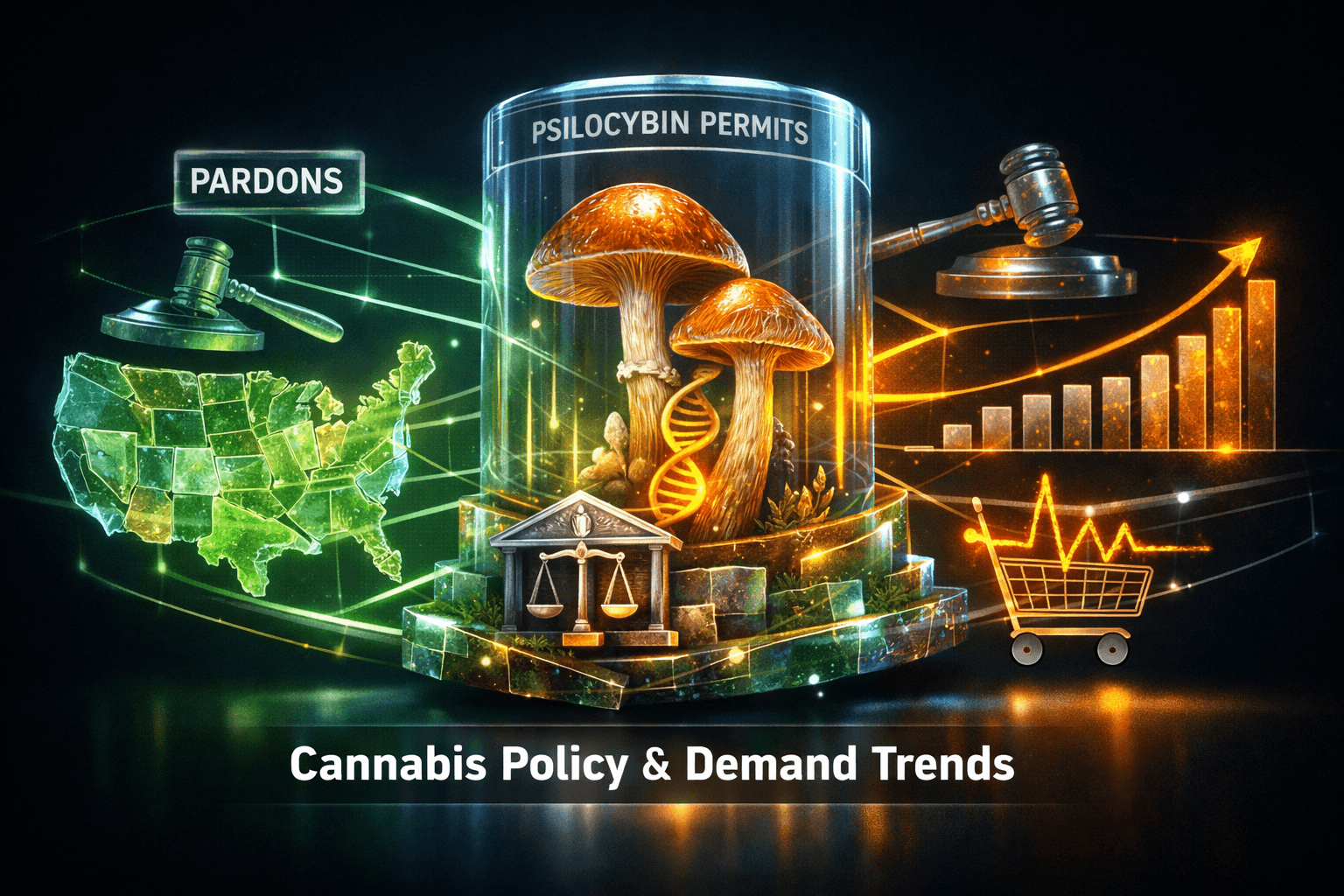
State-level action is setting the tone for the cannabis sector this morning, but the signals are mixed for investors. Colorado expanded cannabis pardons while New Mexico opened producer permit applications for medical psilocybin, both steps that expand legal and therapeutic pathways.
At the same time, Missouri is defending a contentious hemp product ban in federal court, and industry commentary and consumer guidance pieces highlight shifting product preferences and labeling complexity. You’ll want to pay attention to both regulation and demand, because they're moving the market in different directions.
Market Highlights
Quick facts and context from today’s top stories.
- Colorado pardons: The governor issued additional cannabis pardons, underscoring continuing state-level criminal-justice reforms that can ease market stigma and affect legacy market participants.
- New Mexico psilocybin: The state opened producer permit applications for its medical psilocybin program, an operational step that could create commercial pathways for psychedelics-focused companies and suppliers.
- Missouri hemp legal battle: State officials defended a ban on intoxicating hemp products in federal court, a case that could clarify or complicate regulatory frameworks for hemp-derived cannabinoids.
- Consumer-focused coverage: High Times published practical guidance on reading cannabinoid labels and a long-form piece arguing that flower remains central to many consumers, signaling persistent demand for traditional product categories.
- Sector tickers to watch include $MSOS, $TCNNF, $GTBIF, $CURLF, and $TLRY for flow and licensing updates, regulatory headlines, and consumer demand signals.
Key Developments
Colorado pardons expand clemency trend
Colorado’s governor issued additional cannabis pardons, reinforcing a broader national shift toward criminal justice remedies tied to cannabis policy. For investors, that may ease political headwinds in some markets and change how companies address legacy liabilities and community relations.
New Mexico moves psilocybin from law to logistics
New Mexico opened producer permit applications for its medical psilocybin program, with officials saying they want the program operational quickly because people are suffering. This is a practical milestone for psychedelics commercialization and could spur partnerships between cannabis operators and psychedelics-focused firms as producers seek licensing and supply chain readiness.
Missouri defends hemp ban in court
Missouri officials argued in federal court that the state’s ban on intoxicating hemp products can be enforced, while plaintiffs say the law creates contradictory legal status between hemp and marijuana. The outcome could be important for companies that sell hemp-derived cannabinoids across state lines and for ETF exposure to market segments tied to hemp innovation.
What to Watch
Forward-looking items and risks you should track today and in the coming weeks.
- Missouri court timeline, possible November motion dates, and any early rulings. Will this case set precedent for other states? You should monitor filings and the judge’s timeline closely.
- New Mexico permit process and operational milestones. Watch for application winners, issuance timelines, and any bonding or facility requirements that could delay market entry.
- Regulatory trend risk across states. State-level divergence, from pardons to product bans, creates localized winners and losers. Data suggests policy momentum in some regions but resistance in others, so your exposure may need to be selective.
- Consumer-product signals: labeling clarity and lab-report transparency are getting more coverage, and the broader industry debate about flower versus processed products is shifting shelf mix. Are consumers returning to flower, or will packaged cannabinoids continue to grow? That question will influence product strategy.
- Ticker watchlist: Monitor $MSOS for ETF flows and sector breadth, $TCNNF and $TLRY for operator licensing and retail dynamics, and $GTBIF and $CURLF for international and product-specific exposure. Look for licensing wins, legal developments, and quarterly updates that could move these names.
- Operational risks: supply-chain readiness for new psilocybin producers, potential enforcement actions around hemp-derived products, and compliance costs tied to labeling and testing standards.
Bottom Line
- Policy momentum is uneven: some states are easing criminal penalties and enabling psychedelics programs, while others are tightening hemp product rules.
- Regulatory outcomes matter more than headlines; legal fights in Missouri could reshape market access for hemp-derived cannabinoids.
- Consumer demand still favors flower for many users, but education on cannabinoid combinations and labeling could shift purchasing patterns over time.
- Watch the named tickers for flow-driven moves and company-level licensing or legal updates that will affect short-term performance.
- Analysts note both upside catalysts and regulatory headwinds, so a selective, information-driven approach is warranted if you’re tracking this sector.
FAQ Section
Q: How will Colorado pardons affect cannabis companies? A: Pardons help reduce stigma and can improve public relations for operators, though they don't directly change licensing or tax regimes.
Q: What does New Mexico’s psilocybin permit opening mean for investors? A: It turns policy into an operational process, creating potential commercial opportunities for producers and service providers that secure permits.
Q: Could Missouri’s hemp case impact nationwide hemp product sales? A: Yes, a ruling that upholds the ban could encourage other states to tighten rules and complicate interstate sales of hemp-derived cannabinoids.