The Big Picture
The most consequential development for the industry remains the federal rescheduling decision and the implications it's already creating for dealmaking and market structure. Analysts and lawyers are parsing how the April 23 rescheduling order alters tax, banking, and acquisition dynamics, even as procedural questions about the record and testing shortfalls keep risk front and center.
Markets were closed Saturday, so the moveable parts below reflect news and data released after the close of trading, and figures reported as of Friday, August 28. If you follow this sector, you'll want to balance near-term operational headwinds with a changing regulatory backdrop that could reshape capital flows over the next 12 to 24 months.
Market Highlights
Quick facts and numbers from this round of reporting.
- Federal rescheduling, first implemented April 23, is prompting law firms and industry observers to flag potential M&A interest from pharma and agricultural firms, creating more consolidation chatter in the sector.
- Canada set a monthly licensed cannabis sales record in June at CA$517.8 million, about US$374.5 million, which exceeded California's reported June sales of roughly US$372.4 million for that month.
- Kentucky's medical marijuana rollout is mixed: one report notes only 39 businesses open 20 months after legalization, while state officials say roughly half of licensed dispensaries are now open and there are more than 25,000 registered cardholders.
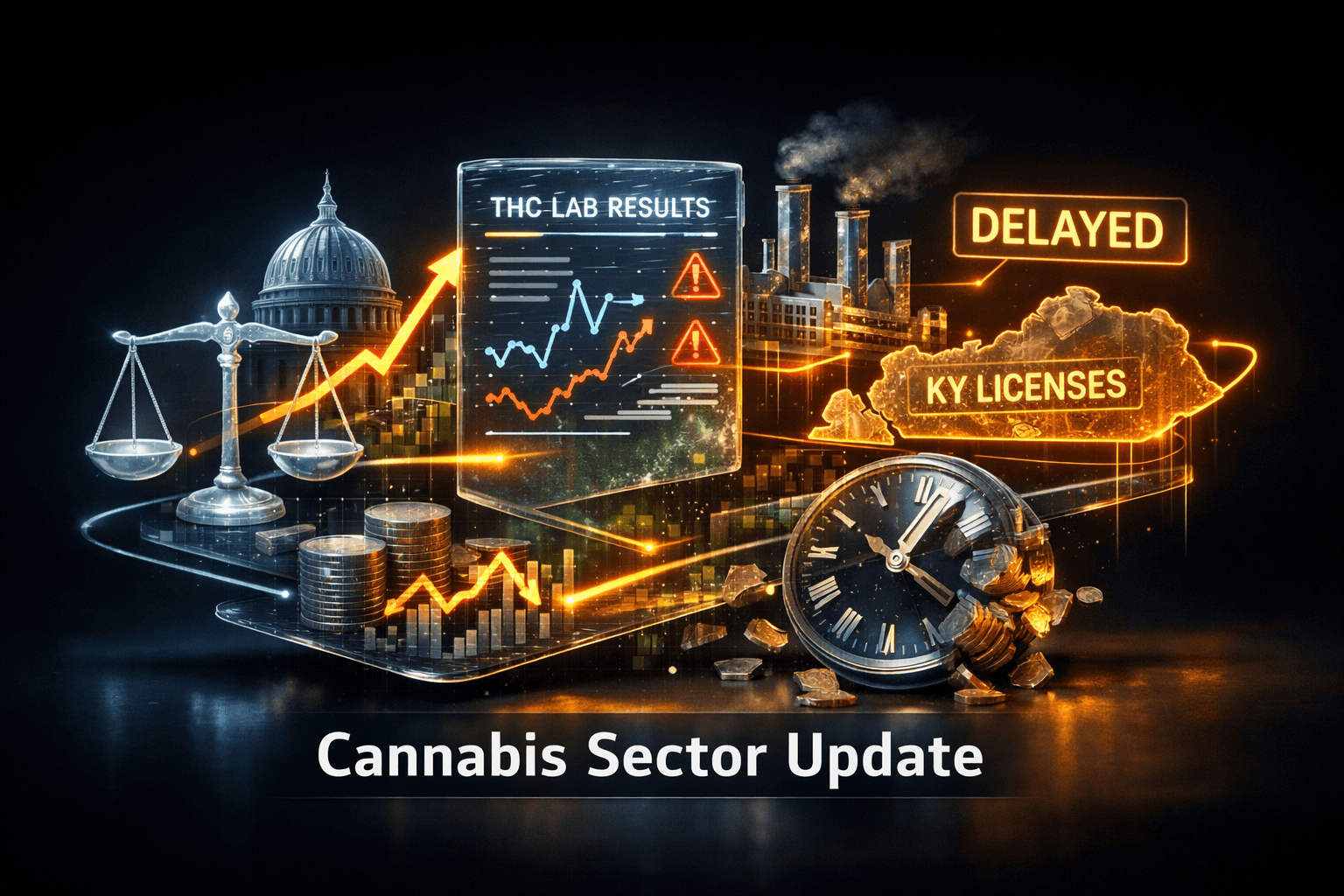
- Testing and labeling problems are attracting scrutiny. A High Times sample study found labels claiming on average 34.2% more THC than lab results, with only two of 15 products testing within legal limits in the sample set.
- Process accuracy matters, and it showed up in the DEA record. The agency published a 2,533-page transcript that required 294 corrections, some of which altered witness statements, which raises questions about the underlying evidentiary record used in rescheduling discussions.
- Watch these sector tickers for market signals: AdvisorShares Pure US Cannabis ETF (MSOS), Trulieve Cannabis (TCNNF), Green Thumb Industries (GTBIF), Curaleaf Holdings (CURLF), Tilray Brands (TLRY). Analysts and traders use these to gauge sentiment and flows in the cannabis complex as you monitor headlines and volume heading into next week.
Key Developments
Federal Rescheduling Fuels M&A Conversations
Commentary and an op-ed this weekend push the practical question: are cannabis companies positioned to be consolidators or acquisition targets under the new federal framework? Legal experts note the path to greater mainstream participation is opening, which could attract pharma, ag, and traditional consumer companies looking for scale.
That doesn't mean deals will happen overnight. Due diligence will focus on testing, compliance, and licensing. You should expect strategic buyers to prioritize companies with clean records and scalable supply chains.
Testing, Labels, and Trust
Quality-control issues surfaced again in an analysis showing systemic overstatement of THC content on labels, and another report highlighting discrepancies in testing and shipping paperwork in enforcement investigations. Those stories underline a recurring theme: until testing and chain-of-custody reform are addressed, buyers and regulators will remain cautious.
For investors, the takeaway is clear, you need to watch which companies are tackling lab standards and traceability. Those who do may avoid regulatory headaches that can erode value.
State Rollouts: Progress and Growing Pains
Kentucky illustrates how legalization can deliver both momentum and friction. Officials report the program has crossed milestones, including 25,000 cardholders and half of licensed dispensaries open. At the same time, supply shortages and licensing delays are hampering patient access and retailer operations.
That duality shows why state-level execution matters just as much as federal policy for company revenue trajectories. Are you tracking state-by-state rollouts and licensing backlogs? You should be.
What to Watch
Focus on catalysts and risks that could move sentiment once markets reopen on Monday, August 31.
- Deal activity and M&A announcements tied to rescheduling, including interest from large pharma and agriculture companies. Analysts note that deal flow may accelerate if financing terms improve.
- Regulatory follow-ups on testing standards and lab accreditation. Companies that disclose plans to address labeling accuracy or that obtain third-party certifications will be ones to monitor.
- Kentucky licensing updates and supply chain fixes, since state rollouts often signal where other late-adopter markets might run into trouble.
- Operational transparency, governance, and management credibility. Weekend reviews warned about opaque teams and AI trading pitches unrelated to core cannabis operations. You want clear leadership and audited reporting more than flashy claims.
- Sector exchange-traded and liquid names to watch for flow and sentiment: $MSOS, $TCNNF, $GTBIF, $CURLF, $TLRY. Look at volume and price action when markets open, and check whether headlines drive relative strength or weakness.
What are the odds the rescheduling story powers a near-term rally, and how fast will operational fixes follow? Those are the questions that will shape the sector's tone entering September.
Bottom Line
- Federal rescheduling is changing the strategic backdrop, creating acquisition interest, but it does not erase operational and testing issues that can impede deals.
- Canada's record sales show demand strength, while Kentucky's mixed rollout highlights the execution gap investors must track across states.
- Testing and labeling discrepancies remain a significant risk. Data suggests firms that proactively shore up lab integrity will be better positioned.
- Monitor M&A headlines, licensing updates, and which names disclose meaningful fixes to quality control and governance.
- Analysts note the sector has mixed signals, so a selective approach and focus on transparency and compliance matter if you follow these stocks.
FAQ
Q: How does federal rescheduling change the cannabis industry? A: Rescheduling alters federal legal exposure and may ease banking and tax frictions over time, which analysts say could increase acquisition interest from mainstream firms.
Q: Should I worry about the lab and label discrepancies reported this weekend? A: Yes, quality-control issues create regulatory and reputational risk, and companies that fix testing and traceability will likely have a relative advantage.
Q: Which metrics should I track for state rollouts like Kentucky? A: Watch the number of open dispensaries, registered patient or cardholder counts, supply availability, and licensing timelines for insight into revenue potential and operational strain.