The Big Picture
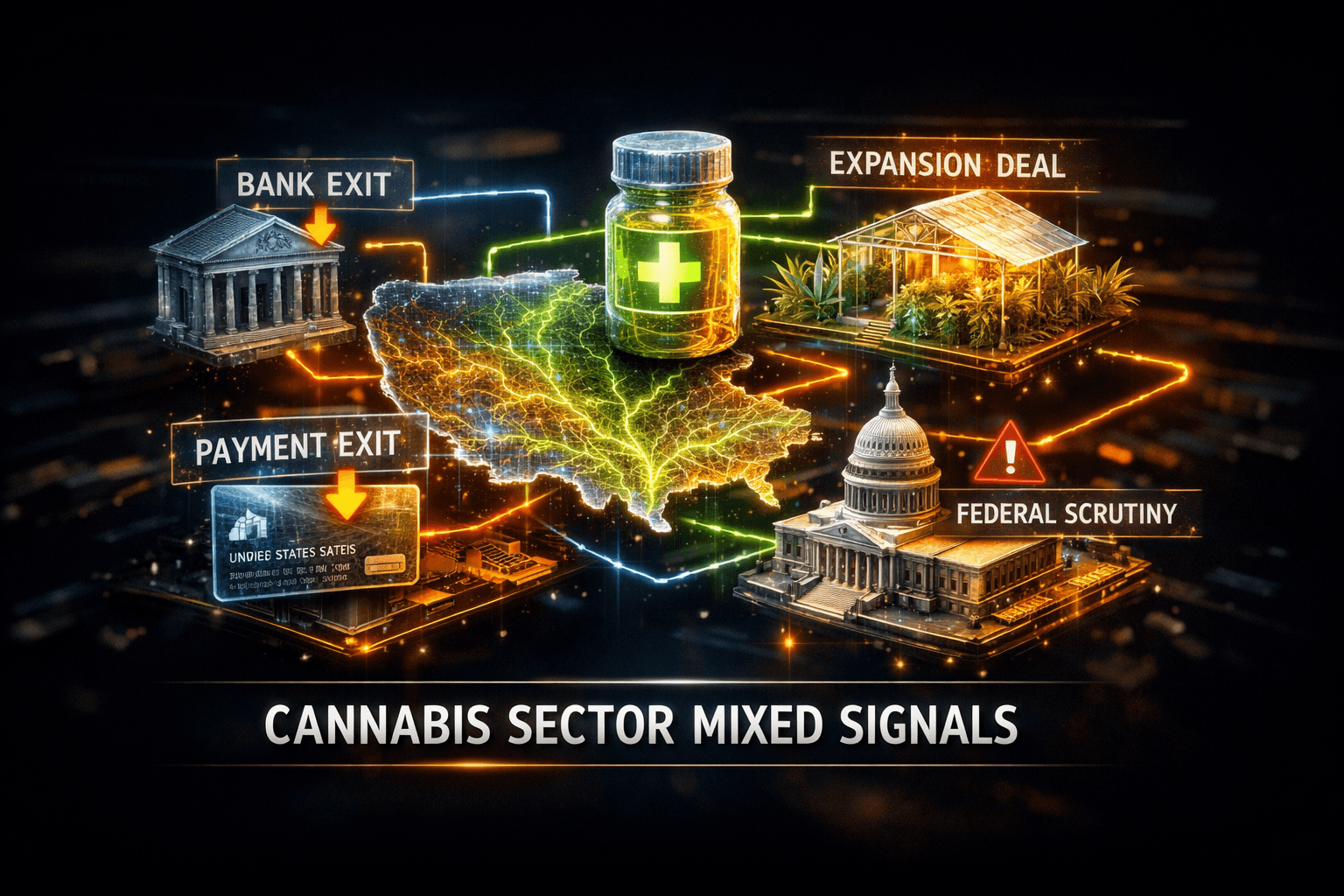
The cannabis industry posted a string of mixed developments on Aug 25, 2026, with expansion and policy progress offset by service-provider exits that raise operational risks for retailers and processors. You saw both M&A and regulatory movement today, and that combination matters because it affects access to markets, payments, and future demand.
For investors, the takeaway is nuanced: growth catalysts are present, but infrastructure and policy friction could constrain near-term execution. What does that mean for your exposure to the sector tomorrow and beyond?
Market Highlights
Today’s headlines were led more by strategic moves and regulatory items than by market-rattling earnings or price shocks. Below are the quick facts and company specifics you should have on hand.
- Barney’s Farm marks 40 years of cannabis seed genetics, announcing F1 precision hybrids, new autoflower F1s, and expansion activity in the US and Germany. This is an industry branding and supply story, not a public-company earnings item.
- Square told some hemp and CBD merchants their accounts will close on November 5, 2026, prompting POS and payment vendors like Cova Software to emphasize support for regulated cannabis retailers.
- Grown Rogue paid $4.5 million to buy PharmaCann’s New York medical permit and related assets, targeting indoor canopy shortages in New York’s market.
- US Eagle Federal Credit Union will close its cannabis banking arm on November 1, citing rising competition in the space rather than weak demand, signaling shifting economics for community banks offering cannabis services.
- Illinois added sickle cell disease and polyendocrine metabolic ovarian syndrome with chronic pain as qualifying conditions for medical marijuana, expanding patient access in a populous state.
- Federal-level activity continues: the DEA released the full transcript from the rescheduling hearing ahead of the judge’s recommendation, and the FDA is soliciting external data on how consumers use cannabis and related products.
- Social and legal context remains in focus: FBI data shows more than 200,000 arrests for marijuana possession last year, reminding markets that enforcement and public policy are still part of the investment equation.
- Key tickers to watch for sector exposure include AdvisorShares Pure US Cannabis ETF (MSOS), Trulieve Cannabis (TCNNF), Green Thumb Industries (GTBIF), Curaleaf Holdings (CURLF), and Tilray Brands (TLRY) as you evaluate ETFs and large-cap names tied to these developments.
Key Developments
Expansion, genetics and supply-side innovation
Barney’s Farm celebrated four decades with new F1 precision hybrids and expansion plans in the US and Germany. For growers and wholesale supply chains, improved genetics and autoflower F1s can raise yields and consistency, which matters if you’re tracking downstream pricing or retail assortment shifts.
Payments and banking: exits complicate operations
Square’s planned exit for hemp and CBD merchants, with account closures slated for November 5, 2026, is a tangible operational risk for many retailers. Cova Software contrasted that move by reaffirming support for regulated cannabis retailers, but the episode underlines the fragile nature of payments relationships in this sector.
Separately, US Eagle Federal Credit Union’s decision to wind down its cannabis banking arm on November 1, citing rising competition, shows the market for cannabis banking is consolidating. That’s good in one sense, because it suggests growing supply of services, but it can disrupt relationships and access in the short term.
Regulatory and policy signals — patient access and federal scrutiny
Illinois added two medical qualifying conditions, expanding the pool of patients who can access legal cannabis in a major market. That’s a straightforward demand tailwind for licensed medical operators in-state and for companies competing for patient share.
On the federal level, the DEA released the full rescheduling hearing transcript while the administrative judge prepares a recommendation, and the FDA put out a request for data about consumer use patterns. Those filings indicate federal agencies are building the evidence base for future policy decisions, but the outcomes and timing remain uncertain.
What to Watch
Expect headlines and potential market reactions tied to payments, banking, and the federal regulatory timeline. Who will fill the payment and banking gaps left by exits? And how will federal agencies act on the transcripts and data they’re collecting?
- Payment and POS transitions: watch announcements from Cova and other POS vendors, and track which acquirers or fintechs move to serve hemp and CBD sellers ahead of November 5.
- Banking access: monitor other regional banks and credit unions for follow-on exits or expansion, particularly around the November 1 US Eagle exit. This affects cash handling and working capital for operators.
- Federal regulatory calendar: look for the DEA judge’s recommendation following the transcript release and any FDA solicitations that could presage labeling, surveillance, or research requirements.
- State-level demand: track Illinois patient registrations after the new qualifying conditions, and keep an eye on New York canopy development tied to the Grown Rogue $4.5 million permit acquisition.
- Sector ETFs and large names: keep $MSOS, $TCNNF, $GTBIF, $CURLF, and $TLRY on your radar as indicators of investor sentiment and potential volatility tied to today’s stories.
Bottom Line
- Mixed headlines dominated Aug 25, with expansion and patient access gains offset by payment and banking exits.
- Operational risk is rising for retailers that rely on third-party payments and local banking; you should follow which vendors step in before early November.
- Federal activity is accelerating, but outcomes remain uncertain; the DEA transcript and FDA data requests are items to watch for policy implications.
- M&A and permit deals, like Grown Rogue’s $4.5 million New York purchase, point to persistent demand for cultivation capacity in constrained markets.
- Overall, the news suggests selectivity is advised, as growth opportunities coexist with tangible execution risks and regulatory noise.
FAQ
Q: What should I watch first regarding the payment and banking exits? A: Track account closure dates listed by Square, November 5, 2026, and Nov. 1 for US Eagle’s banking arm, plus vendor announcements from POS providers like Cova.
Q: Will the DEA transcript lead to immediate rescheduling? A: The transcript makes the record public and helps the administrative judge form a recommendation, but it does not guarantee immediate policy changes; timing remains uncertain.
Q: How material is Illinois adding two medical qualifying conditions? A: Expanding qualifying conditions increases potential patient counts and could support demand for licensed medical producers and dispensaries in Illinois over time.