The Big Picture
The cannabis sector wakes up to a mixed but tilted picture on Aug 24, where policy uncertainty and state-level restrictions are creating clear headwinds for licensed operators. You saw strong demand for new entrants in Missouri, but federal and state policy moves this week leave many growers and operators on the outside looking in.
For investors, that means growth prospects are still real, but risk around funding, taxation, and regulatory clarity has increased. How you position for this will depend on whether you favor momentum in market access or protection against policy-driven downside.
Market Highlights
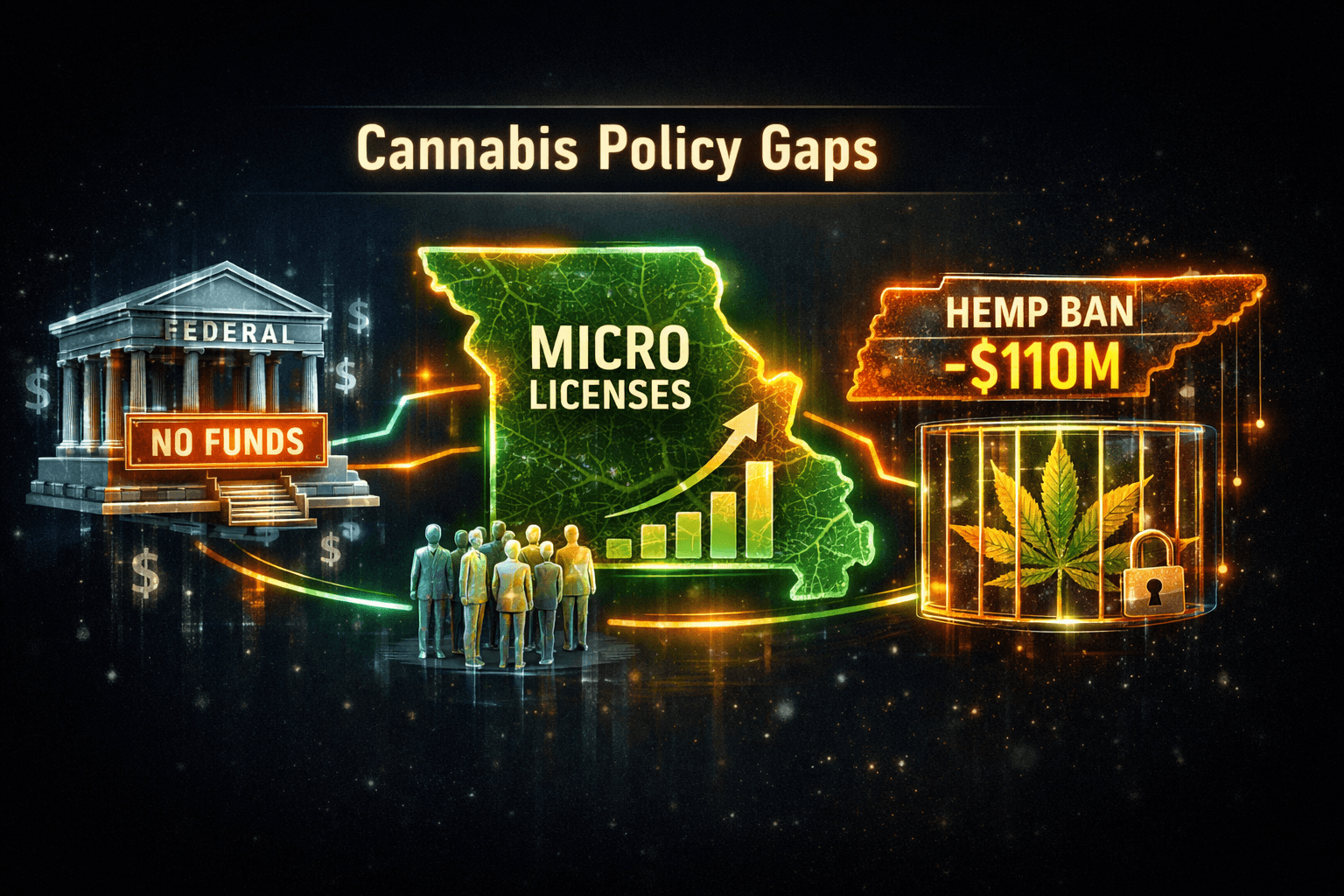
- Missouri received nearly 900 applications for 77 microbusiness licenses, the Lottery will hold a public draw on Sept 9 to allocate awards.
- A federal executive order to pay farmers for soil regeneration excludes state-licensed cannabis growers, though hemp growers remain eligible.
- South Dakota and other states report the federal rescheduling process has left state officials with more questions than answers on tax and banking implications.
- Tennessee’s July ban on many cannabinoid-derived hemp products is projected to create a roughly $110 million state tax shortfall, according to local projections.
- Sector names to watch for flow and volatility today: $MSOS, $TCNNF, $GTBIF, $CURLF, $TLRY.
Key Developments
Missouri microbusiness licensing surge
Missouri officials disclosed nearly 900 applications for the final microbusiness licensing round, with 77 licenses available and a lottery draw set for Sept 9. That level of demand signals continued entrepreneurial interest and potential for more small operators to enter regulated markets, especially those focused on local retail and cultivation.
For you, that means competition for local market share may intensify where new licensees win awards, but it also points to consumer demand and a deepening supply chain at the state level.
Federal funding order leaves licensed cannabis out
A recent executive order creating payments for farmers who adopt soil-healing practices includes hemp growers, but state-licensed cannabis cultivators were left out. Regenerative agriculture projects by hemp farms will be eligible for federal support, while many cannabis growers will not get the same access to the program’s cost-share payments.
That split creates a funding gap for cannabis cultivators who may already face higher compliance and banking costs. You should note this widens the competitive and cost disadvantage for licensed cannabis operations compared with hemp producers.
Rescheduling uncertainty and state-level fallout
Federal rescheduling discussions were supposed to ease access to banking and tax deductions for medical programs, but state officials say federal agencies aren’t answering key questions. South Dakota officials, for example, told lawmakers they still lack clarity on how rescheduling will translate into operational and tax outcomes at the state level.
Without federal guidance, banks and tax authorities may be slow to change practices, leaving many operators with unresolved exposure on deductions, cash handling, and financial services. Who benefits if clarity arrives, and when will it arrive? Those remain open questions.
What to Watch
- Missouri lottery draw, Sept 9: track awarded licenses and any market concentration in metropolitan areas. If you follow state markets, this draw will shift local supply dynamics.
- Federal guidance on rescheduling: watch Treasury and DOJ statements. Analysts note a lag between policy announcements and operational change, so expect gradual impacts to banking and tax treatment.
- State-level policy moves: Tennessee’s ban and its fiscal hit could prompt legislative pushback or litigation. Monitor state revenue reports and legal challenges for signals.
- Capital flows into ETFs and names: watch $MSOS for broad ETF flows, and individual movers like $TCNNF, $GTBIF, $CURLF, and $TLRY for volatility tied to regulatory headlines.
- Banking availability and cost structures: if federal rescheduling guidance remains vague, you could see continued premium pricing for financial services and insurance for state-licensed operators.
- Earnings and municipal tax receipts: monitor quarterly reports and state sales tax collections for early evidence of demand shifts after policy changes.
Bottom Line
- Policy uncertainty is the dominant near-term risk across the sector, and it’s affecting access to funding and tax treatment for many licensed operators.
- Missouri’s large applicant pool shows demand and new growth opportunities, but winners will face immediate competition and operating cost pressure.
- Tennessee’s hemp product ban highlights how state-level restrictions can create meaningful fiscal and revenue impacts, adding political risk to market exposure.
- Federal rescheduling could be positive if it translates into banking and tax relief, but officials are not yet providing actionable answers, so momentum may be limited for now.
- Watch ETFs and larger names for sentiment shifts, and be ready to adjust if regulatory clarity emerges or further bans are enacted.
FAQ
Q: Will federal rescheduling immediately give cannabis businesses access to banking and tax deductions? A: No, analysts note rescheduling is only the start; banking and tax changes typically require separate regulatory guidance and industry adoption, so benefits may be gradual.
Q: How material is the Missouri licensing round to the national market? A: It’s primarily a state-level development, but nearly 900 applicants for 77 slots signals ongoing demand and could affect local supply, pricing, and consolidation trends that matter to regional investors.
Q: Could excluded growers get retroactive federal support for regenerative practices? A: At this stage, the executive order includes hemp but not state-licensed cannabis growers; future program changes are possible, but you should assume support isn’t guaranteed until official updates are published.