The Big Picture
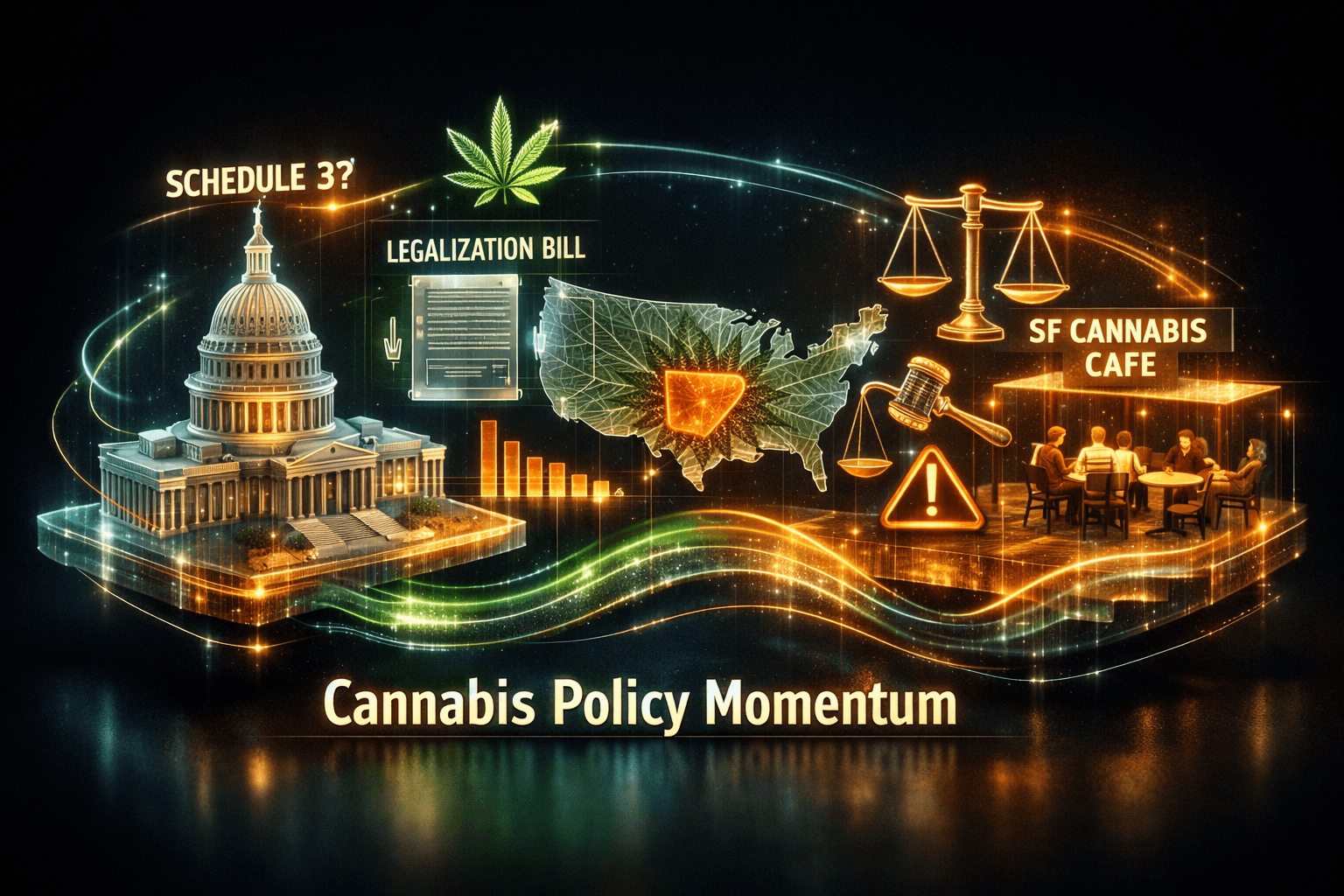
Policy momentum returned to the center of the cannabis story heading into the long weekend, as federal rescheduling signals and a reintroduced legalization bill pushed reform back into the headlines.
Those developments matter because federal change would reshape taxes, banking access, and interstate commerce, which could lift margins and valuations across the sector. At the same time, you should note that litigation and localized sales softness keep risk on the table.
Market Highlights
U.S. markets were closed on Saturday, July 18, so traders are left to parse policy headlines and state-level developments before markets reopen on Monday, July 20.
- Federal policy: The DEA hearing and related filings have renewed talk of rescheduling, while Senators Booker, Schumer, and Wyden reintroduced a full legalization bill.
- State policy: A California judge ruled the state can tweak cannabis law without voter approval, and San Francisco approved cannabis cafés to allow on-site consumption and food service.
- Sales data: Arkansas reported a modest pullback in medical cannabis sales, roughly a 2.6% decline through midyear versus last year, indicating some near-term demand headwinds.
Key Developments
Federal Rescheduling and Congressional Action
There were two big federal threads on Friday that you'll want to weigh together. First, reporting on the DEA hearing showed opposition witnesses making points that could support moving cannabis out of Schedule I toward Schedule III, a technical change that would lower regulatory hurdles and open research and banking avenues.
Second, Senate Democrats reintroduced the Cannabis Administration and Opportunity Act to remove cannabis from the Controlled Substances Act and set up federal regulatory authority. That dual track, administrative and legislative, puts the industry in a stronger position if either body moves forward.
Legal Pushback and Litigation Risk
Not all actors support rapid change. A pharmaceutical company and a drug-testing trade group asked a federal court to block the administration's rescheduling while litigation proceeds, arguing rescheduling could increase abuse and raise safety issues. That challenge creates short-term legal uncertainty for federal action.
Still, the public record from the DEA hearing and the Senate reintroduction suggest regulatory reform is alive. How quickly change happens is less clear, and litigation could slow the timetable, so you're likely to see episodic headline risk as challenges proceed.
State-Level Moves: California, San Francisco, and Arkansas
On the state front, a California judge ruled the state can tweak cannabis law without reverting to voter referendums. That gives policymakers more flexibility to implement tax or regulatory changes, which could ease burdens on licensed operators in the state.
San Francisco approved a cannabis café ordinance permitting on-site consumption with food and live entertainment. That creates new retail formats and marketing channels for licensed operators, a potential incremental demand driver in mature markets.
By contrast, Arkansas reported a slight decline in medical sales, down about 2.6% in the first half of 2026 versus 2025 and $140.3 million in H1 sales. That soft patch after a record 2025 suggests normalization after a big year, and it shows state-level demand can still surprise you.
What to Watch
Watch the federal docket and the timelines for both administrative rescheduling and congressional debates. Will the DEA or the courts set the pace, or will Congress pick up the baton? That question matters for regulatory scope and for the size of any tax or banking relief.
Keep an eye on these names and ETFs as policy headlines evolve: $MSOS, $TCNNF, $GTBIF, $CURLF, and $TLRY. You should track commentaries from major operators and the timing of implementation guidance if rescheduling proceeds.
Also monitor state rollouts that can create immediate revenue impacts, like California regulatory tweaks and the new San Francisco café licenses. Finally, watch litigation updates filed by industry opponents and drug-testing firms, since court rulings can delay administrative action.
Bottom Line
- Federal momentum is back in focus, with rescheduling debate and a reintroduced legalization bill suggesting policy upside for the sector.
- Legal challenges and state-level demand dips, such as Arkansas' modest sales decline, mean timing and impact remain uncertain.
- Local wins like San Francisco cannabis cafés expand retail formats and may boost sales for licensed operators in major markets.
- Track the DEA docket, Senate activity, and court filings closely, since each will shape near-term volatility and longer-term fundamentals.
- Be selective and patient, because policy progress may be incremental, but it could open the door to meaningful industry change over time.
FAQ
Q: How likely is federal rescheduling to happen soon? A: Rescheduling momentum has increased, but litigation and administrative timelines make the exact timing uncertain.
Q: Will the Senate bill immediately legalize interstate sales? A: The reintroduced bill aims to remove cannabis from the Controlled Substances Act and set up regulation, but enactment would take time and implementation rules.
Q: How should you monitor state-level impacts? A: Watch state sales reports, local ordinances like San Francisco's café rule, and tax or regulatory tweaks that affect licensing and margins.