The Big Picture
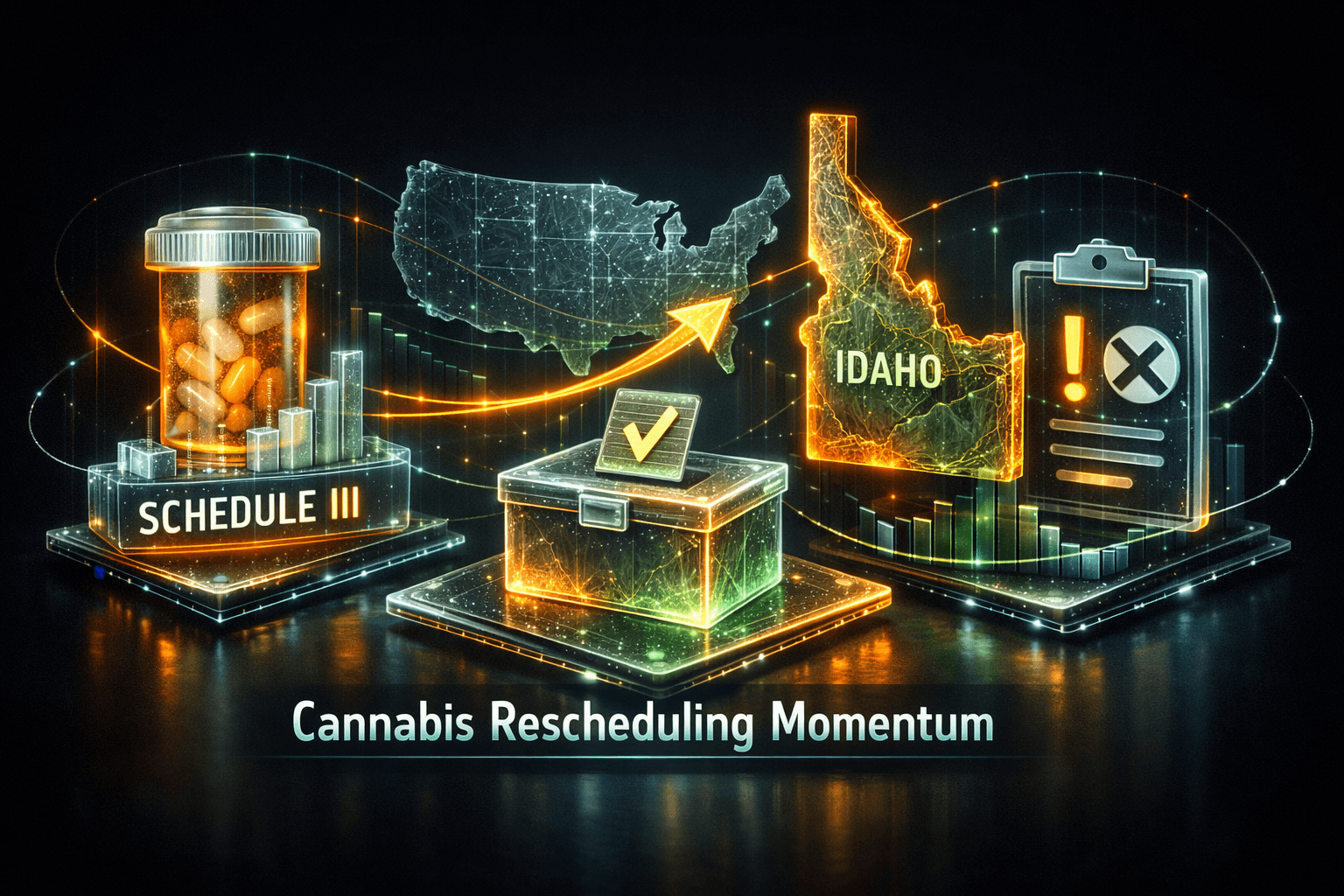
The most impactful development this week is clear, the DEA told a federal tribunal it supports moving cannabis from Schedule I to Schedule III. That federal-level shift, paired with growing state and territorial reform activity, has created tangible policy momentum that could reshape banking, research, and corporate operations for the sector.
At the same time you should note that safety groups and new public-health research are pushing back, and enforcement and civil fraud cases remind you regulatory risk is still very real. Markets were closed for the holiday weekend, so investors are digesting these developments heading into the next trading session after Thursday, July 2.
Market Highlights
Key headlines and facts to scan quickly before you dig deeper.
- Federal: The DEA told an administrative hearing this week it supports reclassifying cannabis to Schedule III, according to reports. That position could clear regulatory hurdles for research and banking access.
- State-level action: Idaho organizers submitted county-verified petitions for a medical marijuana ballot initiative, sending the measure to state officials for final review ahead of the November election.
- Public health and safety: A JAMA Health Forum study tracking about 463,000 adolescents found prior-year cannabis use was associated with significantly higher risks of later psychotic disorders, bipolar disorder, depression, and anxiety, with roughly double the risk for psychotic and bipolar disorders in some comparisons.
- Global context: The UN flagged 755 new psychoactive substances and estimated 331 million people use drugs globally, underlining the broader policy and public-health challenges regulators face.
- Legal risk: A Cuyahoga County grand jury returned a 20-count indictment in an alleged cannabis candy securities fraud scheme, a reminder of ongoing compliance and criminal-risk issues in the space.
Key Developments
Federal Rescheduling Hearing
The DEA opened an administrative hearing this week and, importantly, the agency argued in favor of moving cannabis to Schedule III. DEA counsel said the government will call a limited number of witnesses, framing the agency’s position on scientific and medical grounds.
Why this matters for you, the investor: a Schedule III classification could ease banking frictions, expand clinical research, and reduce some federal compliance costs for companies. It would not erase all risk, but momentum at the DEA is a meaningful policy catalyst that analysts note could unlock sector re-rating if sustained.
Safety Groups Push Back
Transportation and safety organizations, led by the American Trucking Associations, sent a letter warning federal officials about rescheduling consequences for drug testing of truck drivers, pilots, transit operators and other safety-sensitive workers. They raised serious safety concerns and asked for protective steps to preserve workplace testing regimes.
This pushback raises regulatory uncertainty you need to monitor, especially around implementation. Could federal agencies carve out exemptions for safety-sensitive roles, or will they tighten other rules to address these concerns? Either outcome could create operational and compliance costs for companies and their customers.
State, Territorial and Cultural Momentum
State-level activity looks constructive. Idaho’s medical marijuana campaign submitted county-verified petitions for final state review, keeping the possibility of a November ballot measure alive. Overseas, the Cayman Islands’ Law Reform Commission published options for cannabis reform and invited public comment after a decriminalization vote.
Meanwhile cultural coverage continues to normalize cannabis, with lifestyle and entertainment pieces highlighting new consumer touchpoints. That helps you understand demand-side narratives, even as regulators and public-health studies shape policy risk.
What to Watch
Here are the catalysts and risks that should be on your radar through the next trading day and beyond. You need to watch these items closely because they can alter business models and valuations quickly.
- DEA timeline and rulings, including any formal scheduling order or implementation guidance, and whether federal agencies issue carve-outs for safety-sensitive industries. Will rules move fast enough to benefit companies, or will implementation be slow and complex?
- Idaho ballot review outcome and any November ballot developments in other states. State-level legalization or medical initiatives can change local demand and licensing opportunities.
- Regulatory responses from transportation and safety agencies, including guidance on drug testing protocols for drivers and pilots, which could affect retail and wholesale customers and corporate contracting.
- Public-health research headlines and media coverage, such as the JAMA Health Forum study on adolescent mental health risks, and how policymakers react to those findings when shaping age limits, marketing rules, and potency limits.
- Legal and enforcement actions, including securities fraud cases, which underscore the need for corporate governance and compliance. Watch for additional indictments or enforcement trends in local jurisdictions.
- Sector ETFs and names to monitor for flows and sentiment, including $MSOS, $TCNNF, $GTBIF, $CURLF, and $TLRY. These tickers often lead the narrative for retail and institutional sentiment.
Bottom Line
- Federal momentum, especially the DEA signaling support for Schedule III, is a major bullish policy catalyst that could ease banking and research barriers, but implementation details will matter a great deal.
- Safety and public-health pushback introduce tangible regulatory risks, particularly around workplace drug testing and youth-use concerns, so caution is warranted.
- State and territorial developments, from Idaho to the Cayman Islands, are expanding the policy front and can create near-term commercial opportunities.
- Legal and compliance issues remain a persistent threat, as shown by the 20-count indictment in Ohio, so governance should be a screening factor for your research.
- Watch the DEA process, state ballot calendars, and agency guidance closely, they are the likely near-term drivers of sector sentiment and re-pricing.
FAQ Section
Q: How soon could a DEA rescheduling decision affect companies? A: The timing varies, analysts note; even if the DEA moves to Schedule III, administrative implementation, agency guidance, and congressional or agency follow-up could take months, so near-term change may be incremental.
Q: Will rescheduling end all federal cannabis restrictions? A: No, rescheduling to Schedule III would change some legal and research frameworks, but it would not fully federalize commercial legalization or eliminate state rules, banking friction, or employment policies.
Q: What should I monitor this week as markets reopen? A: Track any DEA procedural updates, the Idaho ballot review result, agency responses to transportation group concerns, and headlines from public-health studies, all of which can shift sentiment quickly.