The Big Picture
The DEA’s controversial rescheduling hearing stole the spotlight today, with restricted access and no livestream yet testimony from government witnesses arguing for cannabis medical value. That federal-level attention matters because any shift in scheduling would reshape banking, research, and interstate business dynamics for the entire sector.
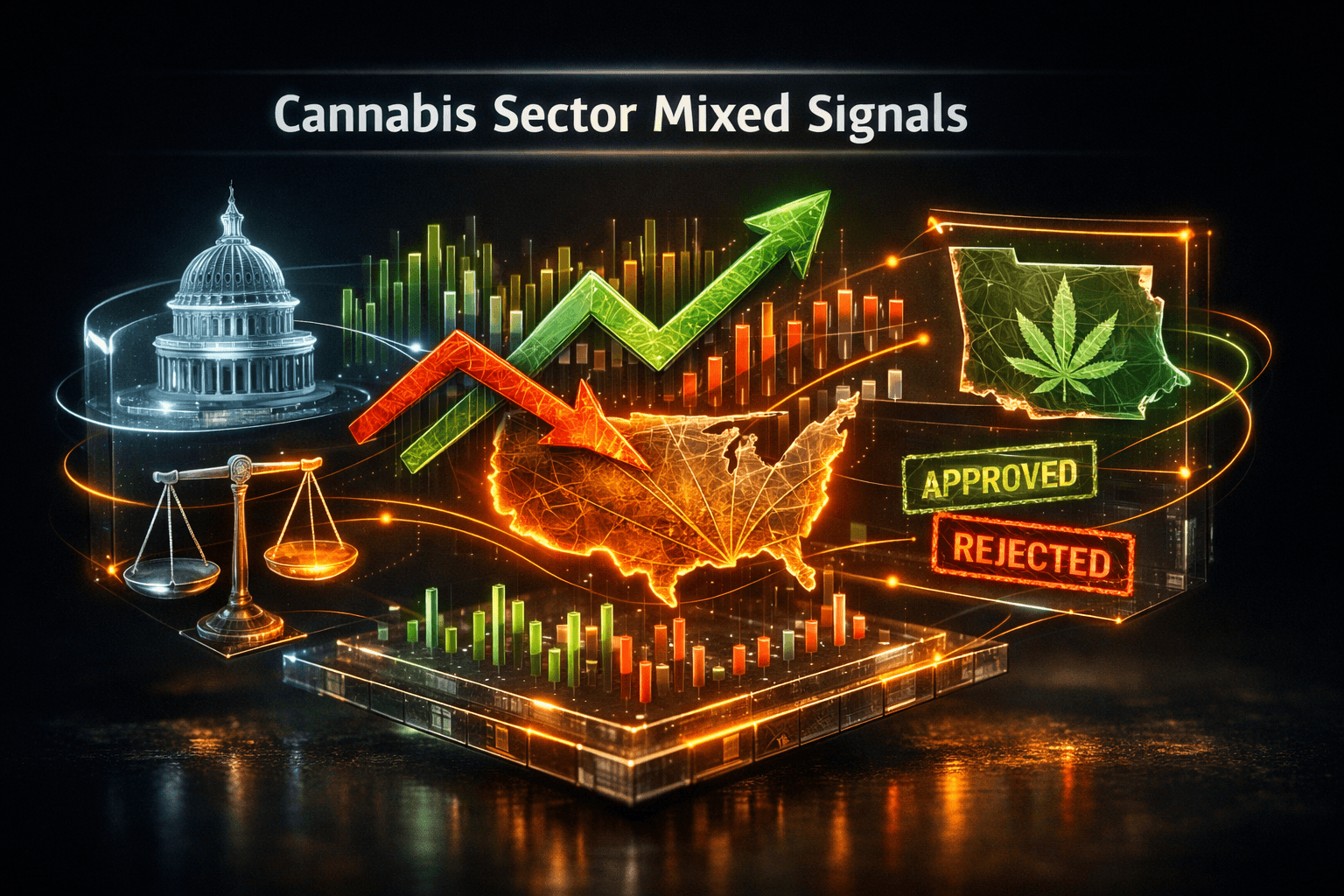
At the same time, states moved in opposite directions: Nebraska finalized medical marijuana regulations and Guam issued its first cultivation permit, while Hawaii and Idaho saw enforcement and judicial setbacks that could slow market growth in those jurisdictions. What does that mean for investors and your positions in sector-related names?
Market Highlights
Trading reflected a sector reacting to policy rather than earnings. Volume was concentrated in names tied to U.S. policy and multistate exposure. Below are the top snippets to scan quickly.
- Nebraska, regulatory win: Nebraska Gov. Jim Pillen signed permanent medical cannabis rules this week, with regulations becoming part of state code next Monday. That clears a path for licensed operations and gives operators a compliance framework.
- Guam permit: The Cannabis Control Board approved the island’s first cultivation operating permit, seven years after adult-use legalization, a symbolic milestone for territory markets and a blueprint for other small jurisdictions.
- Hawaii enforcement and lawsuit: A new enforcement push targeting non-compliant hemp and CBD products prompted a federal lawsuit from affected retailers, who say the rules would remove nearly 90 percent of some product lines.
- Idaho petition setback: An Idaho judge disqualified petition signatures submitted minutes late, a procedural defeat that delays medical legalization efforts and shows how timing and administration can shape reform outcomes.
- Sector tickers to watch: major trackers and names investors track include $MSOS, $TCNNF, $GTBIF, $CURLF, and $TLRY.
Key Developments
DEA rescheduling hearing, access and testimony
The DEA limited participation and blocked cameras for a rescheduling hearing, prompting criticism about transparency. Despite those restrictions, government witnesses testified to cannabis medical utility and comparative safety, and legal analysts called the agency’s narrow invite list an odd but potentially strategic sign for supporters.
Why it matters: federal rescheduling would alter research access, reduce barriers to banking, and change enforcement risk. Could this accelerate momentum toward Schedule III or another change? The hearing raised that possibility without delivering a decision today.
State-level wins: Nebraska rules and Guam permit
Nebraska’s move to codify medical cannabis rules gives businesses a clear regulatory horizon, which should reduce licensing uncertainty and speed market entry once applications open. Guam’s first cultivation permit is smaller in scale but important for operators and suppliers watching territory rollouts.
For operators and suppliers these are practical wins: predictable regulations can lower compliance costs and make capital deployment easier. If you follow state-by-state rollouts, these developments offer concrete timelines to track.
Legal headwinds: Hawaii enforcement and Idaho procedural loss
Hawaii’s crackdown on non-compliant hemp and CBD products has prompted a federal suit, with retailers warning mass product removals could “destroy” some businesses. Retail CBD will face higher regulatory scrutiny if enforcement holds.
In Idaho, a narrow timing dispute led a judge to exclude signatures from a medical ballot drive, underlining how legal and administrative technicalities can frustrate reform efforts. Both stories are reminders that not all progress is linear across states.
What to Watch
Keep an eye on federal and state timelines that will shape market access and investor sentiment. You’ll want to monitor DEA rulemaking follow-ups, state licensing application windows, and any appeals or court rulings tied to today's legal actions.
- DEA next steps: Look for agency commentary, formal rule proposals, or a timeline for a scheduling decision. Any signal toward rescheduling would be a major catalyst for research, banking access, and institutional interest.
- State licensing calendars: Nebraska’s rules go into state code next Monday, so watch for application guidelines, fee schedules, and rollout dates from regulators.
- Legal fallout in Hawaii and Idaho: Track the federal lawsuit docket in Hawaii and any appeals or rehearings in Idaho, since outcomes will affect retail and ballot dynamics.
- Ticker watch: If you’re tracking sector ETFs and major names, monitor $MSOS, $TCNNF, $GTBIF, $CURLF, and $TLRY for volatility around policy headlines. These tickers often move on legal and regulatory news rather than company fundamentals.
- Risk factors: enforcement actions, narrow judicial rulings, and uneven state implementation timelines can create headline-driven volatility. Have a plan for how you’ll react if headlines move your positions sharply.
Do you need to act today? Not necessarily, but you should be ready to respond to new federal guidance or a state licensing announcement. How will you position for the next policy move?
Bottom Line
- Federal focus dominated today, with the DEA hearing raising both transparency concerns and the prospect of progress on rescheduling.
- State-level moves were mixed, with Nebraska and Guam delivering regulatory clarity, and Hawaii and Idaho posing enforcement and procedural roadblocks.
- Expect continued headline-driven volatility, especially in ETFs and large-cap names tied to U.S. policy, including $MSOS, $TCNNF, $GTBIF, $CURLF, and $TLRY.
- Analysts note that rescheduling would be a structural positive for the sector, but legal and administrative hurdles at the state level mean outcomes will vary widely by market, making the near-term picture a mixed bag.
- This article is for informational purposes only, and it does not recommend buying, selling, or holding any security.
FAQ
Q: Will federal rescheduling happen soon? A: The hearing increased visibility but did not produce a decision. Watch for formal DEA announcements or rule proposals, which could take weeks or months.
Q: How do state regulatory wins affect multistate operators? A: Clear state rules reduce licensing uncertainty and can speed market entry, but each state’s commercial rules and timelines differ, so effects are incremental.
Q: What should you watch about hemp and CBD enforcement? A: Track litigation outcomes, product compliance standards, and retail enforcement actions because they directly affect shelf availability and small retailers.