The Big Picture
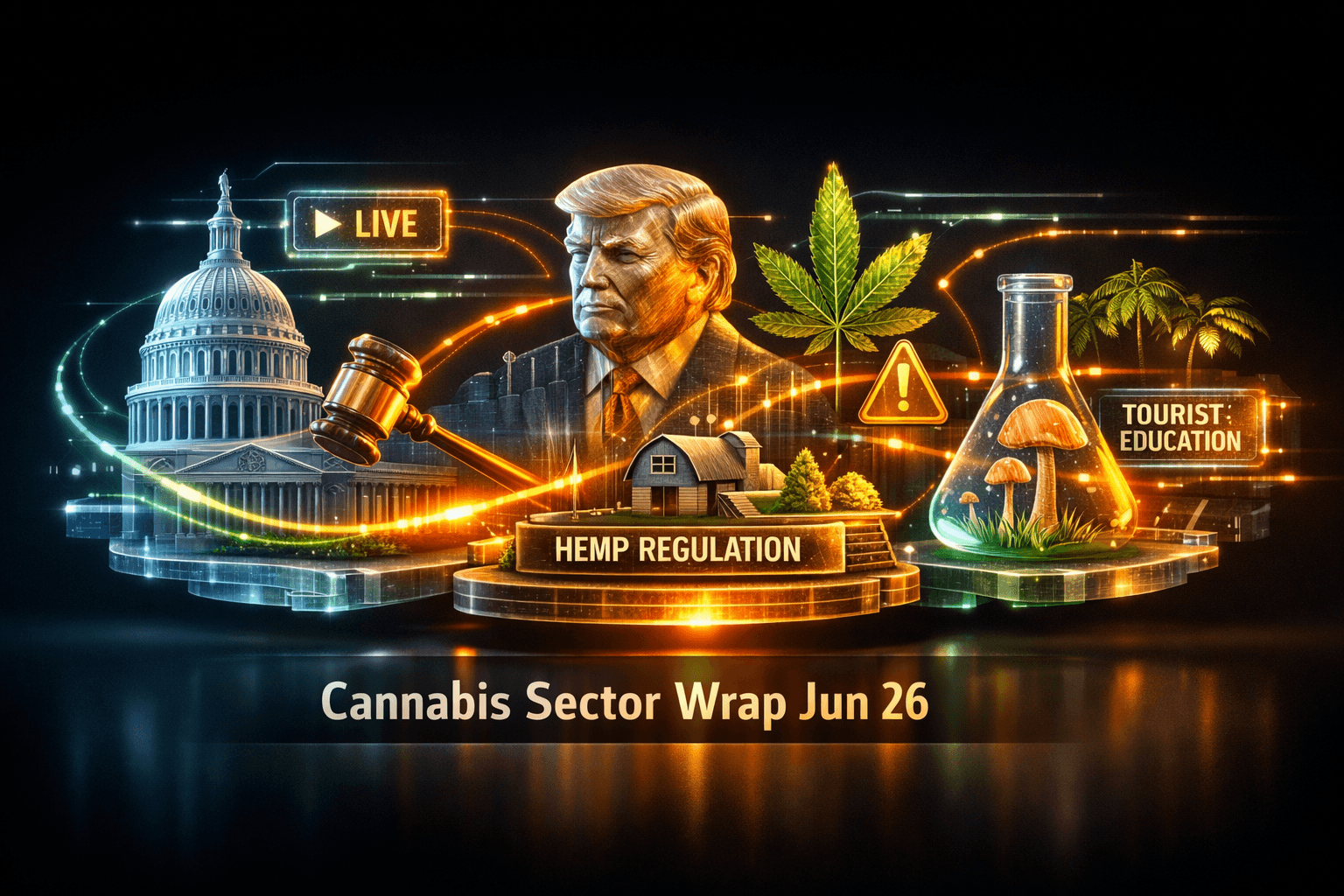
The biggest development for cannabis investors today is the federal rescheduling hearing now set to begin next week, and the growing push for that process to be public and transparent. Requests from media outlets and a member of Congress to have the Drug Enforcement Administration livestream the sessions, combined with the DEA filing that it will highlight medical-benefit testimony, make this the most consequential near-term policy event in the sector.
Why does this matter to you as an investor? Federal rescheduling could change banking access, research pathways, and market perception, so the tone and evidence presented at the hearings will likely move sector sentiment and trading. With lawmakers, regulators, and state programs all active, policy risk is high but so is the potential for regulatory progress that could move the needle for listed cannabis companies.
Market Highlights
Trading was driven by policy headlines rather than company earnings, and investors reacted to the mounting regulatory calendar. Here are the quick facts you need to scan before tomorrow's open.
- $MSOS, the cannabis ETF many traders watch, was a focal point for flows as news on rescheduling and hemp regulation circulated.
- $TCNNF and $GTBIF were mentioned frequently in trade chatter tied to state-level policy and consumer education initiatives, with intraday volatility noted across the group.
- $CURLF and $TLRY remained in the spotlight as names sensitive to both federal policy and retail demand trends, as investors parsed regulatory commentary and local program developments.
Key Developments
DEA Rescheduling Hearing, Livestream Push
Marijuana Moment reported that journalists and Rep. Steve Cohen have joined calls for the DEA to livestream next week’s rescheduling hearing. The move for open proceedings aims to increase transparency around evidence and witness testimony, and it has bipartisan support in the sense of wanting public access.
For investors, an open hearing raises the odds that market-moving testimony and exchanges will be widely disseminated in real time. That could translate into sharper intraday moves and faster repricing of policy-sensitive names, so be ready for volatility when the sessions start.
DEA Will Present Medical-Benefit Testimony
A separate filing disclosed the DEA will put forward a physician who will testify that medical marijuana benefits pain patients, alongside an FDA witness. This signals the government is framing the record to include medical benefit evidence, which matters for rescheduling discussions.
The presence of medical testimony could support arguments for lowering restrictions, but regulators and stakeholders will still debate scientific standards and public health implications. That leaves the outcome uncertain, but the hearing itself is now a major catalyst for the sector.
Federal Hemp Guidance and State-Level Policy Moves
The Trump administration asked Congress to either regulate full-spectrum hemp products or delay a planned federal crackdown on hemp-derived THC products. That request suggests there’s room for legislative action or at least a pause, which may relieve some immediate enforcement risk for certain product categories.
At the state level, Louisiana approved a psychedelic-assisted therapy pilot funded by opioid settlement dollars, and Washington State launched a cannabis information campaign for World Cup tourists. Both items broaden the policy landscape and highlight growing public-sector support for alternative therapies and consumer education.
What to Watch
The rescheduling hearing is the central near-term event. The sessions start Monday, June 30, and you should be prepared for real-time headlines if the DEA allows broader access. Will testimony shift the narrative toward medical acceptance or toward tighter controls? That question will be answered as testimony unfolds.
Watch Congress and agency guidance on full-spectrum hemp. The administration’s ask that Congress regulate or delay enforcement could mean either a legislative window opens or a temporary pause is possible, so monitor committee calendars and bill text closely.
Keep an eye on state pilot programs and tourism-focused education campaigns, because they can drive local demand and shape consumer perceptions. The names you track, including $MSOS, $TCNNF, $GTBIF, $CURLF, and $TLRY, will be sensitive to both federal and state developments. Also watch messaging from the DEA and FDA for clues on medical framing and scheduling preferences.
Risks to monitor include enforcement shifts, uneven scientific data on medical benefits, and potential timing mismatches between federal and state policymaking. How you size positions should reflect that uncertainty, and you may want to follow regulatory filings and hearing transcripts closely.
Bottom Line
- Federal rescheduling hearings next week are the primary market catalyst, and calls to livestream increase transparency and near-term volatility.
- DEA’s choice to highlight medical-benefit testimony could influence the rescheduling debate, but outcomes remain uncertain and may take time to affect fundamentals.
- The administration’s request to Congress on hemp regulation may buy the sector time and reduce near-term enforcement risk, depending on legislative action.
- State-level initiatives, from psychedelics pilots to tourist education, show policy momentum that broadens the market beyond traditional cannabis uses.
- Expect headlines to drive trading, monitor the hearing closely, and focus on risk management as you parse new information.
FAQ Section
Q: When does the federal rescheduling hearing start? A: The hearings are scheduled to begin Monday, June 30, and regulators will present witness panels that could shape the debate on rescheduling.
Q: How could a livestream change market reaction? A: A public livestream would put testimony and exchanges into the open quickly, creating faster price moves and potentially larger intraday swings for cannabis-related names.
Q: What should you watch on hemp regulation? A: Track congressional activity and agency guidance, because the administration has asked Congress to regulate full-spectrum hemp or delay enforcement actions that could affect hemp-derived THC products.