The Big Picture
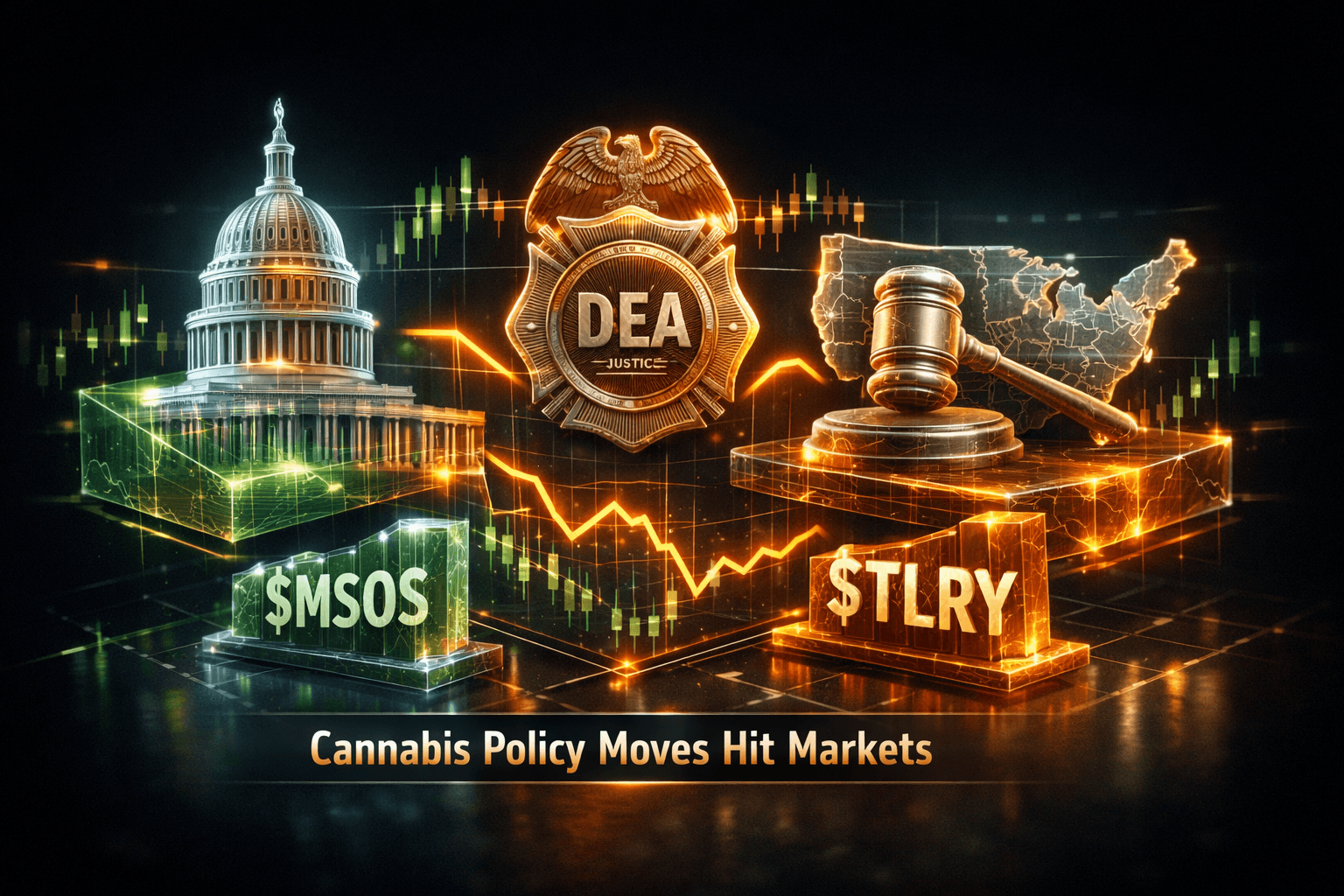
The most impactful development this morning is a fresh federal push to address cannabis banking, with new legislation filed in Congress designed to ease financial access for cannabis businesses. That matters because better banking access could reduce cash handling, lower operational friction, and expand lending options across the industry.
At the same time regulators and state lawmakers are keeping pressure on various policy fronts. The DEA reiterated its defense of a proposed HHC ban, and several states are moving on legalization, veto overrides, or enforcement changes. The result is a policy landscape that could help liquidity on one hand and add compliance complexity on the other.
Market Highlights
Here are the quick facts investors should note going into today’s session. If you’re trading cannabis exposure today, pay attention to policy headlines because they will likely dominate price action.
- Cannabis banking legislation filed in Congress, reported June 26, 2026, signaling renewed federal focus on financial access for the industry.
- DEA publicly defended an HHC ban, underscoring federal regulatory enforcement risk for hemp-derived products and alternative cannabinoids.
- State-level activity includes New Hampshire lawmakers considering an override of a marijuana greenhouse veto, Massachusetts activists pushing to preserve legalization, and Virginia advocates pressing the governor on penalty reforms.
- Names to watch for policy sensitivity include ETFs and stocks tracked by retail investors such as $MSOS, $TCNNF, $GTBIF, $CURLF, and $TLRY, which could move on any legislative or enforcement updates.
Key Developments
Federal: Banking bill filed in Congress
Lawmakers filed new cannabis banking legislation on June 26, 2026, aiming to make it easier for cannabis firms to open accounts and access payment and lending services. For investors, the practical implication is that easing banking constraints would likely lower operational risk for many public and private operators and could facilitate more conventional financing and M&A activity.
How fast the bill advances will determine near-term market impact. Committee referrals, bipartisan support, and alignment with Senate priorities will be the early indicators you want to track.
Regulatory pressure: DEA defends HHC ban
The Drug Enforcement Administration defended a proposed ban on HHC, a hemp-derived cannabinoid, raising enforcement questions for producers and retailers that have expanded into novel products. That defense signals federal willingness to tighten rules around non-THC cannabinoids, which could affect product portfolios and revenue streams for companies selling hemp-derived alternatives.
Companies with meaningful exposure to alternative cannabinoids may see higher compliance costs and inventory write-down risks if enforcement ramps up. You should watch company disclosures and supply chain notes for signs of material impact.
State-level fights add a patchwork of outcomes
Several states are actively shaping cannabis policy, from New Hampshire’s potential veto override to Massachusetts’ legalization advocacy and Virginia’s push on penalty reform. These are not just political stories, they affect licensing timelines, retail rollouts, and municipal-level revenue opportunities.
State variability will continue to favor operators with diversified footprints and experienced compliance teams. Expect volatility around state ballot dates, local ordinances, and executive decisions.
What to Watch
Monitor the legislative calendar and committee actions in both chambers of Congress. Does the banking bill get a hearing? Who’s sponsoring it and which committees are involved? Those early signals will tell you whether the proposal has momentum.
Watch DEA statements and Federal Register notices for timing on any HHC rulemaking. Clarity often follows publication of proposed rules, and that is where you’ll see specific compliance timelines and transition provisions.
State-level catalysts include any upcoming veto override votes in New Hampshire, campaign activity in Massachusetts, and executive decisions in Virginia. Those outcomes can create localized winners and losers among operators.
Also track sector flow through the key tickers many retail investors follow. $MSOS and $GTBIF track broader ETF exposure, while $TCNNF, $CURLF, and $TLRY represent company-specific risk and opportunities you might want information on before making decisions. Earnings and quarterly reports from large operators and ancillary service providers will add clarity on how policy moves are translating into revenue and margins.
What are the risks you should keep an eye on? Policy reversals, stricter federal enforcement on novel cannabinoids, and slower-than-expected legislative progress on banking could keep volatility elevated. Who stands to gain if banking access improves and who may be exposed if enforcement tightens?
Bottom Line
- Federal banking legislation is a significant positive for structural liquidity, but passage timing and scope will determine market impact.
- DEA’s defense of an HHC ban raises regulatory risk for hemp-derived product lines and could pressure revenues for exposed firms.
- State actions in New Hampshire, Massachusetts, and Virginia create patchwork outcomes that favor diversified and compliance-savvy operators.
- Keep an eye on committee hearings, Federal Register notices, and company disclosures for material developments you can act on.
- For tracking sector moves, follow $MSOS, $TCNNF, $GTBIF, $CURLF, and $TLRY for policy-sensitive price action.
FAQ Section
Q: What would cannabis banking reform change for companies? A: Banking reform would reduce cash handling, expand access to payment networks and loans, and potentially lower operating costs for licensed cannabis businesses, based on provisions typically proposed in such bills.
Q: How could a DEA HHC ban affect public companies? A: A ban could force changes to product lines, increase compliance costs, and lead to inventory adjustments for companies with significant exposure to hemp-derived cannabinoids.
Q: Which developments should you watch first? A: Watch congressional committee activity on the banking bill, any Federal Register actions from the DEA on HHC, and near-term state votes or executive actions in New Hampshire, Massachusetts, and Virginia.