The Big Picture
Federal and state developments put cannabis back in the headlines today, and the tone leaned constructive for the industry. A push for livestreaming of the DEA rescheduling hearing, new peer reviewed clinical data showing quality-of-life gains for pain patients, and an Alaska law shielding some cannabis records are all signs of increased public and regulatory engagement.
Why does this matter to you as an investor or observer? These stories touch three pillars that influence valuation and adoption: policy transparency, clinical evidence, and social equity. Each can change perceptions, licensing outcomes, and long term market access.
Market Highlights
Trading reflected a calm market digesting policy news rather than corporate earnings. Here are the quick facts and names investors watch most closely today.
- $MSOS remained the headline ETF for sector exposure as policy headlines circulated, with traders leaning into diversified cannabis exposure.
- Major multi-state operators you track, including $CURLF, $GTBIF and $TCNNF, were referenced widely in commentaries on state law and patient access.
- Plant-touching names and cultivator-focused stocks like $TLRY saw renewed attention after the Minnesota clinical study highlighted patient outcomes tied to medical cannabis.
- Volatility has been muted relative to earlier policy cycles, with market focus shifting to catalytic events such as the DEA rescheduling hearing next week and state implementation details.
Key Developments
DEA Hearing Transparency Fight
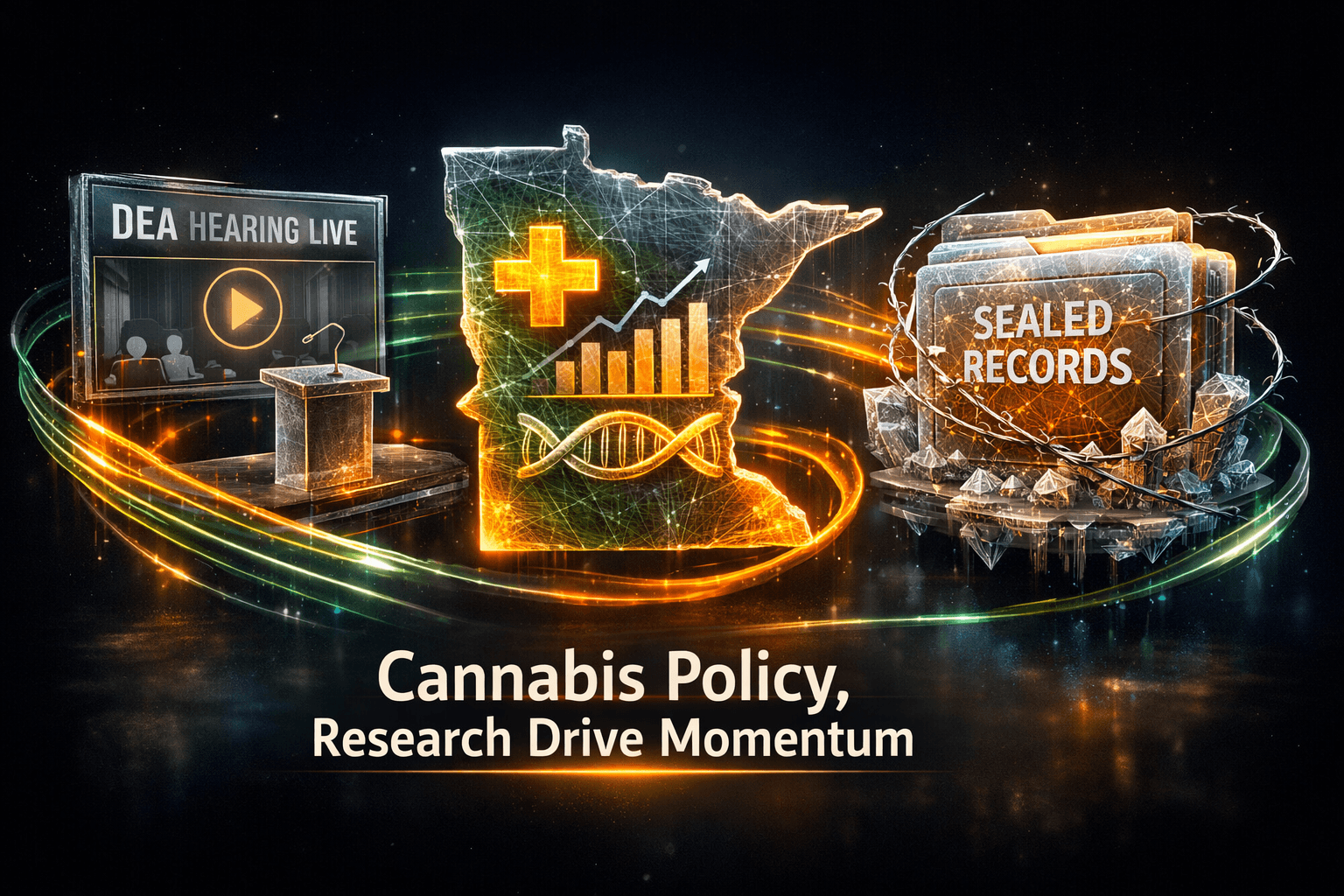
Marijuana Moment asked a DEA judge to allow livestreaming of the upcoming rescheduling hearing after Chief Administrative Law Judge Derek Julis barred livestream access. The hearing features invited participants who oppose the Trump era rescheduling proposal, and the petition argues for public access and transparency.
For you, this matters because open proceedings could shape public narrative and give market participants earlier insight into how federal agencies approach scheduling and policy. Will increased transparency change the rescheduling debate? It could accelerate clarity around timelines and stakeholder positions.
Minnesota Study Links Medical Cannabis to Better Quality of Life
Researchers at Minnesota’s Office of Cannabis Management published a peer reviewed study in Clinical Therapeutics analyzing more than 6,000 chronic pain patients. The data suggest significant improvements in life enjoyment, general activity, and physical wellbeing for medical marijuana patients.
Analysts note that robust state level data like this may strengthen medical programs and payer conversations, especially for companies with sizable medical-channel exposure. What does this mean for your expectations on demand? Better evidence can support steady consumption growth in regulated medical markets.
Alaska Law Seals Some Marijuana Convictions; Community Focus Continues
Alaska’s HB 239 became law without the governor’s signature, allowing certain marijuana convictions to be sealed from public view. The change is part of a larger criminal justice package and signals continued state level momentum on social equity measures.
Separately, cultural coverage such as High Times’ interview with organizer Logan Grendel reminded readers of the grassroots and community dimensions that influence local policy and market development. Taken together, the legal and cultural stories point to reputational improvements for the sector, which can affect licensing, hiring, and local partnerships.
What to Watch
Look ahead to these catalysts and risks so you can judge how today's headlines might translate into market moves tomorrow.
- DEA rescheduling hearing next week, and the outcome of the livestream petition. Greater transparency could reveal lines of legal and scientific argument that matter to policy timelines.
- State level implementation of sealing laws in places like Alaska. These actions can reduce stigma and potentially expand customer pools over time.
- Follow additional peer reviewed studies and real world evidence from states like Minnesota. Data suggests clinical validation is becoming a larger factor in payer and physician acceptance.
- Watch the big sector tickers for flow and sentiment signals, including $MSOS, $TCNNF, $GTBIF, $CURLF, and $TLRY. These names often lead correlated moves as headlines break.
- Regulatory risk remains material. Even positive hearings and studies do not guarantee federal policy change, so you should monitor legal filings, agency statements, and court schedules closely.
Bottom Line
- Policy transparency efforts and state reforms are adding constructive momentum for the sector, while peer reviewed clinical data strengthens medical narratives.
- Investors and observers should watch the DEA rescheduling hearing and any rulings on livestreaming for earlier market signals, because disclosure can speed pricing of outcomes.
- State actions like Alaska’s sealing law reduce stigma and carry long term implications for labor markets and consumer demand.
- Keep an eye on $MSOS, $TCNNF, $GTBIF, $CURLF, and $TLRY for liquidity and sentiment cues as these names reflect broader sector flows.
- Data suggests momentum is building, but policy timelines remain uncertain, so assess risk exposure and stay informed of legal developments.
FAQ
Q: What does the DEA livestream request mean for the rescheduling process? A: The petition seeks public access to the hearing. If granted, it could accelerate transparency and provide earlier insight into the arguments shaping any scheduling decision.
Q: How should you interpret the Minnesota clinical study? A: The peer reviewed data show improved life enjoyment and activity among chronic pain patients. Analysts say such evidence can support expansion of medical programs and reduce stigma around therapeutic use.
Q: Will Alaska’s new law affect other states? A: Alaska’s move is part of a broader trend toward record relief. Other states may follow, and these changes can influence public perception and long term market fundamentals.