The Big Picture
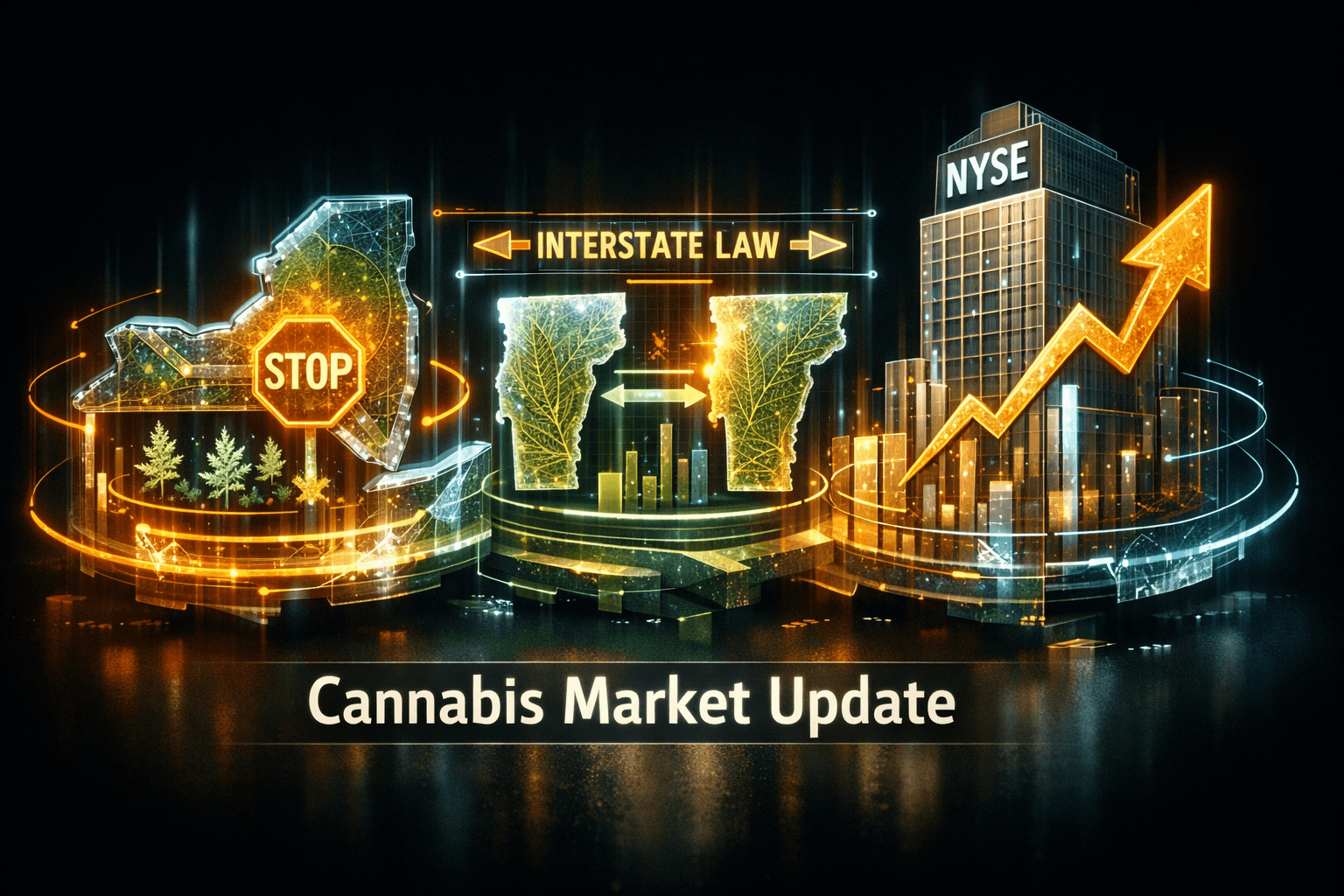
Today’s most impactful developments point to a maturing U.S. cannabis industry where policy and capital moves are working in tandem. New York lawmakers passed a bill to stop illicit product from entering the regulated market, Vermont raised possession limits and signaled interstate openness, and Glass House Brands filed to uplist to the NYSE.
For investors, that mix matters because regulatory clarity and expanded market access can reduce risk for licensed operators while uplists raise the prospect of improved liquidity and broader institutional interest. If you follow sector names or ETFs, these stories are immediate and actionable signals to watch this morning.
Market Highlights
Key overnight and early-morning facts for the cannabis complex.
- Regulation: New York’s legislature has approved a bill designed to prevent the inversion of illicit cannabis into the regulated market, sending the measure to Gov. Kathy Hochul for signature.
- Policy expansion: Vermont’s governor signed a bill doubling possession limits and adding language that contemplates interstate cannabis markets, a development with long-term market implications.
- Corporate action: Glass House Brands said it applied to uplist to the New York Stock Exchange, an effort tied to a corporate restructuring to separate adult-use and medical operations.
- Sector tickers to watch include $MSOS, $TCNNF, $GTBIF, $CURLF, and $TLRY, which traders and portfolio managers use as bellwethers for retail and institutional flows.
Key Developments
New York moves to shut the back door on illicit product
New York’s bill, passed by both chambers and headed to the governor, defines illicit cannabis as product not subject to tax or sourced from unlicensed sellers. The measure bans introducing such product into the regulated market and establishes legal tools to enforce compliance.
That’s positive for licensed operators because it aims to protect their market share and tax base, and it reduces a source of price pressure. What does that mean for your exposure to multi-state operators and New York-focused firms? It suggests a safer route to revenue capture for authorized sellers if enforcement follows through.
Vermont increases possession limits and opens the door to interstate talk
Vermont’s new law doubles consumer possession limits at licensed dispensaries to two ounces of flower or 10 grams of hashish, and includes wording that contemplates interstate cannabis markets. The bill cites changing federal posture on regulated markets as part of the rationale.
For investors this is a growth signal. Higher possession and permissive interstate language may lift retail demand and create coordination points between state regulators. If you’re watching regional roll-ups, Vermont’s move is another data point suggesting states may gradually harmonize rules, which could ease expansion for compliant companies.
Glass House Brands seeks NYSE uplist amid restructuring
Glass House Brands said it has applied to uplist to the NYSE and plans to deconsolidate adult-use and medical businesses through a restructuring with a subsidiary. The company frames the move as a way to meet NYSE listing standards and unlock clearer corporate structure.
An uplist can increase visibility and liquidity, and it tends to attract different investor cohorts. You should watch how Glass House frames its pro forma financials and whether the exchange approves the application, because approval could set a precedent for other operators aiming for more mainstream capital markets access.
What to Watch
Forward-looking catalysts and concrete items to monitor during today’s session and over the coming weeks.
- Governor’s action in New York: Will Gov. Kathy Hochul sign the anti-inversion bill? If she signs, enforcement timelines and agency rulemaking will be the next items to track.
- Glass House uplist timeline: Watch filings with the NYSE and any follow-up investor presentations. Uplist approval or rejection will affect sentiment for mid-cap operators seeking broader access to institutional flows.
- Interstate market signals: Vermont’s language on interstate commerce is worth watching for legislative follow-ups or memoranda of understanding with neighboring states, which could change market opportunity maps.
- ETF and blue-chip watchlist: Keep an eye on $MSOS, $TCNNF, $GTBIF, $CURLF, and $TLRY for flow-driven moves as investors digest these policy and corporate updates. These tickers often reflect both retail interest and institutional allocation shifts.
- Risk factors: Enforcement intensity, tax and licensing rules, and how quickly regulators adopt implementing guidance will influence realized benefits. Also watch capital markets conditions for uplist appetite and funding availability.
Bottom Line
- Regulatory moves in New York and Vermont support the regulated market by reducing illicit competition and expanding consumer allowances, which could boost legal sales over time.
- Glass House’s NYSE uplist filing signals continuing industry maturation and a push for greater liquidity and institutional visibility.
- Policy clarity and corporate actions together tend to reduce execution risk, but you should still monitor rulemaking and enforcement for material impacts on operations.
- Watch the named ETFs and stocks for flow-driven volatility as market participants price in these developments.
- Analysts note these items as catalysts, but this summary is informational and not investment advice. Portfolio decisions should reflect your goals and risk tolerance.
FAQ Section
Q: What does New York’s bill mean for licensed dispensaries? A: It aims to protect licensed sellers by banning illicit product from entering the regulated market, which should reduce unfair price competition if enforcement is effective.
Q: How soon could Glass House’s uplist affect liquidity? A: Uplist impacts depend on NYSE approval and subsequent investor interest; monitor exchange filings and company guidance for timing and expected float changes.
Q: Will Vermont’s law lead to interstate cannabis sales immediately? A: The law includes language that contemplates interstate markets, but actual interstate sales would require coordinated state rules and likely federal clarity, so any change would take time.
Investment Disclaimer: This article provides market analysis and factual summaries for informational purposes only. It does not recommend buying, selling, or holding any security and is not personalized investment advice. Analysts note trends and data, but you should consult your own advisor for decisions about your portfolio.