The Big Picture
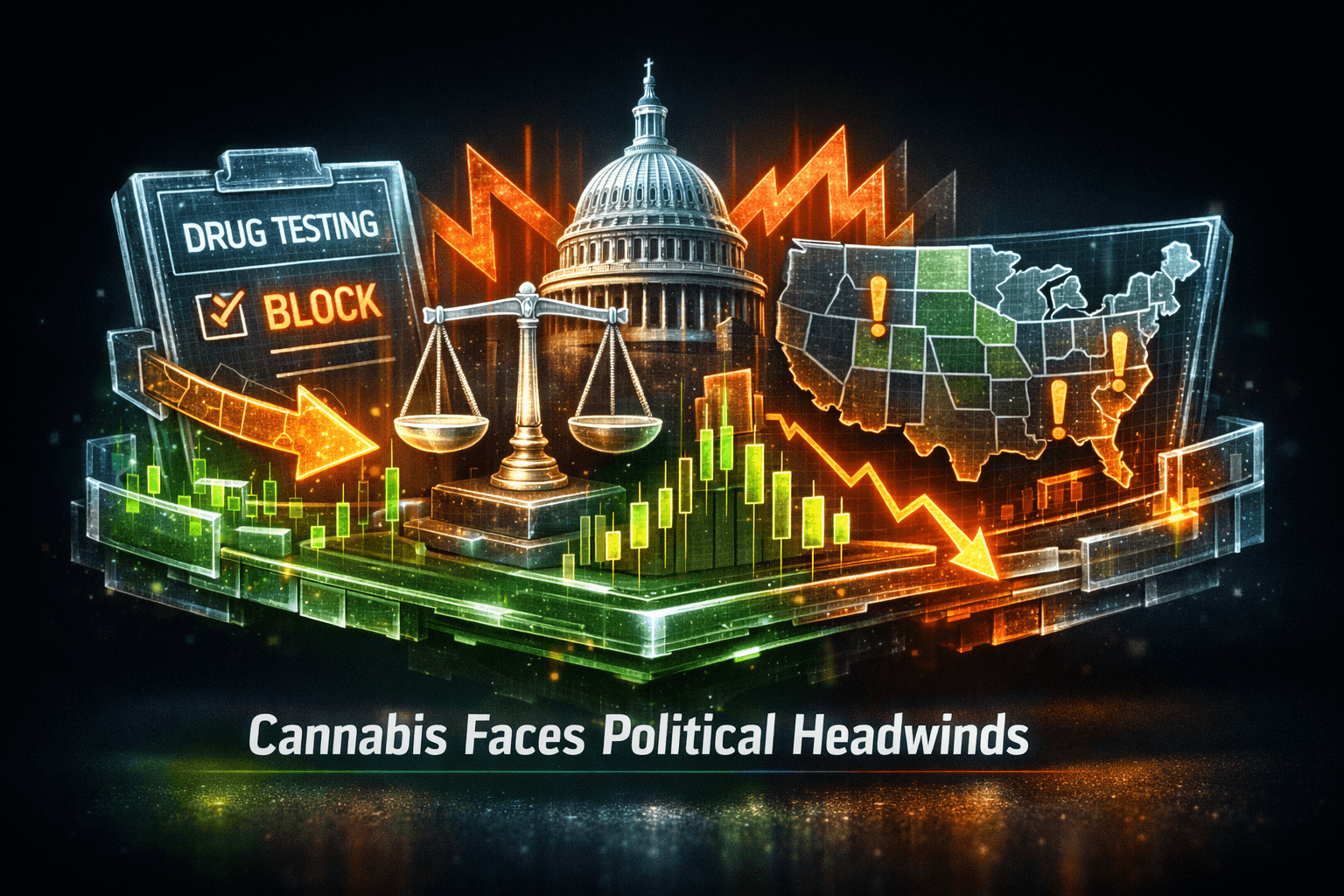
The most impactful development this morning is renewed, organized opposition to federal cannabis rescheduling from the drug testing industry, a push that could slow Washington momentum and complicate near-term policy outcomes. That effort, paired with state-level political fights and a defeated bill in Pennsylvania, signals fresh regulatory headwinds for the sector.
For investors, today matters because policy progress is a key catalyst for easing banking, tax, and research constraints on cannabis companies, and any delay or reversal of momentum can affect valuations across the space. You should be watching how lawmakers and agencies respond, because today's headlines may shape the next legislative calendar.
Market Highlights
Here are the quick facts to scan before the market opens.
- Industry pushback: The drug testing industry is actively trying to block or slow federal rescheduling efforts, according to Marijuana Moment's June 12 newsletter.
- State friction: Kentucky and Pennsylvania political disputes were highlighted in the same newsletter, with a Kentucky governor publicly criticizing a GOP lawmaker and a Pennsylvania senator blaming the governor for a cannabis bill defeat.
- Stocks to watch: Major sector tickers on investor radar include $MSOS, $TCNNF, $GTBIF, $CURLF, and $TLRY. No major price-moving announcements were included in the report overnight.
Key Developments
Drug testing industry pushes to block rescheduling
Reports show industry groups tied to workplace and forensic drug testing are mobilizing against federal rescheduling moves that would reduce cannabis' legal status at the federal level. Their lobbying could influence agencies and Congress, since lawmakers often balance public safety and employment concerns when weighing policy changes.
For investors, that means a rescheduling timeline that had appeared achievable could face new delays, and regulatory uncertainty may remain elevated for weeks or months. Analysts note uncertainty around rescheduling can limit the near-term upside for companies that rely on banking access and tax clarity.
State-level fights add friction
The same newsletter highlighted several state stories, including a Kentucky governor criticizing a Republican lawmaker's medical marijuana comments, and a Pennsylvania senator blaming the governor after a cannabis bill failed. Massachusetts also saw an anti-marijuana petitioner removed from a ballot effort.
These episodes show progress is uneven at the state level, and local politics can derail or slow reforms that investors often priced as incremental wins. Data suggests that mixed state signals will keep headline risk high for operators and ETFs that track multi-state exposure.
Policy implications for businesses
If rescheduling is delayed, companies will likely continue to face federal restrictions on banking, interstate commerce, and research. That preserves an uneven operating environment where state-licensed businesses compete under differing rules, and tax and finance structures remain constrained.
Expect heightened lobbying from both sides, as tribunals and industry coalitions try to shape public opinion and agency decisions. You should factor in longer lead times for meaningful federal reform when assessing sector outlooks.
What to Watch
Focus on catalysts and risk points that could change the narrative quickly.
- Federal signals, timing: Watch statements from the Department of Health and Human Services and the DEA for any procedural changes on rescheduling. A formal review or public comment period would be material.
- Congressional movement: Keep an eye on any hearings or bills that gain bipartisan traction, because legislative progress can override administrative delays. Will members of key committees announce hearings this month?
- State legislative calendars: Track upcoming votes in legislatures where reform is active, especially Pennsylvania and Kentucky, as state setbacks can stall investor sentiment.
- Sector tickers and ETFs: Monitor $MSOS, $TCNNF, $GTBIF, $CURLF, and $TLRY for volatility tied to policy headlines. You should watch trading volume alongside price action, since headline-driven moves can be fast and short lived.
- Lobbying and legal filings: Watch for filings from drug testing and employer groups, and any court challenges, because these can change agency calculations or delay implementation.
Bottom Line
- Political and industry pushback is the dominant near-term risk for cannabis policy, and that increases uncertainty across the sector.
- State-level disputes reinforce that progress will be uneven, so geographic exposure matters when you assess companies.
- Expect continued headline-driven volatility for cannabis ETFs and names tied to U.S. reform, including $MSOS, $TCNNF, $GTBIF, $CURLF, and $TLRY.
- Watch federal agency signals and congressional activity closely, because either could shorten or lengthen the rescheduling timeline.
- Analysts note that while long-term structural demand remains, near-term regulatory hurdles are likely to keep risk elevated for investors.
FAQ Section
Q: What does the drug testing industry action mean for rescheduling? A: It suggests new lobbying pressure that could delay administrative or legislative timelines, increasing regulatory uncertainty for the sector.
Q: How should I monitor state-level risks? A: Track legislative calendars and key votes in states where you hold exposure, and watch local political statements that may signal shifting support or opposition.
Q: Which tickers should I keep an eye on amid these headlines? A: Investors often watch $MSOS, $TCNNF, $GTBIF, $CURLF, and $TLRY for policy-driven volatility and sector sentiment, along with trading volume indicators.