The Big Picture
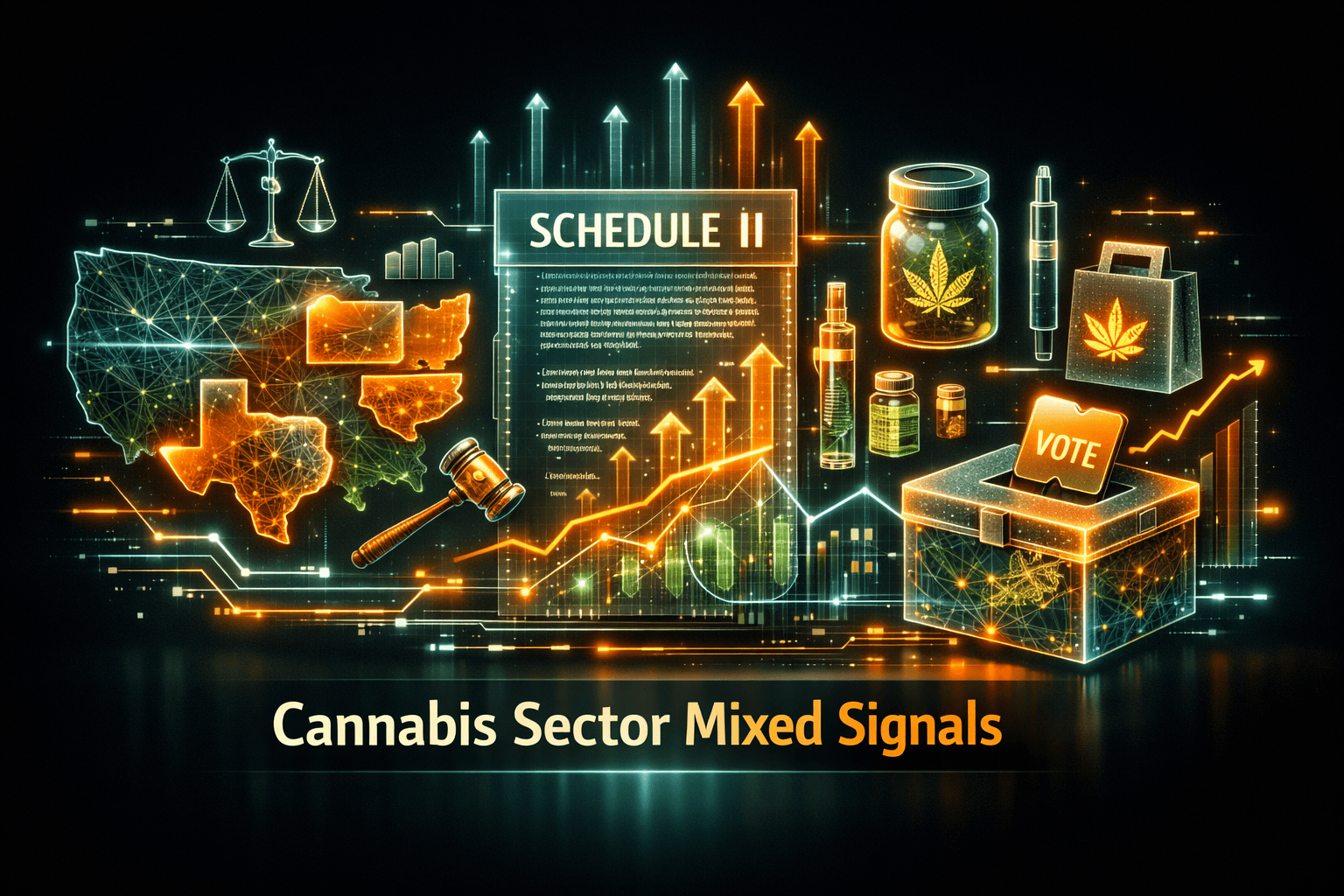
Today the cannabis sector served up a mixed bag for investors, with promising commercial developments set against persistent state-level regulatory headwinds. Federal rescheduling is opening practical doors for brands, while lawsuits and enforcement actions in multiple states are keeping legal risk front and center.
Why this matters to you, the retail investor, is straightforward. The industry is being shaped by two forces at once, national policy shifts that create long-term tailwinds and patchwork state fights that can swing near-term volatility for names you track.
Market Highlights
Trading reflected the mixed news flow, with sector names and ETFs showing modest intraday swings as investors parsed policy vs litigation. Below are the quick facts and items to note from today.
- State regulation drama: The Pennsylvania Senate rejected a bill to create a Cannabis Control Board today, but lawmakers immediately moved to revive the proposal after the vote.
- Legal pushback: Nearly a dozen hemp beverage makers and distributors filed a class action in Ohio seeking to block new state hemp product restrictions.
- Court rulings: A Texas appeals court upheld enforcement of the state's smokable hemp ban, maintaining a major restriction for that market segment.
- Commercial upside: Federal rescheduling has prompted guidance on trademark filings for cannabis brands and fresh consumer interest in higher-end cannabis cuisine.
- Watch these tickers: major sector trackers and names investors follow include $MSOS, $TCNNF, $GTBIF, $CURLF and $TLRY, which traded mixed as headlines landed.
Key Developments
Pennsylvania bill blocked, but revival motion looms
The Pennsylvania Senate rejected a bill to create a Cannabis Control Board that would regulate medical marijuana and intoxicating hemp products. Lawmakers immediately moved to revive the measure, signaling the fight is far from over.
For investors that means policy risk in key state markets remains fluid. If the bill is revived and passed it could tighten hemp product rules and create a new regulatory body, affecting companies with exposure in Pennsylvania.
Hemp companies push back in Ohio; Texas upholds smokable hemp ban
In Ohio, roughly a dozen hemp beverage makers and distributors filed a class action to block enforcement of new hemp restrictions, arguing the law treats federally legal hemp as marijuana once it crosses state lines. This is a direct legal response to state-level restrictions that companies say conflict with federal law.
Meanwhile a Texas appeals court has allowed enforcement of the state's ban on smokable hemp products to proceed. That decision maintains a significant constraint in one of the largest state markets for hemp products and raises questions about product category viability in restrictive states.
Rescheduling opens trademark doors and consumer trends evolve
With federal rescheduling now in effect, guidance is emerging for cannabis brands on filing for federal trademarks. Industry advisors are urging companies to prepare filings, as federal protection could materially affect brand value and M&A dynamics.
On the consumer side, coverage of cannabis gastronomy shows the market moving beyond brownies to premium culinary experiences, a sign demand is evolving toward higher-margin, experiential products.
What to Watch
Expect headlines and volatility in the days ahead as legal and political processes play out. Here are the catalysts and risks to monitor so you can keep your watchlist current.
- Pennsylvania legislature: Will the Senate revive and pass the Cannabis Control Board bill? You’ll want to watch votes and committee activity closely because state rules could change distribution and product standards.
- Maine and Massachusetts ballot fights: Accusations of misleading petitioning for anti-legalization measures add uncertainty to upcoming ballots. Could these campaigns gain traction or falter under scrutiny?
- Ongoing lawsuits: Ohio class action filings and Texas litigation over smokable hemp are near-term legal catalysts. Court rulings could alter market access for hemp products across states.
- Trademark window after rescheduling: Companies will likely accelerate federal trademark filings. Track industry filings and any USPTO guidance that clarifies eligibility and timelines.
- Sector tickers to monitor: $MSOS, $TCNNF, $GTBIF, $CURLF and $TLRY remain key proxies for sector sentiment and will likely show day-to-day sensitivity to legal and policy headlines.
Bottom Line
- The sector is being pulled in two directions, federal-level gains from rescheduling and state-level restrictions and litigation that create near-term volatility.
- Major state actions in Pennsylvania, Ohio and Texas are likely to drive headlines and price swings, so you should monitor legislative calendars and court dockets.
- Brand protections via federal trademarks are now a live catalyst that could boost long-term commercial value for established companies.
- Ballot measures and signature challenges in New England add political risk that could ripple across regional operators and multi-state operators.
- Keep an eye on ETFs and the listed names cited earlier for intra-day sensitivity, as traders will use those tickers to express views on policy and legal developments.
FAQ
Q: How will federal rescheduling affect cannabis trademarks? A: Rescheduling has opened a pathway for federal trademark protection, prompting attorneys and brands to prepare filings and monitor USPTO guidance.
Q: What should I know about the Ohio hemp lawsuits? A: Nearly a dozen hemp beverage companies filed a class action aiming to block enforcement of new state hemp rules, arguing conflicts with federal law and interstate commerce protections.
Q: Could state bans like Texas change national market prospects? A: State bans limit local market access and product categories, and court outcomes can set precedents that affect multi-state strategies and distribution plans.