The Big Picture
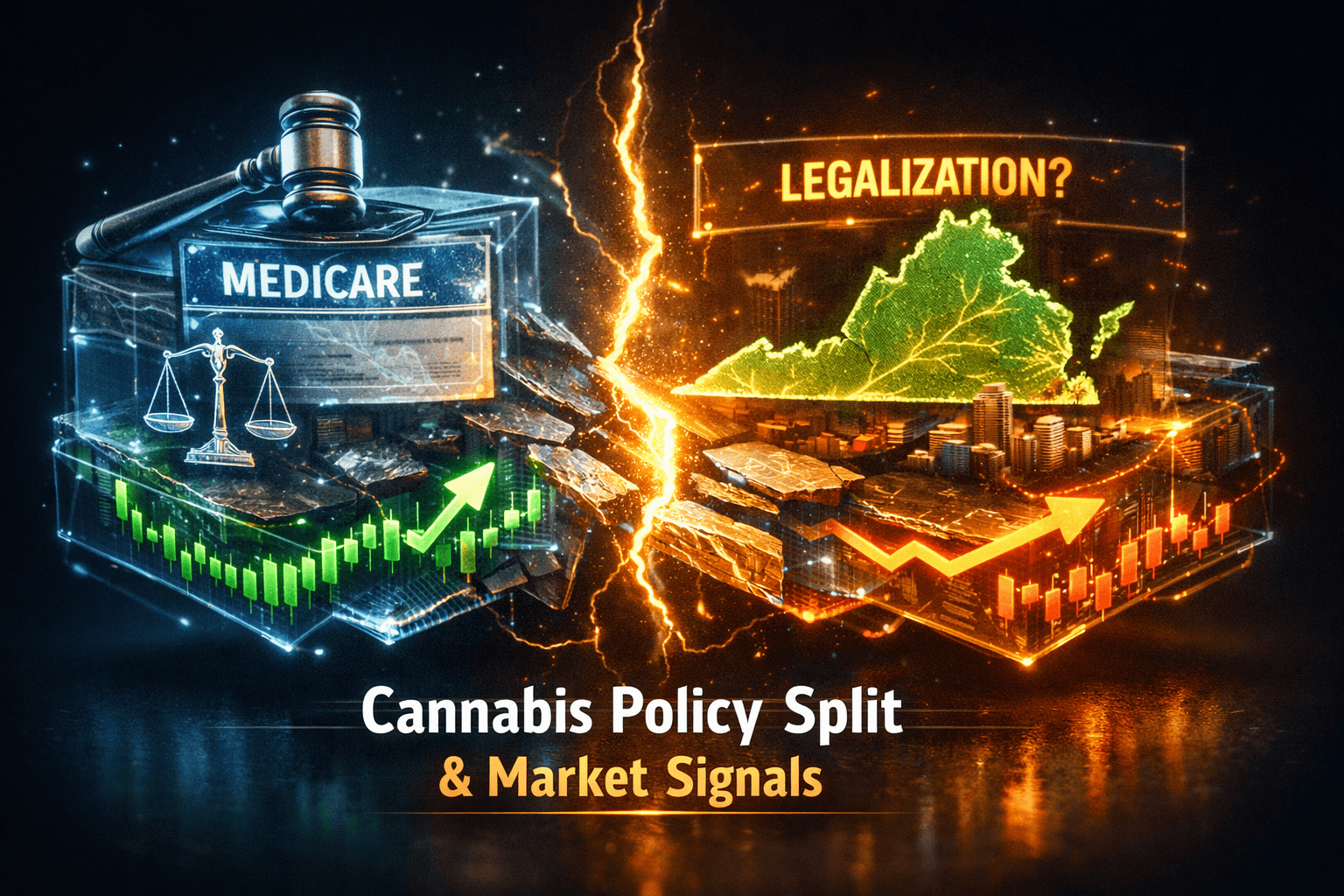
Federal and state policy developments left the cannabis sector with a mixed bag of headlines heading into the long weekend. On one hand advocates and some state lawmakers are advancing reforms and guidance that could widen access, and on the other hand opponents and a congressional panel are mounting legal and legislative limits that increase uncertainty.
That split matters because policy drives demand, reimbursement and where capital flows in this industry. You should pay attention to court timetables and budget votes before making decisions, since markets were closed Saturday and the last trading day was Friday, June 5.
Market Highlights
Here are the quick facts and company names to watch as you assess risk and opportunity.
- Federal legal challenge: Anti-marijuana groups and a cannabis biopharma firm asked a federal appeals court on June 5 to revive a suit challenging a Trump administration program that would provide up to $500 in annual Medicare coverage for hemp-derived products.
- State policy momentum: Virginia lawmakers and Governor Abigail Spanberger met to pursue a budget-based path to legalize recreational sales after a recent veto, and sources say a compromise could pass this month.
- Patient guidance: Americans for Safe Access released a guide outlining patient and caregiver rights following the federal rescheduling of medical cannabis from Schedule I to Schedule III.
- Revenue warning: Michigan’s new 24% wholesale cannabis tax generated far less than projected in its first quarter, raising questions about state revenue assumptions and market demand.
- Congressional restriction: A House appropriations subcommittee voted 11-7 to advance a funding bill that would bar federal workers’ compensation from covering medical marijuana for federal employees.
- Stocks and ETFs to watch: sector trackers and key names you may already follow include $MSOS, $TCNNF, $GTBIF, $CURLF, and $TLRY heading into next week.
Key Developments
Federal legal fight over Medicare hemp coverage
Opponents of the Medicare hemp coverage program asked an appeals court to revive their lawsuit after a dismissal by a trial judge. The challenge targets an administration policy that would let eligible Medicare beneficiaries receive up to $500 per year for hemp-derived products, a provision that could expand consumer access and shift demand toward regulated hemp offerings.
For you as an investor, a revived suit could delay implementation and create short-term policy risk for companies positioned to supply Medicare-eligible products.
Congressional move to block workers’ comp coverage
The House appropriations subcommittee approved language that would prevent federal workers’ compensation plans from covering medical marijuana, despite rescheduling. The vote shows continued congressional caution and a willingness to carve out federal programs from broader rescheduling effects.
This carve-out could limit a predictable institutional demand channel, so watch legislative text as it moves through the process and note that appropriations riders can change before final passage.
State-level shifts: Virginia talks and Michigan tax shortfall
Virginia appears closer to enacting recreational sales via budget language after the governor and lawmakers met on negotiations. A budget-based pathway could accelerate retail openings and taxable sales if a compromise is reached this month.
By contrast, Michigan’s 24% wholesale tax produced much less than the state’s estimates in Q1, a reminder that tax policy and forecasting errors can pressure margins and pricing. You should consider how state tax regimes may alter retail economics in different markets.
What to Watch
Here are the immediate catalysts and risks you should track this week and into next month.
- Appeals court timetable: Monitor filings and a potential oral argument date in the Medicare hemp coverage suit, since a revived case could stall implementation.
- Virginia budget vote: Check whether negotiators include legalization in the imminent budget, and if so, how licensing and tax language affects retail rollouts and local market competition.
- Appropriations process: Follow full committee and floor action on FY2027 appropriations language that would bar federal workers’ comp coverage, it may change before final passage.
- State revenue reports: Look for revised Michigan revenue estimates and other states’ first-quarter data, which will inform how policymakers adjust taxes or licensing fees.
- Names to watch closely: $MSOS as the ETF barometer for industry ETFs; $TCNNF and $GTBIF among large multi-state operators and investment plays; $CURLF in the Canadian-linked cohort; and $TLRY for consumer-packaged goods exposure. You should check these tickers for company disclosures or earnings calendars next week.
- Patient access and compliance: ASA’s guide may drive patient behavior in rescheduled states, so watch how companies and dispensaries update compliance and billing policies.
Bottom Line
- Policy is the dominant driver right now, with federal and state actions pushing in different directions, so volatility tied to newsflow is likely near term.
- Legal and appropriations fights could delay some access and reimbursement pathways, while state-level legalization and patient protections may expand markets where enacted.
- Revenue shortfalls, like Michigan’s, underscore the need to parse tax structures and underlying demand when you evaluate state exposure.
- Analysts note that you should watch court calendars, budget negotiations and appropriations language for concrete catalysts that will move valuations next week.
- Disclaimer: This article provides information only, it does not recommend buying, selling, or holding any specific security and it is not personalized investment advice.
FAQ Section
Q: Will federal rescheduling immediately increase access for medical cannabis patients? A: Rescheduling to Schedule III provides federal legal changes, but access varies by program and state, and federal policy implementation may be delayed by litigation or legislation.
Q: How could a revived lawsuit over Medicare hemp coverage affect companies? A: If the suit succeeds or delays implementation, manufacturers and retailers targeting Medicare beneficiaries could face postponed demand and regulatory uncertainty.
Q: What should I watch to gauge near-term cannabis market direction? A: Track court timetables, Virginia budget votes, appropriations language, and state revenue reports, and monitor disclosures from major ETFs and issuers such as $MSOS, $TCNNF, $GTBIF, $CURLF, and $TLRY.