The Big Picture
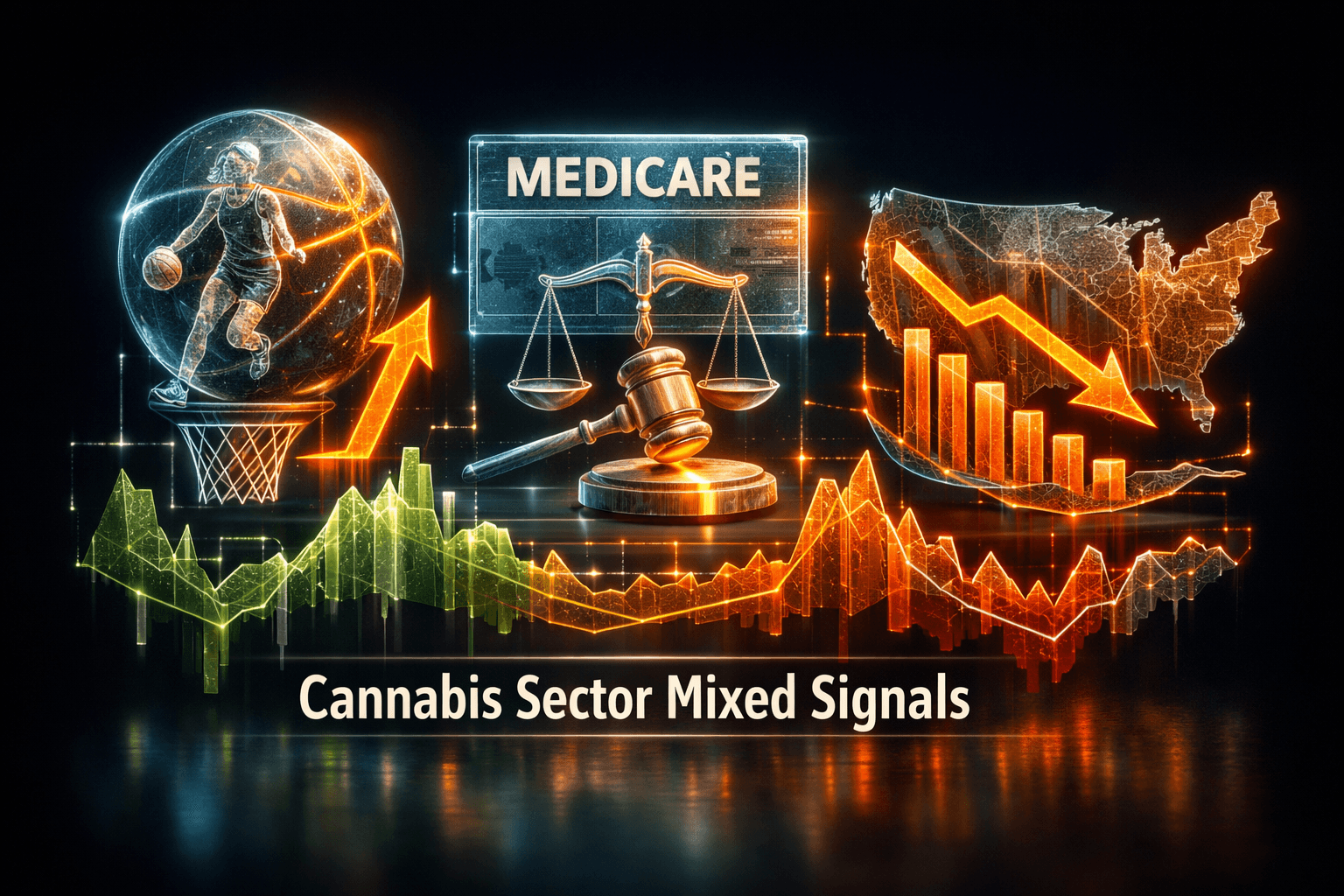
Cannabis policy momentum met fresh pushback today, leaving the sector a mixed bag that investors will want to parse carefully. High-profile normalization moves at the sports and state level came alongside legal challenges to federal hemp coverage and a congressional push to limit workplace coverage.
These developments matter because they affect patient access, market sizing, and political risk. You need to weigh expanding consumer and patient protections against regulatory and fiscal constraints when sizing opportunities in the space.
Market Highlights
- The WNBA removed marijuana from its banned substances list while adding psychedelics like psilocybin and DMT to prohibited items, a sign of increased mainstream acceptance for cannabis use among athletes.
- The Trump administration’s Medicare hemp coverage program, which proposes up to $500 in annual coverage for eligible beneficiaries, faces a revived court challenge from anti-marijuana groups and a pharma firm.
- Virginia lawmakers and Governor Abigail Spanberger met on a possible compromise to legalize recreational marijuana sales via budget action, which could move quickly if included in upcoming appropriations.
- Congressional action showed friction: a House appropriations subcommittee voted 11-7 to block federal workers’ compensation programs from covering medical marijuana for federal employees, signaling legislative limits despite rescheduling.
- Patient protections advanced, with Americans for Safe Access publishing a guide clarifying rights after cannabis was reclassified to Schedule III, aimed at medical patients and caregivers.
- Michigan’s 24% wholesale cannabis tax, intended to raise roughly $420 million, generated far less revenue than projected in its first quarter, a data point that could affect state policy and market growth expectations.
Key Developments
Mainstream Normalization and Patient Protections
The WNBA’s decision to drop marijuana from its banned list signals cultural and workplace shifts that often precede broader commercial adoption. At the same time, Americans for Safe Access released a guide to help patients understand federal protections after rescheduling, which could reduce friction for medical use and clarify compliance for providers.
For you as an investor, these moves suggest steady demand-side tailwinds in consumer and medical channels, but they don’t eliminate legal or reimbursement questions that still matter for revenue models.
Federal Coverage and Legislative Headwinds
Tension at the federal level was a theme. A coalition wants an appeals court to revive a lawsuit against the Medicare hemp coverage pilot, challenging a program that would cover up to $500 of hemp-derived products per eligible beneficiary annually. Meanwhile, an appropriations subcommittee voted 11-7 to bar federal workers’ comp from covering medical marijuana, even after rescheduling.
That split illustrates how rescheduling has not erased policy risk. You should expect more legal and legislative skirmishes as agencies and Congress define the boundaries of access and reimbursement.
Revenue Signals and the Psychedelics Debate
Practical revenue signals came from Michigan, where the new wholesale tax brought in far less than the $420 million lawmakers expected, suggesting either lower-than-modeled sales or pricing and distribution shifts. States reliant on cannabis tax revenue could revisit rates or enforcement, which in turn affects retail margins and growth forecasts.
On psychedelics, commentary warned that commercial capital could crowd out patient-focused models. That’s a reminder that new adjacent markets can be volatile and politically sensitive, and that Wall Street’s entry won’t guarantee scalable, patient-centered outcomes.
What to Watch
- Virginia budget negotiations: a budget-level legalization fix could pass quickly, and you should watch state budget deadlines and legislative updates for timing.
- Appeals court activity on the Medicare hemp coverage suit, and any interim enforcement guidance from federal agencies on the $500 benefit, which would affect product demand in the short term.
- Congressional floor action after the 11-7 subcommittee vote, plus any amendments that would change coverage for federal workers. Lawmakers could also attach riders to broader spending bills.
- State tax receipts and legislative responses, especially in Michigan, where shortfalls may prompt revisions to tax or licensing structures that affect retail margins.
- Sector securities to watch for sensitivity to policy news: $MSOS, $TCNNF, $GTBIF, $CURLF, $TLRY. These ETFs and names tend to move on headlines about legalization, rescheduling, and reimbursement policy, so you may want to track their volume and price action around major votes and court rulings.
- Investor sentiment around psychedelics commercialization, including potential M&A or capital raises that could shift capital away from cannabis plays.
Bottom Line
- Policy progress and mainstream acceptance are visible, but legal and legislative pushback kept headlines balanced today, creating mixed signals for future growth.
- Medicare hemp coverage and workers’ comp limits are high-impact items to watch, because they directly affect reimbursement and institutional demand.
- State-level fiscal surprises, like Michigan’s tax shortfall, can change the calculus for growth and pricing, so don’t assume state revenue will track early models.
- Keep an eye on Virginia’s budget timeline and appeals court activity, as either could materially change market access in the near term.
- Data suggests selective, cautious exposure matters more than broad bets right now, given the active legal and political calendar you’re facing.
FAQ Section
Q: How could the WNBA’s rule change affect cannabis companies? A: Greater mainstream acceptance raises awareness and may boost consumer demand, though effects on sales will be gradual and vary by market.
Q: Will the Medicare hemp coverage program immediately expand sales? A: The program is contested in court, so any boost is uncertain until legal challenges and implementation details are resolved.
Q: What does Michigan’s tax shortfall mean for investors? A: It signals that state revenue projections can be optimistic, and that tax policy may be adjusted, which could affect retailer margins and consumer pricing.