The Big Picture
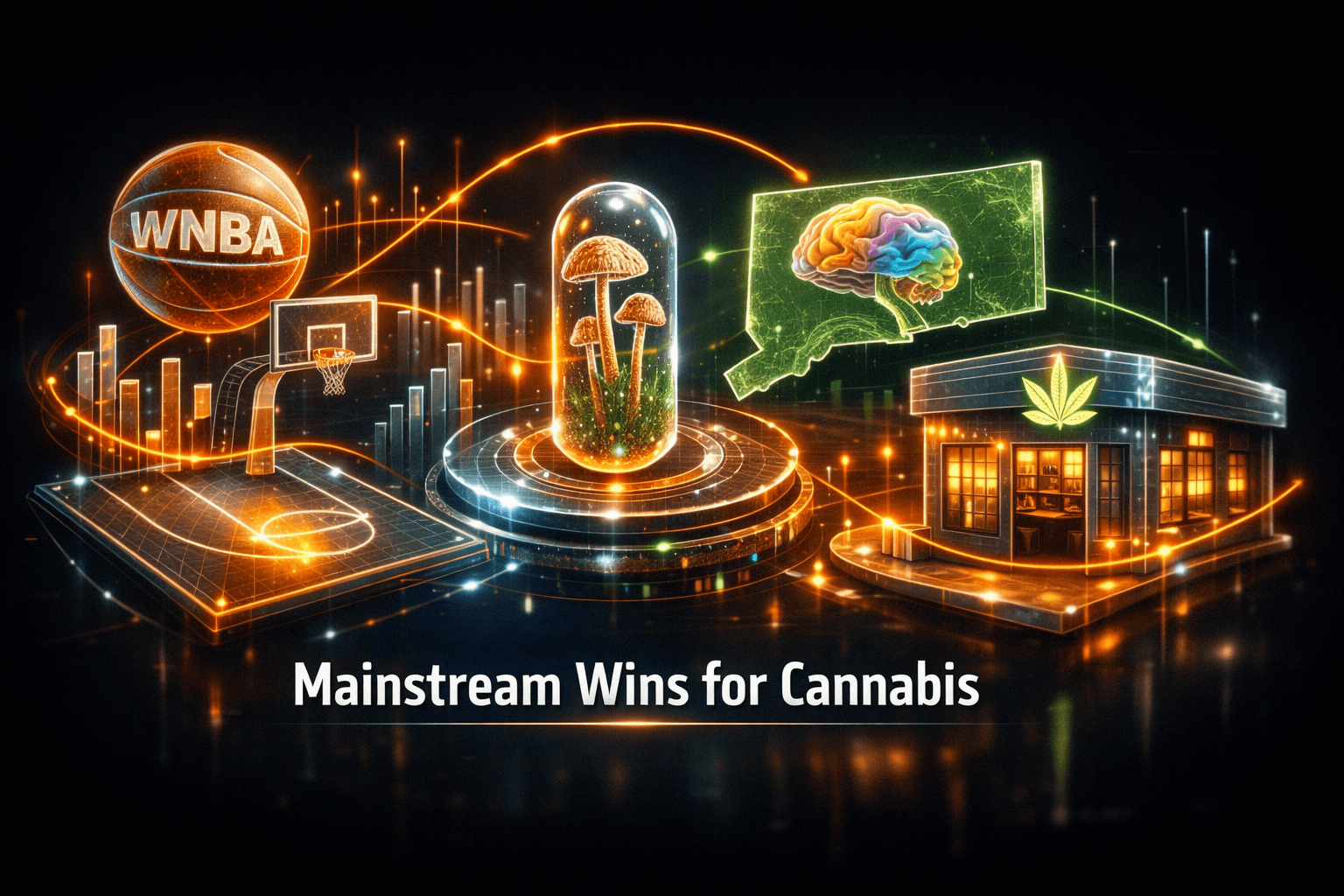
Today brought another step toward mainstreaming cannabis and adjacent therapies, as sports, state policy, and retail culture each delivered headlines that matter to investors. The WNBA removed marijuana from its prohibited substances list, Connecticut expanded a psychedelics pilot, and a celebrity-owned dispensary is opening in Queens this weekend.
These items collectively underscore continued normalization and demand tailwinds for consumer-facing cannabis businesses, even as federal safety and workplace testing remain a constraint you should watch. Overall, momentum indicates growing acceptance across culture and policy, which could support longer term growth in retail and ancillary categories.
Market Highlights
Below are the quick facts and company references you’ll want to scan before making any moves. I’ve flagged the major consumer and policy developments and the ETFs and names investors often track in the sector.
- WNBA revises policy: The league has removed marijuana from its banned substances list and set rules for player endorsements of hemp CBD products, a notable mainstream endorsement of changing norms.
- Connecticut expands psychedelics pilot: The state legislature cleared expansion with a 122-27 House vote and a unanimous 35-0 Senate vote, aiming to position Connecticut ahead of potential federal FDA action.
- Cultural retail moment in New York: Mobb Deep’s Havoc will open The Bridge, a licensed dispensary in Astoria, Queens, this weekend with music events featuring The Alchemist, Funk Flex, and Kid Capri. He’s opening as an owner, not just an endorser.
- Federal safety directive: A congressional committee told agencies to keep drug testing truck drivers, airline pilots, and other safety-sensitive workers for marijuana regardless of any rescheduling, which preserves a regulatory constraint on workplace access.
- Key tickers to watch in this sector: $MSOS, $TCNNF, $GTBIF, $CURLF, $TLRY. These remain the primary ETFs and names market participants use to track overall sector sentiment.
Key Developments
WNBA Removes Marijuana from Prohibited List
The Women’s National Basketball Association officially removed marijuana from its banned substances list and issued guidance that allows players to invest in and promote hemp CBD products. At the same time, the WNBA added several psychedelics to its banned list, reflecting a nuanced approach to on‑court safety and off‑court commercial activity.
For the market, this is a cultural signal. If you follow consumer branding and athlete endorsements, this change lowers reputational friction for cannabis firms seeking athlete partnerships and could increase mainstream marketing opportunities.
Connecticut Expands Psychedelics Pilot Program
Connecticut’s governor signed legislation to expand a pilot program for therapeutic psychedelics, including psilocybin and MDMA, after strong legislative support. The House approved it 122-27 and the Senate voted 35-0, positioning the state to be ready if the FDA progresses toward approval and broader therapeutic frameworks.
This move matters beyond psychedelics firms. You should note the potential for cross-sector spillover into clinical research, treatment centers, and ancillary services. Investors tracking regulated therapeutic rollouts will want to see how reimbursement, licensing, and clinical supply chains evolve.
Celebrity-Led Retail Boosts Local Demand
Mobb Deep’s Havoc is launching The Bridge dispensary in Astoria, Queens this weekend and he’s participating as an owner. The store will open with high-profile music events featuring The Alchemist, Funk Flex and Kid Capri, leveraging culture to drive foot traffic.
Physical retail still matters, especially in major metro markets where celebrity and culture can deliver a faster path to consumer trial. If you focus on retail operators or licensing plays, this is a reminder that localized branding and events can move sales in ways that digital campaigns cannot.
What to Watch
Expect continued momentum on normalization, but keep an eye on policy frictions that could limit access for certain worker groups. If you’re watching catalysts, here are the next items to track closely.
- Federal moves on rescheduling and testing: Congress has directed agencies to continue testing safety-sensitive workers for marijuana regardless of rescheduling. Watch federal agency guidance and any commercial testing developments for operational impact.
- State-level psychedelic policy rollouts: Connecticut’s expanded pilot could be a model for other states. You should monitor licensing timelines, clinical trial updates, and potential reimbursement discussions over the next 6 to 12 months.
- Retail openings and celebrity partnerships: Local openings like The Bridge can be bellwethers for demand in urban markets. Pay attention to licensing approvals and initial sales disclosures where available.
- Sectors and tickers to track: $MSOS for broad multisector ETF exposure, $TCNNF and $GTBIF for Canadian and multi-jurisdiction exposure, $CURLF for growth-oriented plays, and $TLRY as a major branded operator. Watch trading volumes and news flow around these names.
- Industry M&A and partnerships: With cultural acceptance rising, strategic deals and endorsement agreements may accelerate. Where will capital flow next, and how will management teams prioritize retail versus wholesale?
Bottom Line
- Today’s headlines reinforce mainstream acceptance, with the WNBA policy shift and celebrity retail opening as notable cultural wins.
- State policy continues to lead federal action, as Connecticut expands psychedelic research and readiness with decisive legislative votes.
- Federal safety directives on drug testing create a persistent regulatory headwind for workplace access and hiring in safety-sensitive jobs.
- If you follow the sector, focus on licensing timelines, retail rollouts, and athlete or cultural endorsements as near-term demand signals.
- Keep the major trackers on your radar: $MSOS, $TCNNF, $GTBIF, $CURLF, $TLRY for overall sector exposure and sentiment cues.
FAQ
Q: Does the WNBA policy change mean athletes can freely endorse cannabis companies? A: The WNBA created rules that allow endorsements of hemp CBD products and permits certain investments, but specific endorsement terms and league approval processes still apply.
Q: Will Connecticut’s psychedelics pilot lead to FDA approval? A: The state program prepares infrastructure and data for therapeutic use, but FDA approval is a separate federal process. Connecticut’s move positions the state to act if and when federal approvals occur.
Q: How does continued federal testing for drivers affect cannabis businesses? A: The congressional direction to keep testing safety-sensitive workers maintains employment and operational constraints for companies that operate in regulated transportation and logistics.
Note: This article presents analysis and reported facts for informational purposes only. Analysts note that policy and cultural shifts are bullish for normalization, but regulatory and workplace constraints remain important risks to monitor. This is not personalized investment advice.