The Big Picture
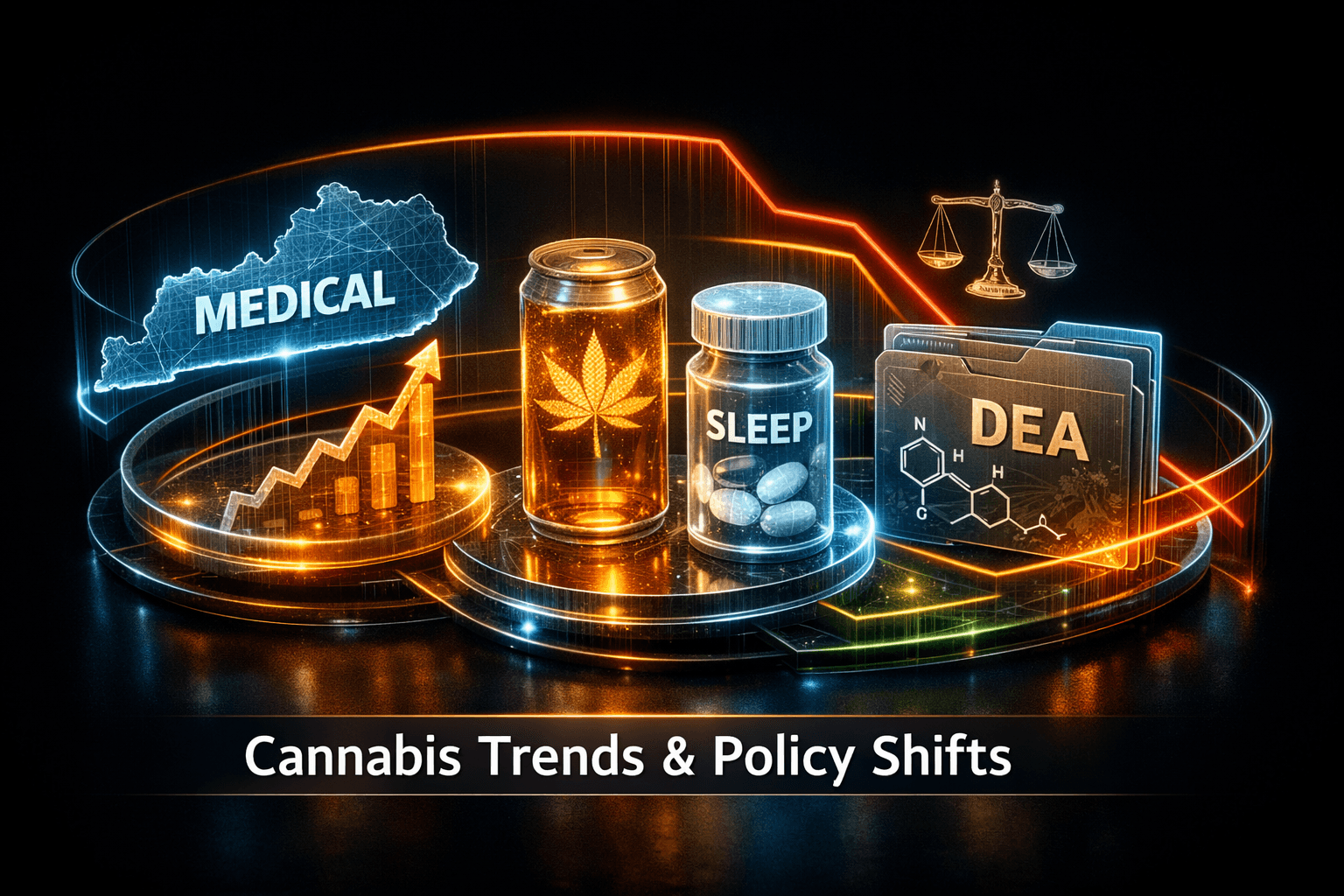
Kentucky's governor expanded medical marijuana qualifying conditions today and publicly called for broader decriminalization, marking the most significant policy development for cannabis markets on Jun 2. That move, combined with fresh consumer signals showing strong demand for cannabis beverages and sleep-related products, suggests momentum is building for mainstream adoption.
At the same time a legal challenge to the DEA over HHC injects important regulatory uncertainty that could become a clarifying catalyst. What does this mean for you and your exposure to the sector tomorrow? It means traders will likely watch policy and court developments closely while consumer-driven product categories keep long-term growth hopes alive.
Market Highlights
Trading was shaped by headlines rather than earnings today, with investors parsing policy changes and consumer surveys. Here are the quick facts to keep on your radar.
- Kentucky expands medical marijuana eligibility, governor signals openness to decriminalization, a policy development that markets often treat as pro-growth for local retail and medical demand.
- Consumer trend data and culture stories highlighted growth in cannabis beverages and use for sleep, reinforcing product-led expansion across licensed markets.
- Legal action against the DEA over HHC creates near-term volatility potential for hemp-focused names and product categories.
- Sector tickers frequently tracked by retail investors include $MSOS, $TCNNF, $GTBIF, $CURLF, $TLRY, which you should watch for headline-driven moves and volume spikes.
Key Developments
Policy and Legal: Kentucky expands medical access, DEA faces lawsuit
Gov. Andy Beshear issued an executive order adding 15 qualifying conditions to Kentucky's medical marijuana program and said it is time for broader decriminalization. That kind of state-level expansion typically boosts patient counts and can improve sales trajectories for local operators once implementation details are set.
Separately, hemp companies sued the DEA over its recent classification of HHC as a Schedule I substance. The litigation could either uphold the agency's ruling or force regulatory clarity that affects the legality of many hemp-derived products. Could legal clarity on HHC come soon, and how will markets react? Expect heightened news sensitivity around court filings and judge schedules.
Consumer Demand: Beverages and sleep benefits gain traction
High Times and survey data from the American Academy of Sleep Medicine pointed to two consumer themes: cannabis beverages are filling social occasions that once centered on alcohol, and about two in three users report improved sleep. Those signals matter because they point to repeat purchase categories and mainstream-friendly formats that can expand addressable markets.
For companies pivoting to ready-to-drink products and sleep-focused formulations, today's stories underscore both branding opportunities and distribution priorities. You should watch product launches and retail placement announcements closely.
Industry Structure: Equity programs face scrutiny
Amber Senter, an architect of early social equity programs, criticized how equity initiatives have often funneled Black founders into challenging business models. That critique raises questions about long-term industry diversity, capital access, and which business models actually scale.
For investors and stakeholders, the takeaway is that legalization can open a door but not guarantee sustainable participation for all groups. You'll want to monitor legislative fixes, grant programs, and private capital initiatives aimed at correcting structural barriers.
What to Watch
Tomorrow and the coming weeks are likely to be defined by a handful of catalysts you can track. Here are the most actionable items to follow and why they matter to your positioning.
- Court schedule and filings in the DEA v. hemp companies HHC case, because a ruling or preliminary injunction could materially affect hemp-derived product sales and share prices for exposed companies.
- State-level decriminalization efforts and implementation details from Kentucky, including enrollment numbers for newly eligible patients, which will affect local market demand over months.
- Product and distribution updates from major operators and retailers as they push cannabis beverages and sleep-focused products into outlets. Watch for shelf placement, pricing, and promotional programs.
- Monitor the names and ETFs you follow: $MSOS, $TCNNF, $GTBIF, $CURLF, $TLRY, since they often lead sentiment and will show headline sensitivity first.
- Social equity policy fixes and capital programs, because changes there can alter competitive dynamics and market access for new entrants.
- Data releases and surveys about consumer use and health effects, which influence public perception and regulatory appetite.
Bottom Line
- Policy momentum is a clear positive today, with Kentucky expanding medical access and political language moving toward decriminalization.
- Consumer demand signals for beverages and sleep products support product-led growth narratives, suggesting category expansion beyond traditional flower sales.
- Legal action over HHC creates short-term regulatory risk but could provide long-term clarity for hemp markets if courts overturn or narrow the DEA rule.
- Equity program critiques highlight structural risks for industry diversity and long-term social sustainability, a factor you should watch for reputational and regulatory outcomes.
- This summary is for informational purposes only, analysts note it is not personalized investment advice and does not recommend buying, selling, or holding any security.
FAQ Section
Q: Is HHC legal now federally? A: The DEA recently moved to treat HHC as illegal, but hemp companies have filed suit and the legal process will determine final status.
Q: Will beverage trends boost big cannabis operators? A: Data suggests beverages are gaining social traction, which could help companies with strong manufacturing and distribution, but execution and shelf access will be decisive.
Q: How should I think about social equity critiques when evaluating companies? A: Equity criticisms point to governance, licensing, and community risk factors that can influence long-term market structure and should be part of your research checklist.