The Big Picture
Two state-level legal changes landed overnight that you need to know about if you follow the cannabis sector. Minnesota enacted a law intended to simplify how medical and adult-use cannabis move through the market, while a New Jersey appellate court ruled that job applicants and employees can sue employers over adverse actions tied to cannabis tests.
These are not national policy shifts, but they matter because state rules shape capacity, labor practices, and compliance costs for multistate operators and local businesses. You should be thinking about how capacity caps and labor litigation risk could influence margins and hiring in affected markets.
Market Highlights
Here are the quick facts from today’s headlines and the numbers that matter.
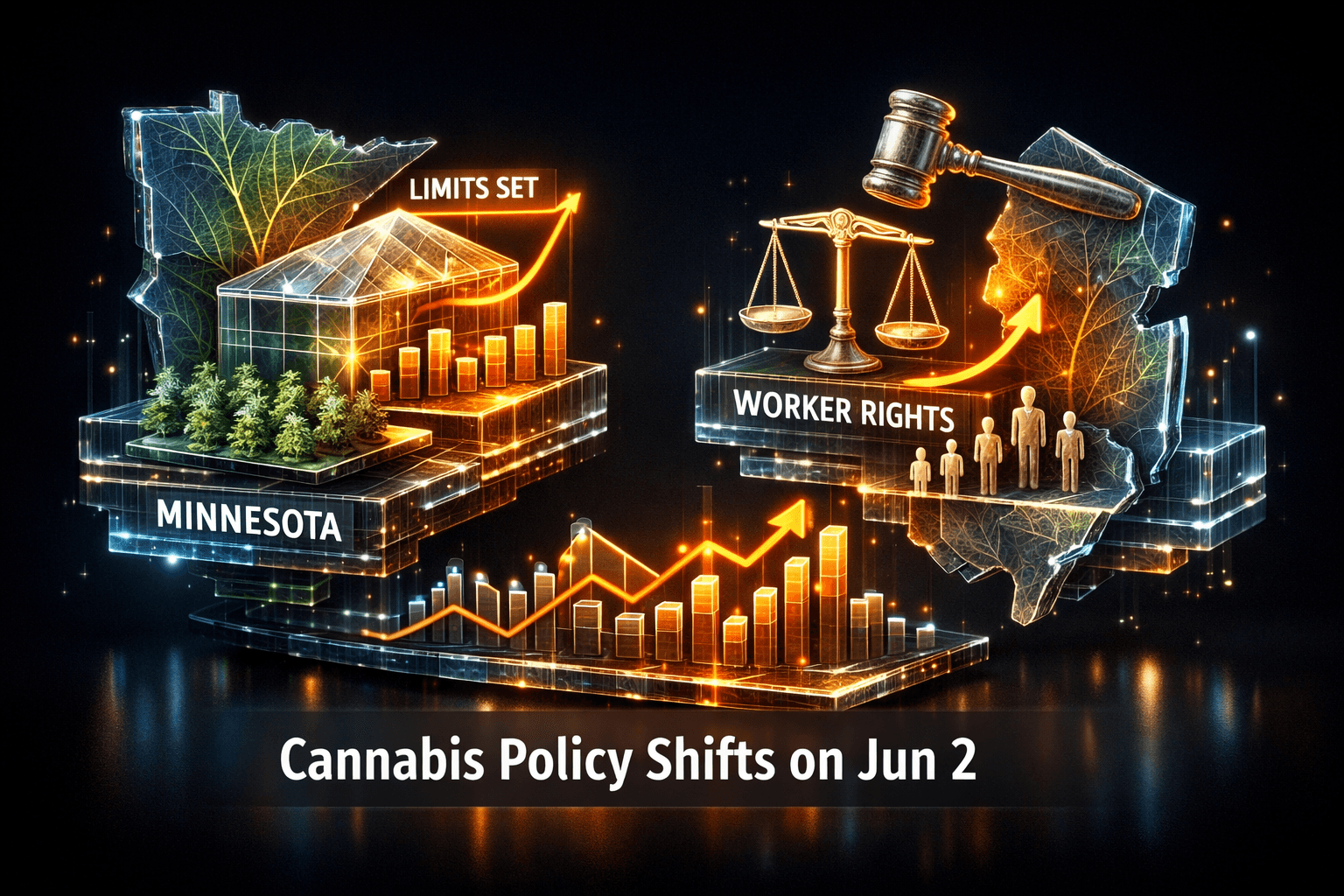
- Minnesota law: new plant canopy cap for indoor cultivation set at 38,000 square feet, down from the previous 90,000 square feet cap for combination licenses.
- Medical carve-out: Minnesota reserves up to 60,000 square feet of canopy specifically for medical cannabis product cultivation.
- New Jersey ruling: the Appellate Division allows applicants and employees denied employment or fired over cannabis tests to sue under CREAMMA, the state cannabis statute.
- Stocks to watch in the sector today include the top trackers and names you follow, such as $MSOS, $TCNNF, $GTBIF, $CURLF, and $TLRY.
Key Developments
Minnesota streamlines supply chains but tightens indoor canopy
Minnesota’s new law removes the old combination medical and adult-use license structure and replaces it with separate pathways. Lawmakers capped indoor cultivation at 38,000 square feet per license, a significant cut from the prior 90,000 square foot ceiling for combination licenses.
That matters because it forces operators to rethink scale strategies in Minnesota. For some producers the shift could mean higher unit costs if they can no longer realize large indoor economies of scale, while medical-focused operators may benefit from the 60,000 square foot allocation. How operators adjust capacity and product mix will determine local pricing and wholesale availability.
New Jersey court expands employee protections under CREAMMA
The New Jersey Superior Court, Appellate Division ruled that applicants and employees who lose opportunities or jobs due to a positive cannabis test can sue employers under the state’s cannabis law. This is the first appellate-level finding in New Jersey to reach this outcome.
Employers in New Jersey now face a higher legal and compliance bar when making hiring and discipline decisions tied to cannabis testing. You should expect more litigation risk and possibly increased administrative costs for HR teams, which could affect retailers and MSOs operating in the state.
What to Watch
Here are the catalysts and risks to monitor over the coming weeks if you own cannabis exposure or are tracking the sector.
- Implementation timelines in Minnesota, including licensing changes and how regulators allocate the 60,000 square foot medical canopy, will determine the near-term supply picture. Watch state guidance and licensing notices closely, because they will shape capacity additions.
- Legal fallout in New Jersey, including possible class action filings and employer responses, could set precedents for other states. Will employers change testing policies or face higher settlement costs? Expect clarity over the next few months as cases proceed.
- Operational responses from multistate operators. Companies you follow, and sector ETFs like $MSOS and names including $TLRY and $CURLF, may comment on exposure to these states during conference calls. Keep an eye on corporate filings and earnings updates for references to state regulatory changes.
- Labor market effects. If testing limitations increase worker protections, hiring windows could widen and turnover costs could shift. This may be subtle, but you're likely to see HR policy updates from larger operators in short order.
Bottom Line
- Minnesota’s law gives regulatory clarity while reducing per-license indoor canopy from 90,000 to 38,000 square feet, with a 60,000 square foot medical reserve. That’s a net mixed outcome for capacity and cost structures.
- New Jersey’s appellate ruling broadens worker protections under CREAMMA and raises litigation and compliance risks for employers operating there.
- Expect state-level implementation details and employer policy changes to drive local supply and labor dynamics, rather than a sector-wide price shock.
- Watch filings and comments from MSOs and ETF managers, including exposure mentions for $MSOS, $TCNNF, $GTBIF, $CURLF, and $TLRY, to gauge market interpretation.
- Data suggests regulatory clarity is easing some uncertainty, but new compliance burdens are likely, so a selective approach to state risk remains prudent.
FAQ Section
Q: How will Minnesota’s canopy cap affect supply? A: The lower 38,000 square foot cap reduces the maximum indoor scale per license, which may limit rapid capacity expansion for adult-use operators while reserving 60,000 square feet for medical cultivation should support medical supply.
Q: Can employers still test employees for cannabis in New Jersey? A: Yes, employers can test, but the Appellate Division ruling means candidates and employees who suffer adverse actions from positive tests can sue under CREAMMA, increasing legal risk for employers.
Q: Should you expect similar legal changes in other states? A: State law varies widely, so outcomes will differ. The New Jersey decision could be cited elsewhere, but you should watch local statutes and court rulings for signals in your markets.