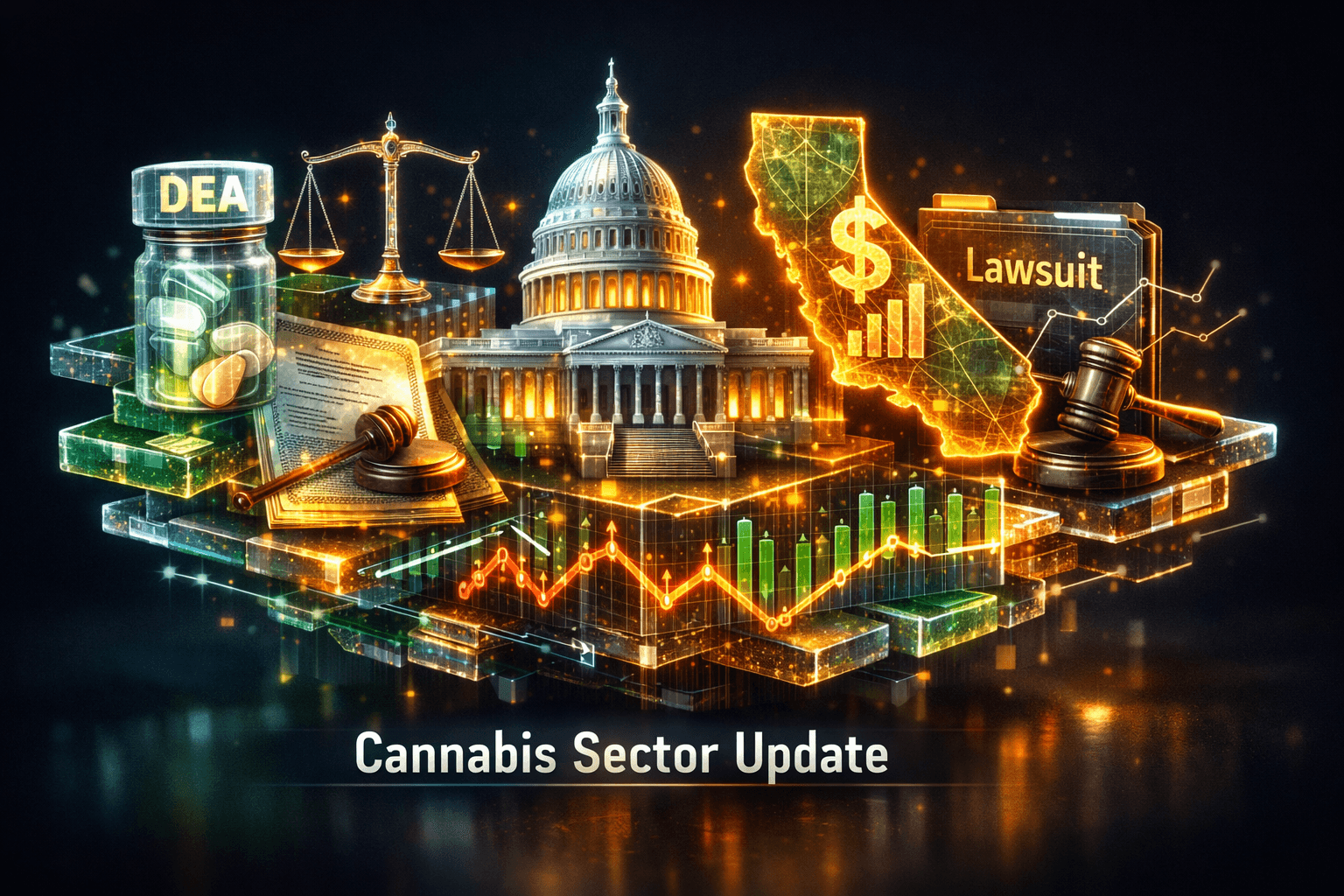
The Big Picture
The cannabis sector is in a state of push and pull heading into the long weekend. A Department of Justice rescheduling move has opened the door to potential benefits for medical cannabis businesses, but confusion at the state level and immediate legal challenges mean clarity is still weeks or months away.
If you follow this space, you should know that policy headlines are driving the narrative more than consumer culture stories this weekend. Markets were closed on Sunday, May 31, with the last trading day on Friday, May 29, so no U.S. equity action occurred today.
Market Highlights
Here are the quick facts and figures investors are parsing this weekend.
- Federal policy: The Department of Justice downgraded medical cannabis classification, creating potential federal tax and regulatory relief for businesses, according to multiple reports.
- Legal pushback: Republican attorneys general from Nebraska, Indiana, and Louisiana filed suit to block the rescheduling order, injecting legal risk into the policy shift.
- State revenue: California reported nearly $248 million in cannabis tax revenue in Q1 2026, including $143.6 million in excise taxes and $104.3 million in sales taxes.
- State-level impacts: Hawaii denied 47 of 163 firearms permit applications last year because applicants were medical marijuana patients, the state AG reported, underscoring ongoing state-to-state policy conflict.
- Sector tickers to watch: mainstream ETFs and names often tracked by retail investors include $MSOS, $TCNNF, $GTBIF, $CURLF, and $TLRY as you evaluate sector exposure.
Key Developments
Federal Rescheduling, But No Roadmap
The Department of Justice's decision to downgrade medical cannabis classification is a major development that could allow companies to claim certain federal tax benefits. State regulators called the lack of implementing guidance "frustrating" and warned they can't effectively advise licensees with a ticking clock for compliance decisions.
What does that mean for you as an investor? Expect a period of regulatory ambiguity. Data suggests businesses may benefit eventually, but short term the absence of clear DOJ or Treasury rules raises transitional risk.
Legal Challenges from Republican Attorneys General
Attorneys general from Nebraska, Indiana, and Louisiana filed suit to block the rescheduling order last week. The plaintiffs argue rescheduling will create enforcement and legal concerns in their states, raising the odds of litigation delaying any practical effects of the DOJ move.
This legal back-and-forth could produce headline volatility. You'll want to track court filings and any emergency motions that could pause implementation.
State-Level Realities: Tax Receipts and Public Policy
On the revenue side, California's Q1 cannabis tax haul of $248 million underscores steady market demand and offers a measurable data point that regulators and analysts will use to model industry health. The breakdown of $143.6 million in excise taxes and $104.3 million in sales taxes shows how local collections feed state budgets.
Conversely, Hawaii's report that medical marijuana status was the single largest reason for firearms permit denials last year highlights lingering conflicts between state law, federal law, and other regulatory regimes. These contradictions can affect patient access and corporate operating risk.
What to Watch
Expect the policy calendar to dominate catalysts next week. You should monitor legal filings, state guidance updates, and corporate disclosures for clues about when the rescheduling move will have practical effects.
- Legal timetable, court activity: Watch for emergency motions or injunctions from the states suing the DOJ, and check filings daily to see if implementation is paused.
- Federal guidance: Treasury and the IRS may publish rules clarifying tax treatment. If guidance appears, that will be a major sector catalyst.
- State responses: Several state regulators are expected to issue advisories to licensees. You'll want to read those closely if you follow specific markets or companies.
- Earnings and tax reports: More state tax receipts like California's Q1 figures could offer insight into demand trends. Will other large states report similar resilience?
- Sector names and ETFs: Keep an eye on $MSOS for ETF flows and $TCNNF, $GTBIF, $CURLF, and $TLRY for company-level updates or management commentary that could change investor sentiment.
- Advocacy and culture: Events like Dasheeda Dawson's multi-state tour and mainstream culture items about cannabis and psychedelics could shift public sentiment, which matters for policy and branding.
How should you think about positioning? Be selective and consider timelines. Do you prefer near-term clarity or longer-term policy gains? That's a question you should ask before adjusting exposure.
Bottom Line
- Federal rescheduling is a major potential tailwind, but implementation details are missing and will determine real business impact.
- Legal challenges by state attorneys general raise the risk of delays or partial rollouts, which could cause headline-driven volatility.
- California's $248 million in Q1 cannabis tax receipts signal continued consumer demand and provide a useful data point for revenue models.
- State-level contradictions, like Hawaii's firearms denials for medical patients, show regulatory friction that could persist regardless of federal moves.
- Monitor DOJ, Treasury, IRS guidance, court filings, and state regulator advisories closely, and pay attention to $MSOS, $TCNNF, $GTBIF, $CURLF, and $TLRY for company-specific cues.
FAQ
Q: What does the DOJ rescheduling mean for cannabis businesses? A: Analysts note rescheduling could allow some federal tax benefits and reduce certain enforcement risks, but practical benefits depend on follow-up guidance from Treasury and the IRS.
Q: Will the lawsuits stop the rescheduling from taking effect? A: Courts may issue injunctions or take months to decide, so litigation could delay implementation but outcomes are uncertain until judges issue rulings.
Q: How should I track state-level impacts? A: Watch state tax receipts, regulator advisories, and local legal developments because state rules will shape market access and operational constraints.
Investment Disclaimer: This summary is for informational purposes only. It does not constitute investment advice or a recommendation to buy, sell, or hold any security. Analysts note risks and catalysts, but you should consult a licensed professional for personalized guidance.