The Big Picture
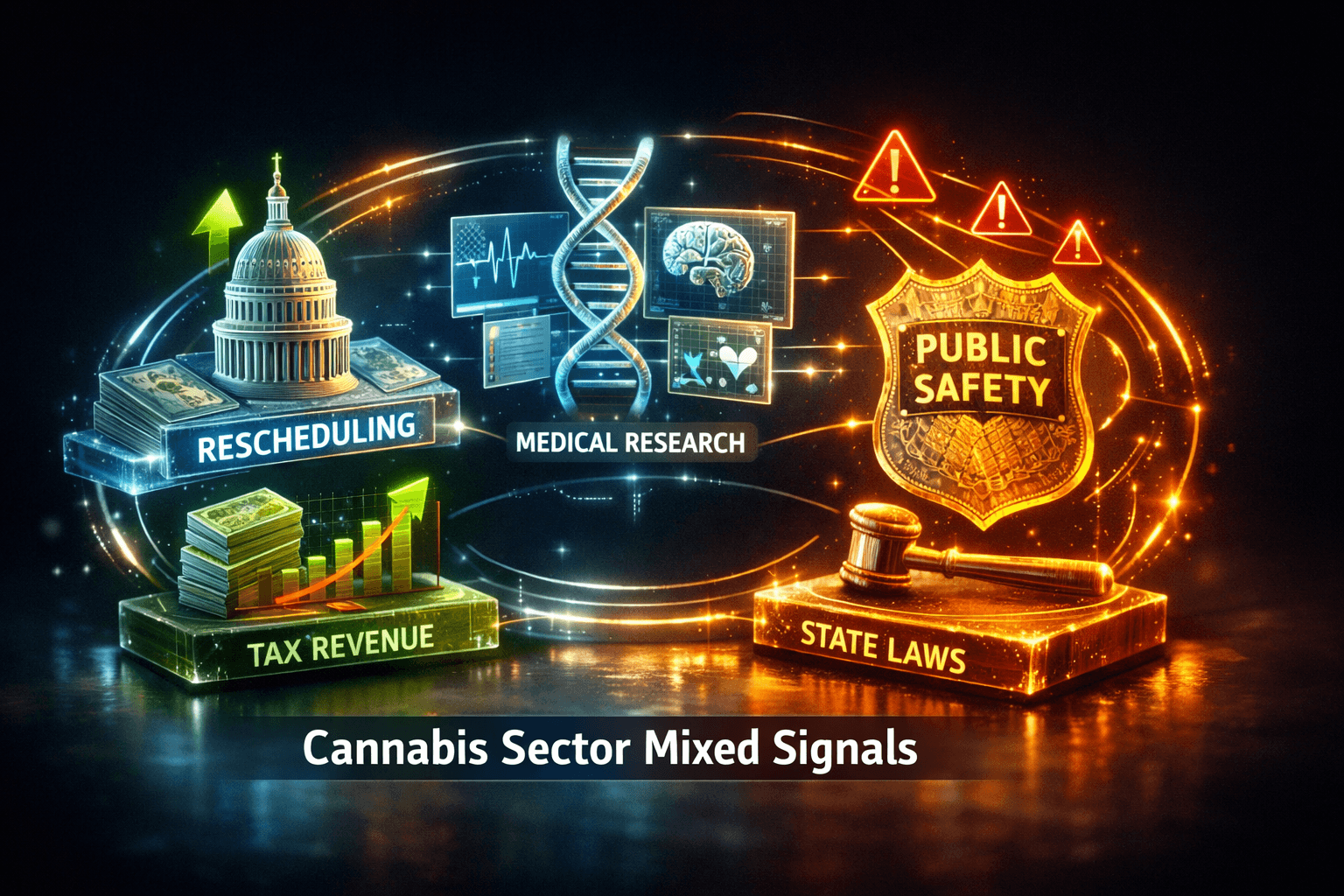
The biggest takeaway heading into the long weekend is simple, you should expect more legal noise even as federal momentum nudges the industry forward. A recent federal rescheduling action that had been driving optimism now faces a multistate legal challenge, creating immediate uncertainty for policy-sensitive companies and investors.
At the same time, hard data and research are providing positive signals. California reported nearly $248 million in Q1 cannabis tax revenue, and a new scientific review found consistent anti-tumor effects for some cannabinoids. U.S. markets are closed today; the last trading day was Friday, May 29, and the next session opens Monday, June 1.
Market Highlights
Here are the quick facts and figures from the most relevant stories you need to know right now.
- Federal policy clash: Republican state attorneys general from Nebraska, Indiana, and Louisiana filed suit to block the Department of Justice order to reschedule medical cannabis, escalating legal uncertainty for the sector.
- California tax receipts: The state reported $247.9 million in Q1 2026 cannabis tax revenue, including $143.6 million in excise taxes and $104.3 million in sales taxes, a key data point for market demand and state-level fiscal reliance.
- Hawaii gun permit data: The state attorney general’s report shows 47 of 163 firearms permit denials in 2025 were due to applicants’ status as medical marijuana patients, representing more than a quarter of rejections.
- Public safety law: Louisiana signed a bill imposing up to one year in jail for smoking marijuana within 2,000 feet of school property, including college campuses, tightening local enforcement risk.
- Medical research boost: A systematic review in Pharmaceuticals found consistent, statistically significant anti-tumor effects for marijuana components in preclinical studies and potential chemotherapy enhancement.
- Culture and community: Industry-focused events and tours continue to build consumer engagement, including Dasheeda Dawson’s State of Flower Tour, which aims to mix policy conversation with community outreach.
- Tickers to watch: Major sector names you should track are $MSOS, $TCNNF, $GTBIF, $CURLF, and $TLRY as you monitor policy outcomes and sector flows.
Key Developments
Federal Rescheduling Meets State Lawsuits
The Department of Justice’s recent move to reschedule medical cannabis has been met by a coordinated lawsuit from Republican attorneys general in Nebraska, Indiana, and Louisiana. That court challenge could slow implementation, produce conflicting rulings, or lead to an appellate showdown, depending on how quickly judges act and what arguments prevail.
For investors, legal timelines matter more than headlines. How long will the injunction fight take, and will courts preserve the rescheduling order while litigation proceeds? Those are the questions that will determine near-term policy clarity.
Revenue and Research Provide Offsetting Momentum
California’s $248 million in Q1 tax revenue is tangible evidence that the regulated market is producing meaningful state receipts. That kind of tax flow underpins jobs, licenses, and infrastructure investment across the supply chain.
Meanwhile the Pharmaceuticals meta-analysis showing consistent anti-tumor activity for cannabinoids adds to the long-term medical narrative. Clinical translation will take time, but the science reinforces demand potential in medical channels and for companies with R&D or licensing strategies.
State-Level Restrictions and Enforcement Risks
Not all news is supportive. Hawaii’s firearms report and Louisiana’s new campus-proximity criminal penalties underscore how state policies can create operational and social risks for consumers and employers. These developments could influence licensing rules, retailer policies, and local public opinion.
That dichotomy creates a mixed bag for the sector, with federal signals pulling one way and state enforcement often pulling the other.
What to Watch
You’ll want to follow several near-term catalysts and risk points over the next days and weeks. First, track litigation timelines related to the federal rescheduling order, including any motions for preliminary injunctions and expected court dates.
Second, monitor state regulatory responses. Will states with restrictive measures, like Louisiana and Hawaii, inspire similar laws elsewhere? How will regulators handle conflicts between state criminalization rules and federal rescheduling?
- Legal calendar: Watch for filings and hearings in the lawsuit from Nebraska, Indiana, and Louisiana. A quick court decision could stabilize sentiment; a lengthy fight will prolong uncertainty.
- State policy moves: Expect additional legislative or regulatory actions at the state level after high-profile laws in Louisiana and reports from Hawaii.
- Financial flows and earnings: Keep an eye on quarterly sales and revenue reports from leading operators and multi-state operators and on ETF flows into $MSOS and related funds.
- Scientific milestones: Any clinical trials or translational research building on the anti-tumor review will be material for medical plays and IP-focused companies.
- Events and community building: Cultural tours and policy workshops, like the State of Flower Tour, may affect regional branding and retail demand, especially in Northeast markets.
How should you position yourself ahead of the court fight and state-level enforcement? Stay selective, and use upcoming filings and state reports as decision points for reassessing risk.
Bottom Line
- Federal rescheduling creates headline optimism, but the lawsuit from three Republican attorneys general injects legal uncertainty that could slow implementation.
- California’s Q1 tax haul of $247.9 million and promising preclinical research lend structural and medical upside to the sector, over the long run.
- State-level enforcement moves, including Hawaii gun-permit denials and Louisiana’s campus smoking penalties, increase regulatory fragmentation and operational risk.
- Watch legal timelines, state regulatory responses, and any R&D clinical progress closely, and follow flows into $MSOS, $TCNNF, $GTBIF, $CURLF, and $TLRY for market sentiment signals.
- This is a mixed environment, so you’ll want to prioritize information flow and risk controls rather than broad assumptions about direction.
FAQ Section
Q: How will the federal rescheduling order affect state cannabis laws? A: Rescheduling changes federal enforcement and classification but does not automatically override state laws; states retain authority to regulate or restrict cannabis within their borders.
Q: Should you expect immediate market moves when legal filings are posted? A: Markets often react quickly to legal milestones, but the speed and durability of moves depend on court rulings and whether actions are stayed or appealed.
Q: What data should you track to gauge sector health? A: Key indicators include state tax receipts, licensing and retail sales figures, ETF flows into funds like $MSOS, and major legal or clinical milestones that change policy or medical adoption.
Note: This briefing is for informational purposes only. Analysts note that data suggests policy and state-level enforcement will remain the largest near-term drivers of volatility. This is not personalized investment advice, and no specific buy, sell, or hold recommendations are provided.