The Big Picture
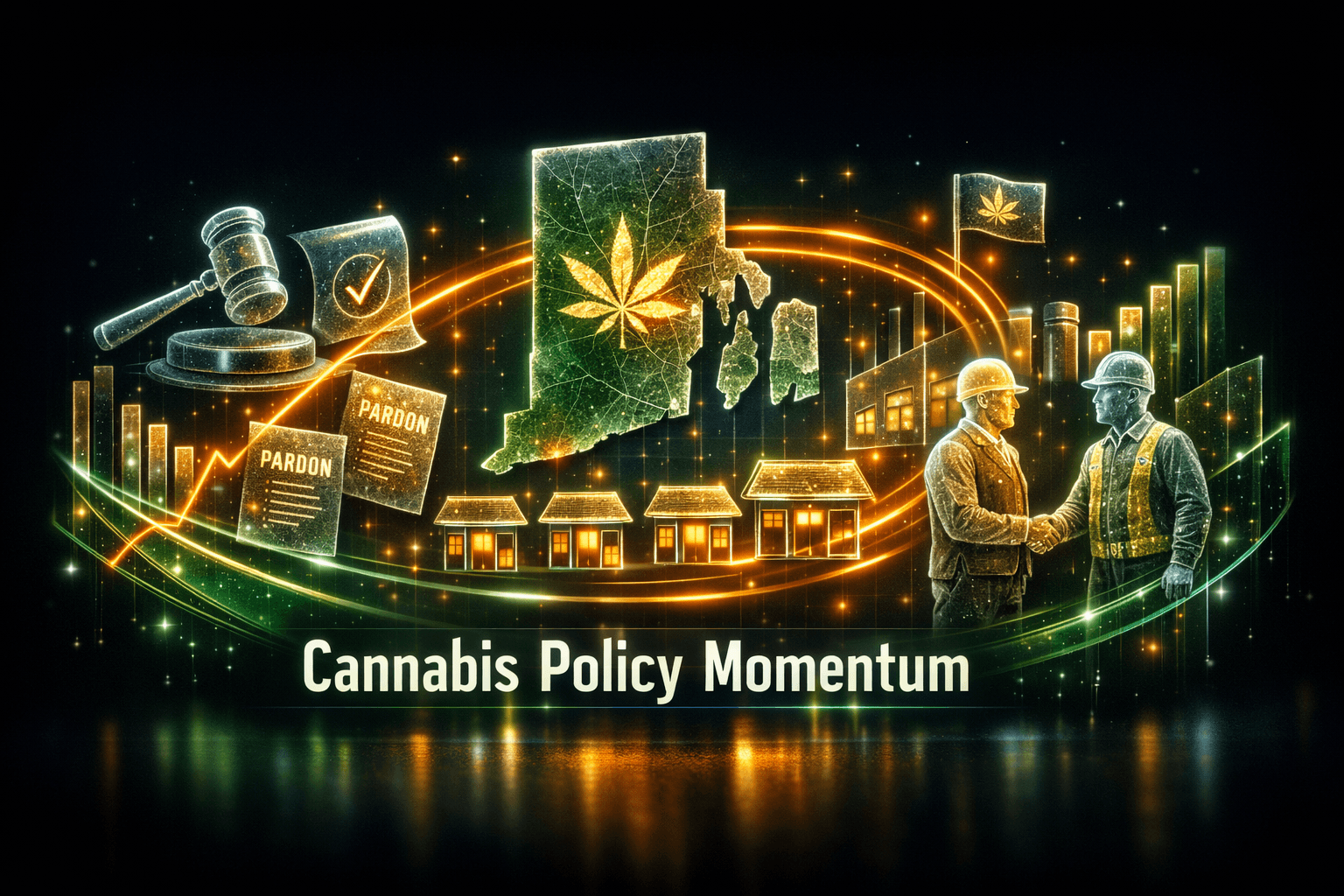
A trio of policy and workforce stories early today underscores accelerating normalization in the cannabis industry. Democratic lawmakers have asked the White House to pardon everyone in federal prison for non-violent cannabis crimes, a Rhode Island bill aims to remove residency barriers that stalled licensing, and workers at a New Jersey extraction facility voted to unionize.
Why does this matter to you as an investor? These items reduce regulatory friction in key markets and signal the sector is maturing, which can broaden addressable demand and bring more predictable labor relations over time. Expect markets to digest the implications for licensing growth, legal risk, and operating costs today.
Market Highlights
Overnight and pre-market headlines focus on policy and labor rather than earnings, so look for sector ETFs and large names to react to developments around licensing and federal relief. Here are the quick facts to kick off trading:
- Federal pardon push: 28 Democratic lawmakers plus Senator Bernie Sanders urged President Trump to pardon federal prisoners convicted of non-violent cannabis offenses, arguing the recent rescheduling to Schedule III doesn't provide relief for those already incarcerated.
- Rhode Island licensing: New bill would remove residency requirements that previously required a state resident to own at least 51 percent of a cannabis business. That restriction prompted a judge to halt the state licensing process last month.
- Union vote in New Jersey: Twelve workers at Sun Extractions in Hamilton voted to join UFCW Local 360 and are now negotiating their first contract, a signal that cannabis manufacturing and extraction roles are organizing as the industry scales.
- Key tickers to watch include $MSOS, $TCNNF, $GTBIF, $CURLF, $TLRY, which often react to regulatory news and state licensing updates. No major pre-market price shocks were reported in these stories, but volume could pick up as markets open.
Key Developments
Federal pardon push for non-violent cannabis convicts
Twenty-eight House Democrats and Senator Bernie Sanders asked President Trump and the pardon czar to expedite pardons for people serving federal sentences for non-violent cannabis crimes. The letter notes that rescheduling to Schedule III does not undo existing convictions or release those incarcerated.
For investors, the ask signals renewed federal attention to criminal-justice relief tied to cannabis policy. If the White House acts, it would remove a political overhang and further normalize the sector nationally. Could that speed broader regulatory clarity at the federal level? It is possible, and markets will be watching for any official response.
Rhode Island moves to reopen licensing by removing residency rules
A bill introduced in Rhode Island would strip residency language from the state’s legalization law that required business owners to be state residents and a resident to hold at least 51 percent. The residency requirement led a judge to halt the state’s licensing process last month, so removing it would restart a stalled market.
That change matters because it can accelerate licensing, attract out-of-state investment, and increase competition for limited retail and cultivation slots. For companies with expansion plans or multi-state operators that track state-by-state license rollouts, this is a development you want to follow closely.
Unionization at a New Jersey extraction facility signals industry maturation
Twelve workers at Sun Extractions voted to join UFCW Local 360 and have begun contract talks. Organizing in extraction and manufacturing roles points to a broader trend where cannabis companies are dealing with workforce issues similar to other consumer packaged goods and pharma sectors.
Investors should interpret union votes as a sign the industry is scaling beyond early-stage startups. That can mean more stable labor relations in the long run, but it could also put upward pressure on labor costs for processors and manufacturers in the near term.
What to Watch
Today you should track the following items and ask how they affect the companies you follow. Will federal action come quickly? How fast will Rhode Island restart licensing? What does union activity mean for margins?
- White House response, timing, and scope: Watch for any official comment or executive action regarding the pardon request. A direct pardon program would be a political catalyst, even if limited in scope.
- Rhode Island legislative calendar: Monitor committee votes and any amended language. If lawmakers pass the bill, the state licensing process could restart, affecting multi-state operators and local applicants.
- Union negotiations in New Jersey: Track contract terms, bargaining timelines, and any strike risk. Labor costs and benefit commitments will be variables for processors and extraction firms to model.
- Sector tape and key tickers: Keep an eye on $MSOS, $TCNNF, $GTBIF, $CURLF, $TLRY for intraday moves tied to policy headlines. You may see volatility around state-level licensing announcements and any federal statements.
- Licensing and market access calendars: States with impending license awards or auctions could react to Rhode Island precedent, so check local regulators for updated timelines.
Bottom Line
- Policy momentum is positive, with a federal pardon push and moves to remove state-level licensing barriers. Analysts note these actions lower legal and market-access risk.
- Rhode Island’s proposed fix could reopen a stalled market, which may attract out-of-state capital and speed growth for multi-state operators tracking expansion opportunities.
- Unionization at an extraction facility shows the sector is maturing and formalizing labor relations, a double-edged sword for margins and stability.
- Watch for official responses and legislative votes today, and watch the quoted ETFs and names for price reaction. Data suggests policy clarity tends to reduce volatility over time.
- Remember, these developments change the backdrop for earnings and licensing, but they do not guarantee short-term stock moves. Stay selective and monitor regulatory timelines closely.
FAQ
Q: Will a presidential pardon erase federal cannabis convictions? A: A pardon would clear criminal records for those covered, but implementation and eligibility details would determine how many cases are affected.
Q: How would removing residency requirements affect licensing in Rhode Island? A: Eliminating residency rules would likely restart the licensing process and broaden the pool of applicants and investors eligible to participate.
Q: Does a union vote mean higher costs for cannabis companies? A: Union contracts can increase labor costs and benefits, but they can also bring workforce stability and predictable labor relations as firms scale.