The Big Picture
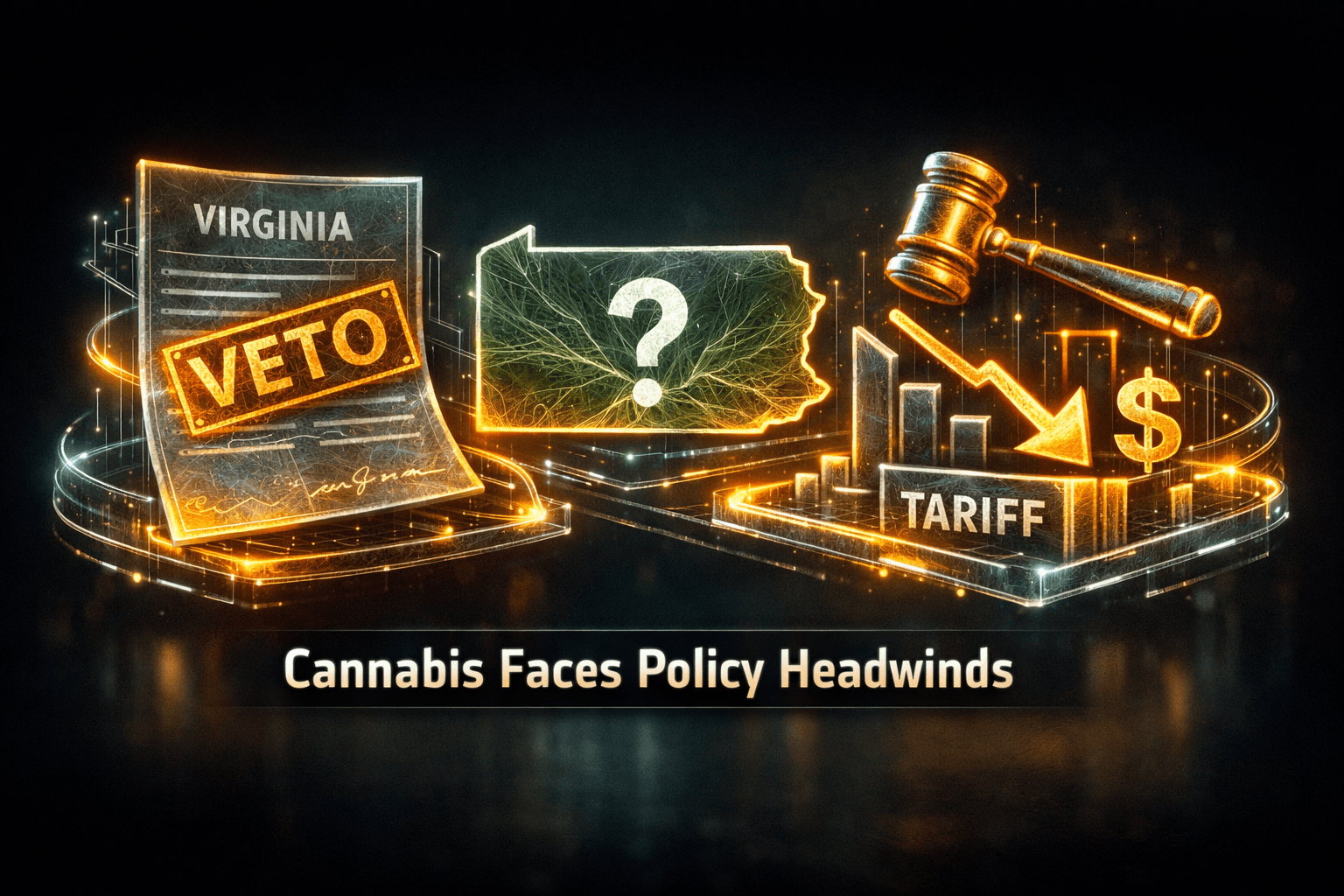
Virginia's governor vetoed a cannabis-related bill and publicly explained his reason for doing so, creating fresh uncertainty for state market timing and licensing plans. That move comes alongside renewed anti-legalization rhetoric in Pennsylvania and policy noise on psychedelics and tariffs highlighted in a May 22 newsletter, leaving regulatory risk front and center for cannabis investors.
Policy developments at the state and federal levels tend to move capital and sentiment in this industry. You should expect more volatility as participants parse how these political shifts affect growth projections, licensing rollouts, and supply chain costs.
Market Highlights
Here are the key market takeaways from the overnight news and this morning's policy updates.
- Virginia governor vetoes a cannabis bill, citing concerns outlined in his public statement, slowing or complicating implementation timelines for state market changes.
- Political rhetoric in Pennsylvania remains hostile toward legalization, with a GOP lieutenant governor candidate calling legal marijuana “catastrophic,” which may influence nearby state policy conversations.
- Newsletter coverage flagged a Department of Justice letter on psilocybin rescheduling and noted tariffs that could raise costs for cannabis businesses operating with imported inputs.
- Key cannabis sector tickers to watch today include $MSOS, $TCNNF, $GTBIF, $CURLF, and $TLRY for sentiment and exposure to market and policy shifts.
Key Developments
Virginia Governor Explains Veto
The governor issued a public explanation after vetoing a bill related to cannabis. He framed the veto around specific policy or implementation concerns, rather than an outright opposition to legalization, according to the newsletter summary. That distinction matters because it signals potential for revised legislation, but it also delays certainty around licensing and market structure for operators planning to enter or expand in Virginia.
For you, that means planned state rollouts could be pushed back and existing license applicants may face longer approval timelines. Companies with expected revenue from new Virginia operations will need to recalibrate near-term forecasts.
Political Headwinds in Pennsylvania
A Pennsylvania GOP lieutenant governor candidate described legal marijuana as “catastrophic,” a blunt statement that signals political risk in a nearby state where legalization has been debated for years. Lawmakers pay attention to public rhetoric, and sharp negative comments can slow legislative momentum even where public support exists.
Regional policy setbacks tend to have spillover effects. If neighboring states stall, multistate operators face slower expansion plans and possible concentration of supply in fewer markets.
Federal and Trade Noise: Psilocybin and Tariffs
The newsletter also flagged a Department of Justice letter on psilocybin rescheduling and commentary about tariffs that could raise input costs for cannabis businesses. The DOJ correspondence may indicate federal interest in clarifying the status of psychedelic compounds, which is relevant for companies exploring alternative therapeutics.
Tariff pressures are a practical concern. Higher import costs for packaging, cultivation equipment, or inputs could compress margins for some operators. That’s a cost story you should keep in mind when reviewing company guidance and margin expectations.
What to Watch
Keep an eye on the following catalysts and risks as you manage exposure to the sector today and near term.
- Virginia follow-ups, including whether the governor signals what changes would make the bill acceptable, and if legislators plan an override attempt.
- State-level legislative calendars in Pennsylvania and neighboring states, since political rhetoric could translate into stalled bills or tougher regulatory frameworks.
- Any public release or reaction to the DOJ letter on psilocybin, and whether regulators or lawmakers propose federal clarifications that affect psychedelics-related equities.
- Trade developments and tariff decisions that could change input costs for cultivation and manufacturing. Watch company-specific margin guidance updates that mention tariff impact.
- The five sector tickers you should be watching for intraday sentiment and correlation effects: $MSOS, $TCNNF, $GTBIF, $CURLF, $TLRY. Look for volume spikes and guidance commentary from names with state exposure to Virginia or Pennsylvania.
How should you position yourself around this news? Are there companies with minimal exposure to the affected states or with diversified revenue that might be less sensitive to these policy moves? Think in terms of selectivity and timeline adjustments.
Bottom Line
- State-level vetoes and hostile political rhetoric are weighing on sector sentiment, creating near-term downside risk for expansion-dependent names.
- Federal policy signals on psychedelics and tariff pressures add complexity to the investment case and could affect margins for some operators.
- Watch legislative next steps in Virginia and Pennsylvania closely, because passage or amendments would be a clear catalyst for the stocks tied to those markets.
- Monitor $MSOS, $TCNNF, $GTBIF, $CURLF, and $TLRY for sentiment shifts and any company-level disclosures that reference the recent policy developments.
- Data suggests investors should be selective and manage risk, keeping a close eye on timelines and cost pressures rather than assuming smooth expansion.
FAQ Section
Q: What does the Virginia veto mean for cannabis revenue timing? A: The veto delays certainty on licensing and market changes, which may push back revenue expectations for operators planning to enter or expand in Virginia.
Q: Will anti-legalization statements in Pennsylvania stop nationwide progress? A: One vocal candidate can slow momentum regionally, but nationwide progress depends on many state legislatures and federal signals, so it’s a headwind rather than a definitive barrier.
Q: How do tariffs and DOJ letters affect cannabis stocks? A: Tariffs can raise input costs and compress margins, while DOJ letters on psilocybin create regulatory uncertainty or clarity depending on the content; both items influence valuation assumptions and guidance reviews.