The Big Picture
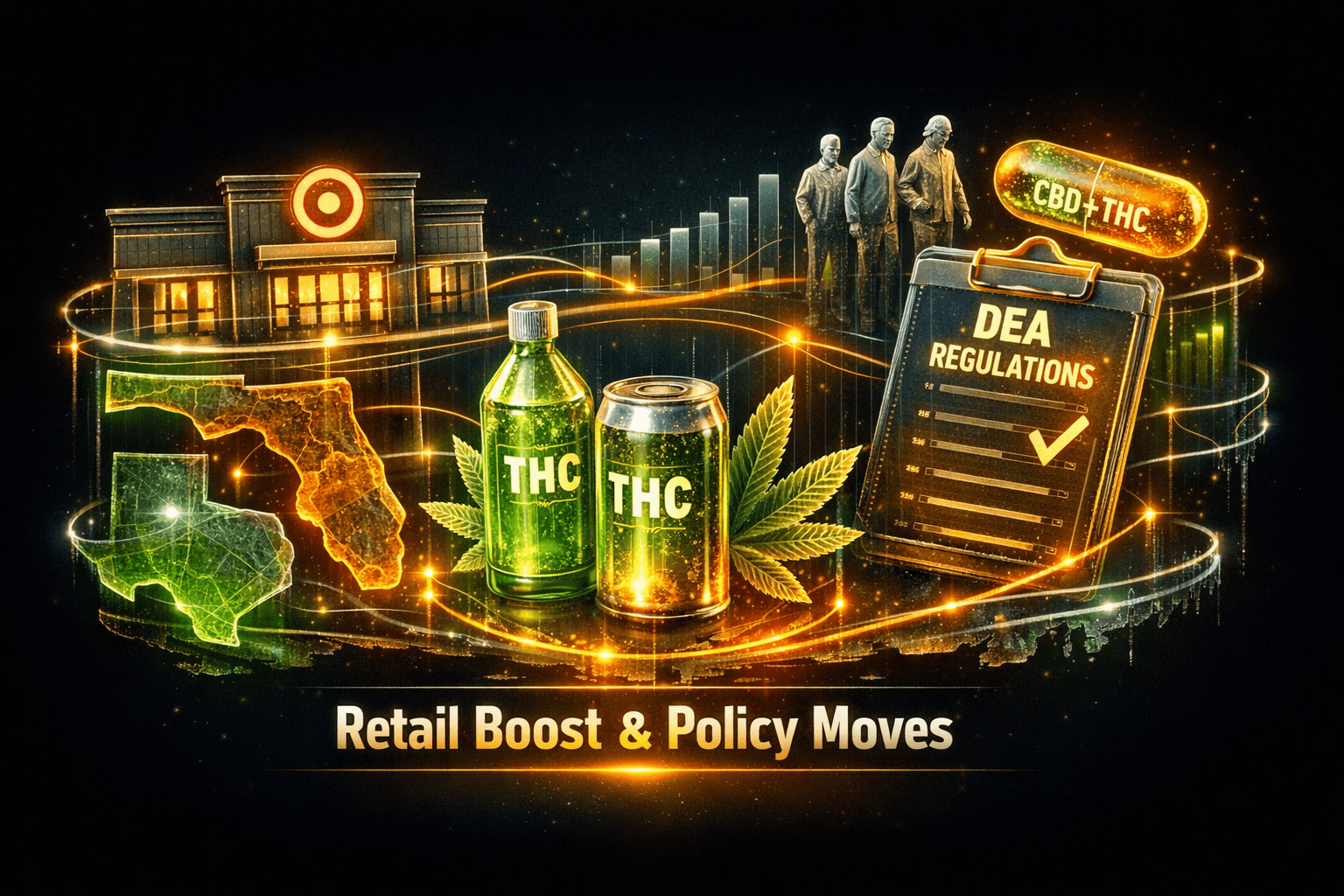
Target's decision to add intoxicating hemp beverages to more than 300 stores across Florida, Texas and approved Illinois municipalities is the day's most consequential development for the cannabis sector. Mainstream retail placement can broaden consumer access and normalize hemp-derived THC products, which may accelerate category growth and brand visibility.
At the same time you should note that regulatory shifts are still arriving, exemplified by Oklahoma's new DEA registration requirement for medical cannabis licensees after federal rescheduling. Finally, demand signals from a JAMA Network Open study suggest older adults are gravitating to CBD and CBD-THC combination products, a demographic trend that could reshape product mix and marketing strategies.
Market Highlights
Quick facts and numbers to know this morning.
- Target expansion: intoxicating hemp beverages will be available at more than 300 Target stores, across all locations in Florida and Texas and in Illinois where municipalities allow sales.
- Regulatory update: Oklahoma's Bureau of Narcotics requires medical cannabis manufacturers and distributors to register with the DEA following the federal move to Schedule III; the directive was issued in a May 8 letter to licensees.
- Consumer research: a JAMA Network Open study found 57.5% of first-time cannabis buyers aged 60 and older in Colorado chose CBD-only or THC-CBD combination products rather than THC-only formulations.
- Sector tickers to watch today include $MSOS, $TCNNF, $GTBIF, $CURLF, and $TLRY as broad gauges of retail interest and multi-state operator exposure.
Key Developments
Target adds intoxicating hemp beverages to stores
Target will carry THC-infused hemp beverages in more than 300 stores across Florida, Texas and approved Illinois municipalities, according to BevNet and Ganjapreneur. For investors you should consider that mainstream retail endorsement can improve brand discovery, shorten the customer trial cycle, and create distribution scale for beverage makers and their suppliers.
Expect manufacturers and regional distributors to be the most directly affected. Retail placement often translates into rapid sales volume for shelf-ready beverage SKUs, and it can force competitors to accelerate their own retail strategies.
Oklahoma requires DEA registration after rescheduling
Following federal reclassification of medical cannabis to Schedule III, Oklahoma's regulatory agency told licensees they must register with the DEA. The move is administrative and compliance focused, but it raises operational costs and paperwork burdens for manufacturers and distributors operating in Oklahoma.
For investors this is a reminder that federal policy changes can create short-term friction even as they lower long-term legal risk. You'll want to watch how other states interpret DEA registration guidance and whether companies disclose incremental compliance expenses.
Study shows older buyers favor CBD and THC-CBD blends
A study published in JAMA Network Open found a majority of first-time cannabis buyers aged 60 and older in Colorado selected CBD-only or CBD-THC combination products, with 57.5% choosing those formulations over THC-only options. That suggests demand is not limited to younger recreational consumers and that the wellness framing of CBD products resonates with older demographics.
This matters for product strategy and marketing. If you track consumer trends, expect more product development geared to milder, symptom-focused formulations that appeal to older adults and caregivers.
What to Watch
Here are the catalysts and risks that could move the sector while markets are open today and in the near term. What should you watch next?
- Retail rollout impact, short term, on manufacturers and suppliers, especially beverage brands that gain Target shelf space. Watch sales updates and retailer replenishment notes.
- Regulatory follow-through, including any guidance from the DEA or state regulators that clarifies registration specifics, timelines, or fees. Oklahoma's requirement could be a template for other states.
- Consumer demand shifts toward CBD and CBD-THC blends, which could influence product mix, pricing and margins. You should monitor sales breakdowns and product category growth from multistate operators and retailers.
- Sector benchmarks and names to track include $MSOS as an ETF proxy for U.S. exposure, $TCNNF and $GTBIF for multinational operator sensitivity, and $CURLF and $TLRY for large-cap and beverage-adjacent plays that may benefit from wider retail distribution.
- Policy calendar items, including upcoming federal or state hearings on hemp definitions and any DEA implementation notices, which could move securities tied to the space.
Bottom Line
- Target's distribution decision is a clear retail win, increasing mainstream visibility for intoxicating hemp beverages and likely boosting near-term sales for listed suppliers and private brands.
- Oklahoma's DEA registration requirement shows that federal rescheduling creates both opportunities and compliance costs, a two-step process that you should watch for company disclosures about expenses and timelines.
- Demographic demand is shifting, with older adults favoring CBD and CBD-THC blends, a trend that could expand the market and change product prioritization.
- Keep an eye on communications from retailers, manufacturers and state regulators for updates that will influence revenue, margins and supply chain logistics.
- Data suggests momentum is building, but regulatory and operational details can move the needle quickly, so stay selective and monitor upcoming filings and earnings.
FAQ Section
Q: How significant is Target's rollout for the cannabis sector? A: Target's move is significant because it gives intoxicating hemp beverages mainstream retail reach across 300 plus locations, which can accelerate consumer trial and scale for beverage brands.
Q: Will Oklahoma's DEA registration rule affect companies in other states? A: Possibly, because states are likely to interpret federal rescheduling differently; other state regulators may introduce similar registration or compliance requirements that you should monitor.
Q: Should product makers change strategy based on the JAMA study? A: The study indicates older buyers prefer CBD or CBD-THC blends, so product makers may prioritize milder formulations and clear wellness positioning to capture that demographic.