The Big Picture
Federal and state policy shuffled the deck for cannabis today, with regulators clarifying which synthetic compounds are illegal even as some states ease access and courts block bans. You should care because those decisions affect product availability, bank access, and legal risk across the supply chain.
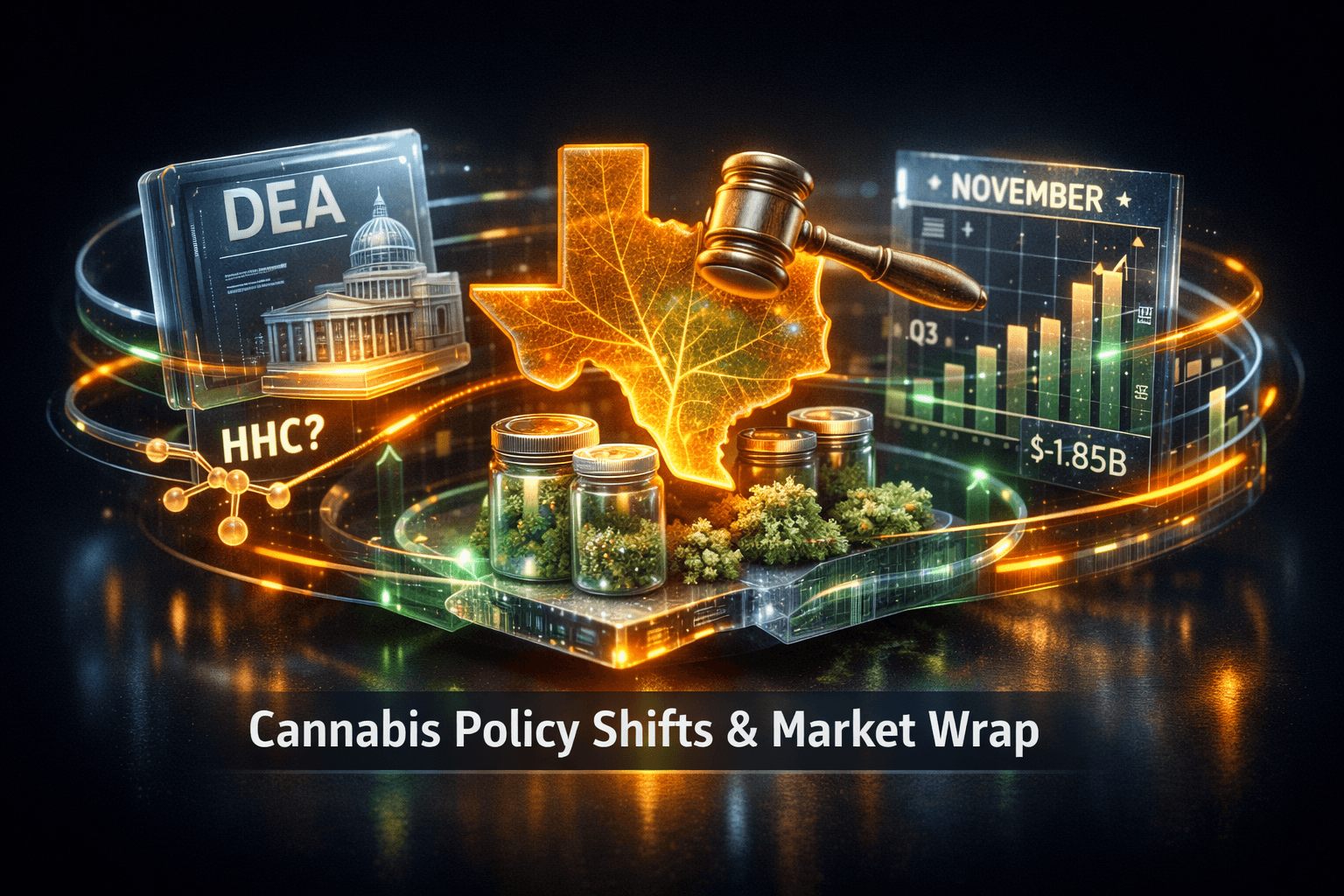
The sector saw a push-pull: rescheduling-related benefits creating new opportunities, while enforcement notes and a looming hemp rule change in November added fresh uncertainty. For you as a retail investor, that means selectivity and attention to balance-sheet health will matter more than ever.
Market Highlights
Traders digested headlines about federal enforcement, state court rulings, and a new vendor credit score list. The equity response was mixed, reflecting both opportunity and risk.
- Wholesale credit stress: U.S. cannabis operators carried more than $3.8 billion in delinquent receivables at the end of 2023, per Whitney Economics, a figure vendors are now using in public credit scoring.
- Congress and rules: The House passed the Farm Bill 224-200 without changes to hemp-derived cannabinoid timing, leaving November federal changes intact.
- Public sentiment and state politics: A Texas poll showed 75% support for medical cannabis reforms, while a Texas judge issued a temporary injunction allowing smokable hemp sales to continue for now.
- Regulatory enforcement: The DEA clarified HHC is federally illegal and not hemp, creating immediate compliance headaches for product makers and retailers.
- Sector tickers to watch: major cannabis names including $MSOS, $TCNNF, $GTBIF, $CURLF, $TLRY traded mixed as headlines landed, with intraday moves generally staying within a few percentage points.
Key Developments
DEA Defines HHC as Illegal
The Drug Enforcement Administration issued a clarification that hexahydrocannabinol HHC is federally banned and does not qualify as legal hemp. That puts immediate legal pressure on retailers and manufacturers selling HHC products and could force rapid product delistings or reformulation.
For you, that means supply chains and product SKUs could change quickly, and legal risk for firms selling synthetic cannabinoids has risen.
Federal Patchwork: Farm Bill and Rescheduling Fallout
The House passed a Farm Bill that left in place the expected federal changes to hemp-derived THC that are due this November. At the same time, California regulators are moving to help state marijuana businesses access tax and banking benefits tied to the recent federal rescheduling action.
So you’re seeing a split: rescheduling opens doors for some firms while the Farm Bill and DEA moves limit the hemp product set. Will Congress act before November or will courts continue to fill the gaps?
State Rulings and Public Pressure
In Texas a judge blocked enforcement of a statewide ban on smokable hemp, even as the state Supreme Court allowed a separate delta-8 ban to move forward. Meanwhile, a new public credit-scoring platform in California is naming low-rated operators after two failed legislative attempts to force timely vendor payments.
These stories chip away at a single narrative. On one hand, courts and voters are pushing expansion. On the other, enforcement and vendor distress are spotlighting operational risks for companies you may follow.
What to Watch
Focus on legal deadlines, balance sheets, and product exposure. You’ll want to track who sells HHC, delta-8, or other synthetics, and which firms rely heavily on tight vendor terms.
- November hemp rule change, enforcement timing, and any congressional action on the Farm Bill, all of which could reshape product legality and margins.
- Ongoing court decisions in Texas and other states, which can create market access or closures at short notice.
- Company financials and receivable management after the Whitney Economics $3.8 billion delinquency figure, especially for multistate operators and retailers. Check filings and vendor notes closely.
- Watch these tickers for liquidity and sentiment: $MSOS, $TCNNF, $GTBIF, $CURLF, $TLRY. Earnings, licensing updates, and state-level rule changes could move them.
How will product portfolios change if HHC and similar synthetics stay banned? How will state regulators respond to rescheduling benefits you may hear about? Keep monitoring regulatory feeds and counsel notes to stay current.
Bottom Line
- Federal and state moves produced mixed outcomes today: rescheduling benefits coexist with new enforcement that narrows the hemp product set.
- Credit stress is real, with more than $3.8 billion in delinquent receivables prompting vendor scrutiny and public naming of low-rated operators.
- Legal rulings in Texas show the state-by-state nature of cannabis risk and opportunity, and public support for reform remains strong at the ballot level.
- Watch the November hemp rule change, DEA enforcement actions, and company balance-sheet disclosures; they will matter for product availability and margin pressure.
- This wrap provides analysis and facts for informational purposes only. Analysts note these developments, and data suggests heightened idiosyncratic risk across names.
FAQ
Q: What does the DEA HHC clarification mean for product sellers? A: It means HHC is treated as a federally illegal compound and sellers may face enforcement risk or need to pull product until legal clarity or reformulation is achieved.
Q: Will the Farm Bill change hemp rules before November? A: The House left November changes intact, and any change would require further congressional action or court decisions, so timing remains uncertain.
Q: How should I track companies exposed to these risks? A: Monitor SEC filings, state licensing updates, and vendor receivable notes, and pay attention to exposure to HHC and delta-8 product lines for potential rapid impacts.