The Big Picture
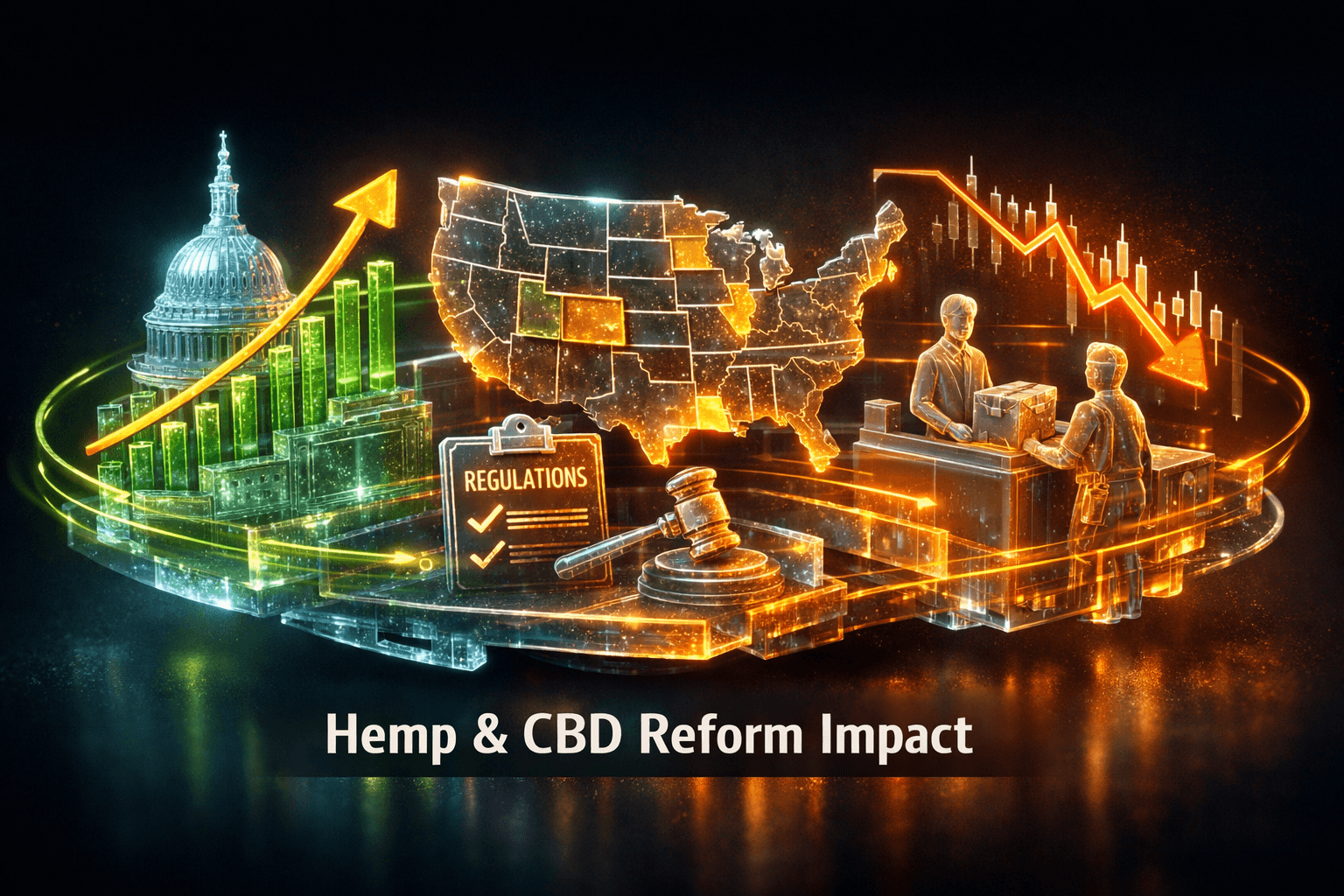
Federal policy chatter is back in the headlines and it's pulling attention to hemp and CBD reform, but state-level restrictions and retail labor friction are reminding you that the market is far from uniform. Today's news combines high-level policy discussion from Washington with concrete legal moves at the state level and cultural stories that shape consumer demand.
That mix matters for your portfolio because federal clarity could unlock broader market access and banking improvements, while state restrictions and litigation can shave margins and raise compliance costs. Expect momentum in some areas and heightened risk in others.
Market Highlights
Here are the quick facts and items to watch from overnight and recent reporting.
- Federal push: Former President Trump and White House actors are reported to be pressing Congress on hemp and CBD reforms, signaling renewed federal focus on sector rules and tax guidance.
- State action: Arkansas Attorney General Tim Griffin certified a law restricting hemp-derived THC products after litigation concluded, enabling enforcement of new limits in that state.
- Political tailwinds: Multiple Wisconsin Democratic gubernatorial candidates publicly endorsed marijuana legalization, adding momentum to possible state-level ballot or legislative action.
- Retail concerns: A High Times feature highlights tipping disputes and lawsuits at dispensaries, pointing to labor, reputational, and compliance risks for retailers.
- Stocks to watch: The key sector tickers investors track include $MSOS, $TCNNF, $GTBIF, $CURLF, and $TLRY, all of which will be sensitive to any policy or state regulatory developments.
- No major sector-wide price moves were reported in the overnight news items, so watch how the market digests these policy and legal headlines during regular trading hours.
Key Developments
Federal push on hemp and CBD reform
Marijuana Moment reports that Trump and White House actors are urging Congress to act on hemp and CBD reforms, alongside federal tax guidance for the marijuana industry. Analysts note that clearer federal rules, including tax and regulatory relief, could ease banking, accounting, and interstate commerce frictions for many operators.
For you, that means a policy catalyst is now on lawmakers' plates, but timing and legislative details will determine how much benefit flows to public companies and ETFs. Expect incremental headlines as bills and staff-level work progress.
State patchwork deepens with Arkansas restriction
Arkansas' attorney general certified a law restricting hemp-derived THC products after litigation ended, allowing state enforcement to proceed. This is a reminder that even as federal debate heats up, states will keep making independent choices that affect local markets.
Companies focused on hemp-derived cannabinoids and retailers selling delta-8 style products could see sales disrupted and compliance costs rise. Expect operators to shift SKUs and labeling to comply, and you should watch state-by-state enforcement closely.
Politics and culture push legalization while retail faces labor scrutiny
Wisconsin Democrats running for governor publicly called for marijuana legalization, reinforcing the steady stream of state-level legalization efforts this cycle. That political pressure could translate into ballot initiatives or legislative bills that expand addressable markets for legal cannabis.
At the same time a High Times feature on dispensary tipping reveals legal fights and worker treatment issues that can affect margins and brand perception. How will retailers balance customer experience, employee pay, and legal compliance? It's a practical question for any operator with multi-state footprints.
What to Watch
Keep an eye on the policy process in Washington, but don't let federal headlines obscure state moves that can materially affect revenues. You'll want to watch several near-term items closely.
- Congressional action and draft bills on hemp and CBD reform, plus any Treasury or IRS guidance on marijuana tax rules, which could change effective tax rates for public companies.
- State enforcement timelines in Arkansas and other states that have moved against hemp-derived THC, since enforcement can cause immediate SKU pullbacks and inventory write-offs.
- Political developments in Wisconsin and other states headed for 2026 ballots, which may expand legal markets and reshape competitive dynamics for brands and retailers.
- Retail labor and litigation trends, including the outcomes of tip-related lawsuits and broad employee relations issues, which can affect operating costs and local reputations.
- Sector ETFs and large names to watch for market reaction: $MSOS, $TCNNF, $GTBIF, $CURLF, $TLRY. These tickers often move on policy news and are useful for gauging investor sentiment.
What should you focus on first, policy or state enforcement? Both matter, but short-term volatility will likely come from state rulings and retail headlines while policy shapes longer-term trendlines.
Bottom Line
- Neutral overall: federal reform talk is constructive, but state restrictions and retail labor issues temper immediate upside for operators and stocks.
- Policy momentum could ease banking and tax friction, but timing is uncertain and details will matter for companies' margins and compliance needs.
- State-by-state enforcement remains the primary near-term operational risk, especially for hemp-derived THC product sellers.
- Retail labor disputes and tip-related lawsuits are an underappreciated cost pressure that you should monitor if you follow multi-state operators or local retailers.
- Watch the named ETFs and stocks for market reaction, and expect headline-driven volatility around both federal and state developments.
FAQ Section
Q: How might federal hemp and CBD reform affect public cannabis companies? A: Analysts say reforms could ease banking and tax burdens and broaden product markets, but benefits depend on the bill text and implementation timelines.
Q: Does the Arkansas law affect marijuana legalization in other states? A: The Arkansas law is state specific, but it highlights that regulators will continue to set divergent rules that can disrupt cross-state supply and product strategies.
Q: Should I expect larger retailers to be insulated from tip and labor disputes? A: Larger retailers may have more legal resources, but litigation and reputation risks can still affect margins and local store performance, so you should watch outcomes and disclosures closely.