The Big Picture
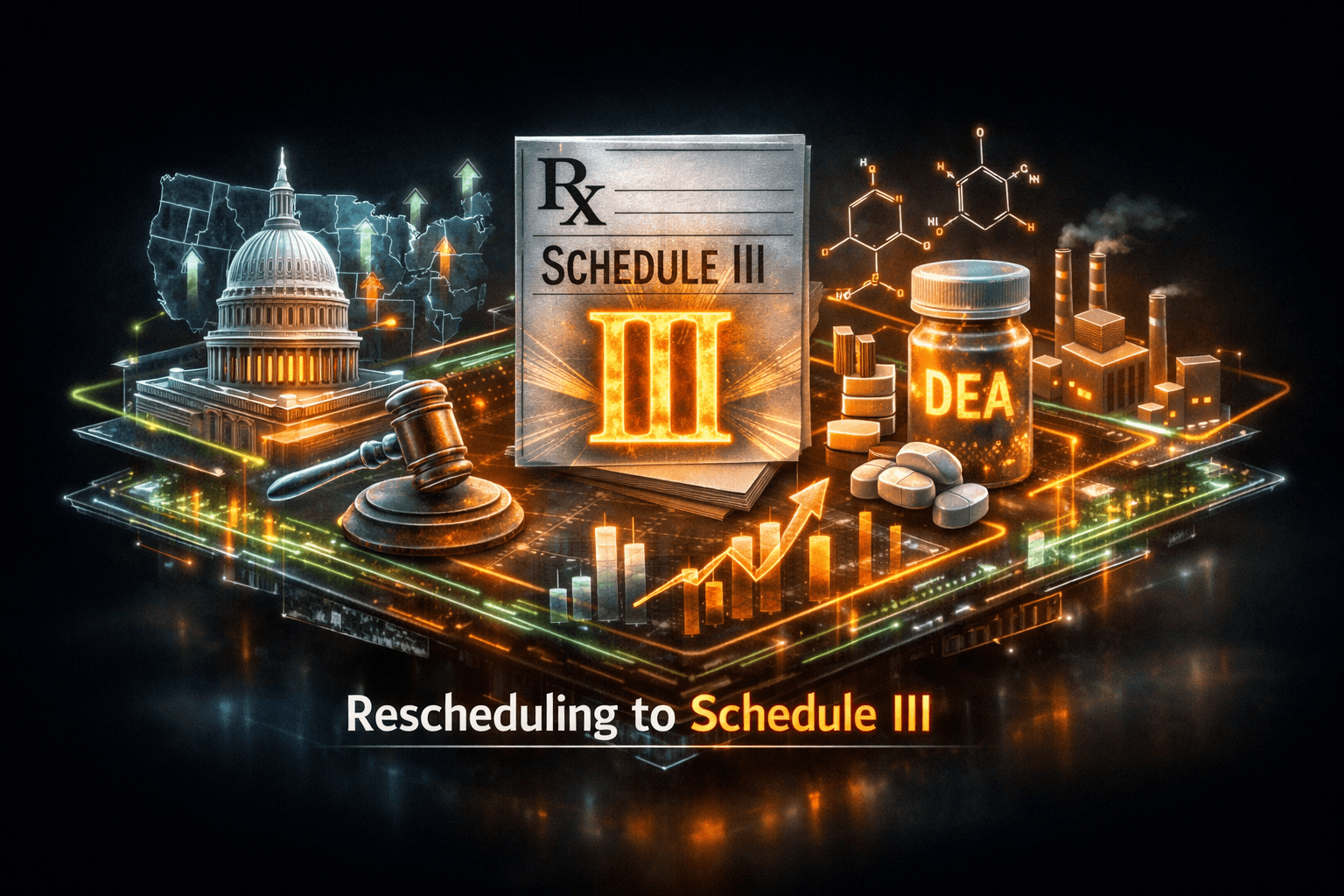
Today's headline was a watershed moment for the cannabis sector, as the Trump administration announced it is moving certain marijuana products into Schedule III of the federal Controlled Substances Act. That action specifically covers FDA-approved marijuana products and cannabis sold under qualifying state medical licenses, and it restarts an expedited administrative process with a June 29, 2026 hearing date.
This matters to you because federal classification shapes research, banking access, tax treatment, and cross‑state commerce. Analysts note the shift reduces a key legal obstacle and opens new strategic options for companies and investors, even as critics say the move doesn’t go far enough.
Market Highlights
News coverage and policy filings drove heavy attention across the sector. You saw lawmakers, industry groups, and operators react in real time as the administration set a fast track for further rescheduling steps.
- Regulatory: Trump administration moved FDA‑approved and state‑licensed medical cannabis to Schedule III, and set a June 29, 2026 administrative hearing to resume DEA review.
- Policy reaction: Lawmakers from multiple states issued statements, with some calling for rapid legislative fixes and others saying the action doesn’t fully legalize adult use.
- Names to watch: key sector tickers include $MSOS, $TCNNF, $GTBIF, $CURLF, $TLRY, which investors often follow for policy‑driven volatility and structural shifts.
Key Developments
Federal Rescheduling and Agency Moves
The Justice Department announced the immediate reclassification for certain cannabis products and scheduled a June 29 administrative hearing to accelerate the broader DEA process. Media outlets called this the biggest federal drug policy shift since 1970.
For investors, the practical takeaway is clearer rules around federally recognized medical products and a potential path toward wider rescheduling or decontrol. Companies that focus on compliant medical programs and clinical trials may be positioned to benefit first.
Political and State-Level Reactions
Reactions came from across the political spectrum, with some lawmakers and advocacy groups praising the step and others arguing it’s insufficient. In Tennessee, a state representative asked for a special legislative session to expand medical access now that federal barriers have shifted.
This matters at the state level because you can expect renewed pressure on legislatures to align statutes and licensing frameworks, and that could speed patient access in states that have lagged.
Legal and Ancillary Issues Still in Play
The Department of Justice told the Supreme Court that rescheduling shouldn’t affect a pending Second Amendment case involving cannabis users and gun rights. Meanwhile, public polling shows strong popular support for full legalization, and industry publications flagged both supportive and critical analyses.
Legal watchers note that rescheduling solves some problems while leaving others unresolved, including federal banking rules and tax code specifics that still need regulatory clarification.
What to Watch
Now that you know the headline, here's what will matter next and what to monitor in real time.
- June 29, 2026 administrative hearing, which could set the timetable for broader DEA rescheduling and inform market expectations.
- State legislative responses, starting with calls for special sessions like Tennessee’s, and how quickly states adjust medical and licensing rules. Will states move faster now that federal classification has changed?
- Clinical partnerships and research deals, as companies pivot to pursue FDA pathways and trials that were harder when cannabis was Schedule I.
- Regulatory follow‑through on banking and taxation, where guidance will determine if tax code issues, such as 280E implications, are materially alleviated for Schedule III products.
- Key tickers investors track for policy sensitivity: $MSOS, $TCNNF, $GTBIF, $CURLF, $TLRY, which often lead sentiment moves and trade on regulatory headlines.
- Cross‑sector opportunities, including biotech work on psychedelics highlighted in today’s coverage, which suggests some firms and researchers may diversify into adjacent therapeutic areas.
Bottom Line
- Federal rescheduling to Schedule III is a meaningful policy shift that reduces regulatory friction for FDA‑approved and state‑licensed medical cannabis products.
- Expect policy and legislative activity at the state level, with implications for patient access and market expansion.
- Watch the June 29 administrative hearing and subsequent DEA actions, which will set the next phase for industry regulation.
- Companies focused on clinical research and compliance may see earlier benefits, while legacy issues like tax treatment and some legal questions remain unresolved.
- Stay selective, and follow how regulatory clarifications affect revenue recognition, banking, and partnerships that could reshape competitive dynamics.
FAQ Section
Q: What exactly changed in federal policy today? A: The administration moved FDA‑approved marijuana products and cannabis sold under qualifying state medical licenses into Schedule III and set a June 29, 2026 administrative hearing to restart DEA review.
Q: Will this immediately remove cannabis from federal restrictions? A: No, rescheduling for certain products eases some federal barriers but does not fully legalize cannabis nationwide, and further regulatory and legislative steps will determine broader effects.
Q: How should you follow developments from here? A: Track the June 29 hearing, state legislative responses, clinical trial announcements, and guidance on banking and taxation, because those items will drive near‑term sector outcomes.